Unlocking Market and Investment Access for Thailand’s Innovation Entrepreneurs
From the SITE 2026 Stage to Real Market Opportunities for Thai Startups and Innovation-Driven Businesses
A great innovation may be where a business begins. But turning that innovation into something the market will adopt and building a business that can grow sustainably—requires much more than a strong product.
It requires market access, trust, capital and the right business networks.
For innovation-driven entrepreneurs and startups, the critical question is therefore no longer simply, “How do we build a better product?” It is increasingly, “How do we turn that innovation into something the market will use?”
Even when a product or solution addresses a genuine problem, the journey from product development to commercial adoption can be complex. Entrepreneurs must secure their first customers, establish credibility, navigate government procurement, raise capital for expansion and, eventually, build a pathway into international markets.
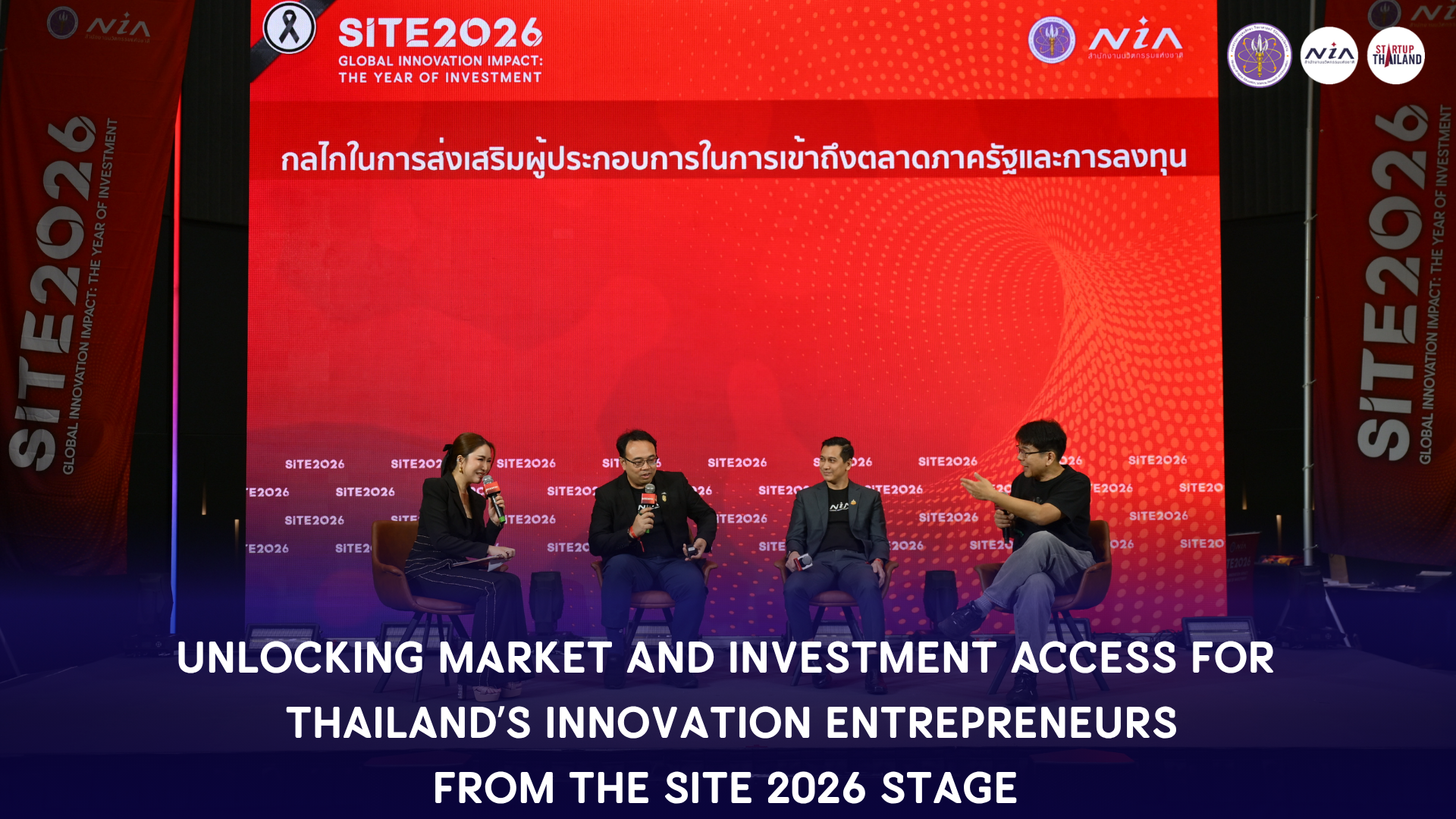
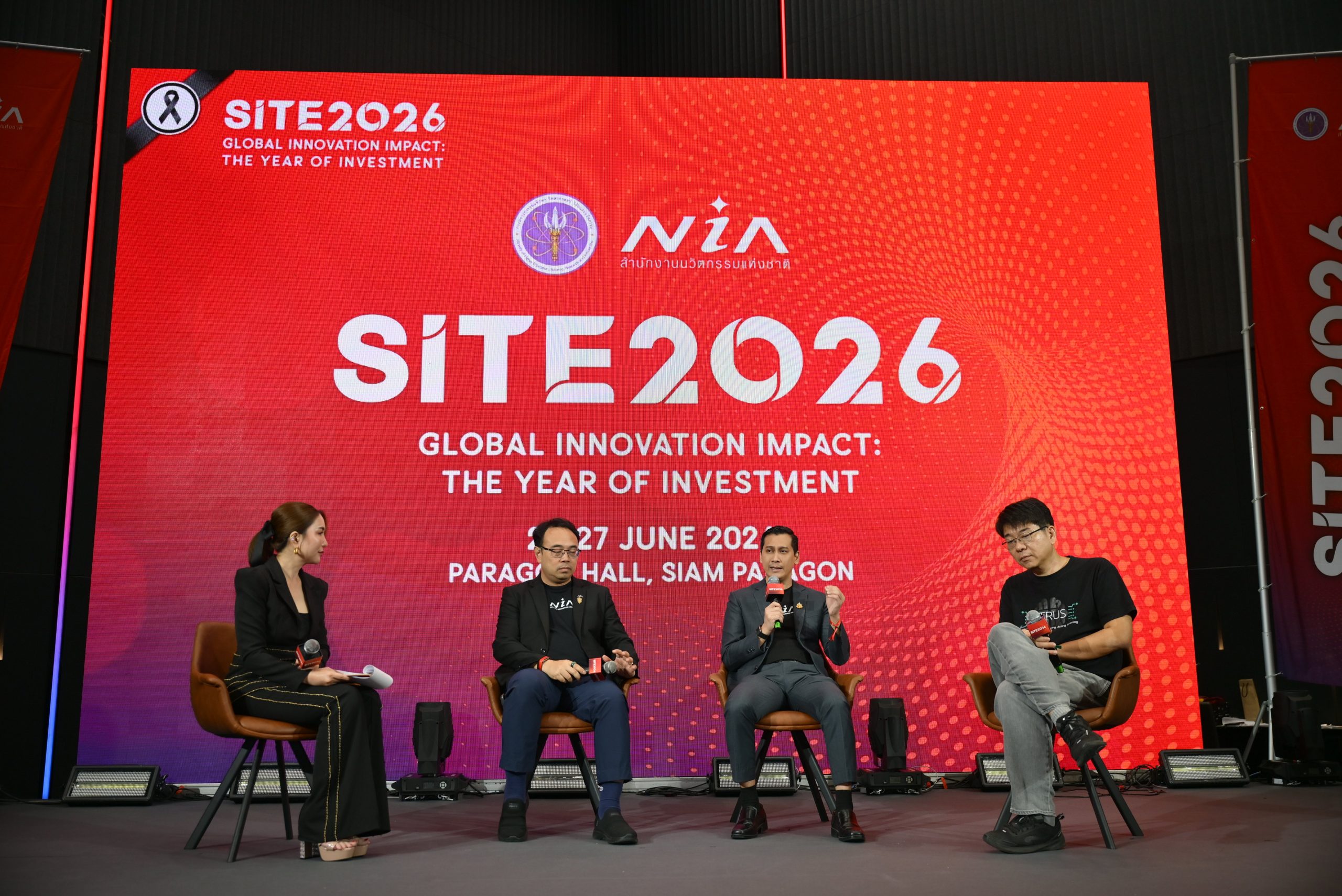
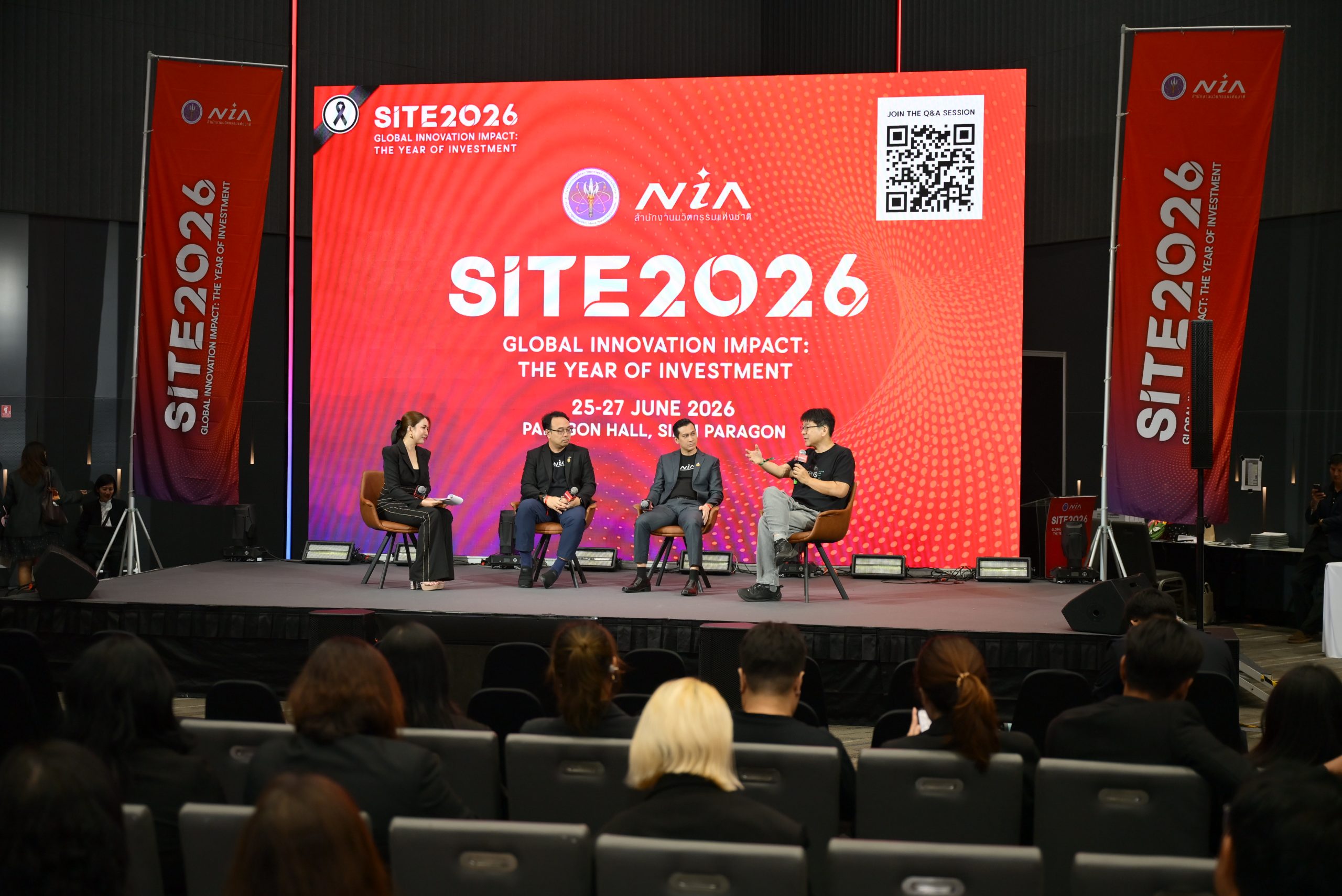
These challenges were at the heart of the panel discussion “Mechanisms to Support Entrepreneurs in Accessing Government Markets and Investment” at SITE 2026.
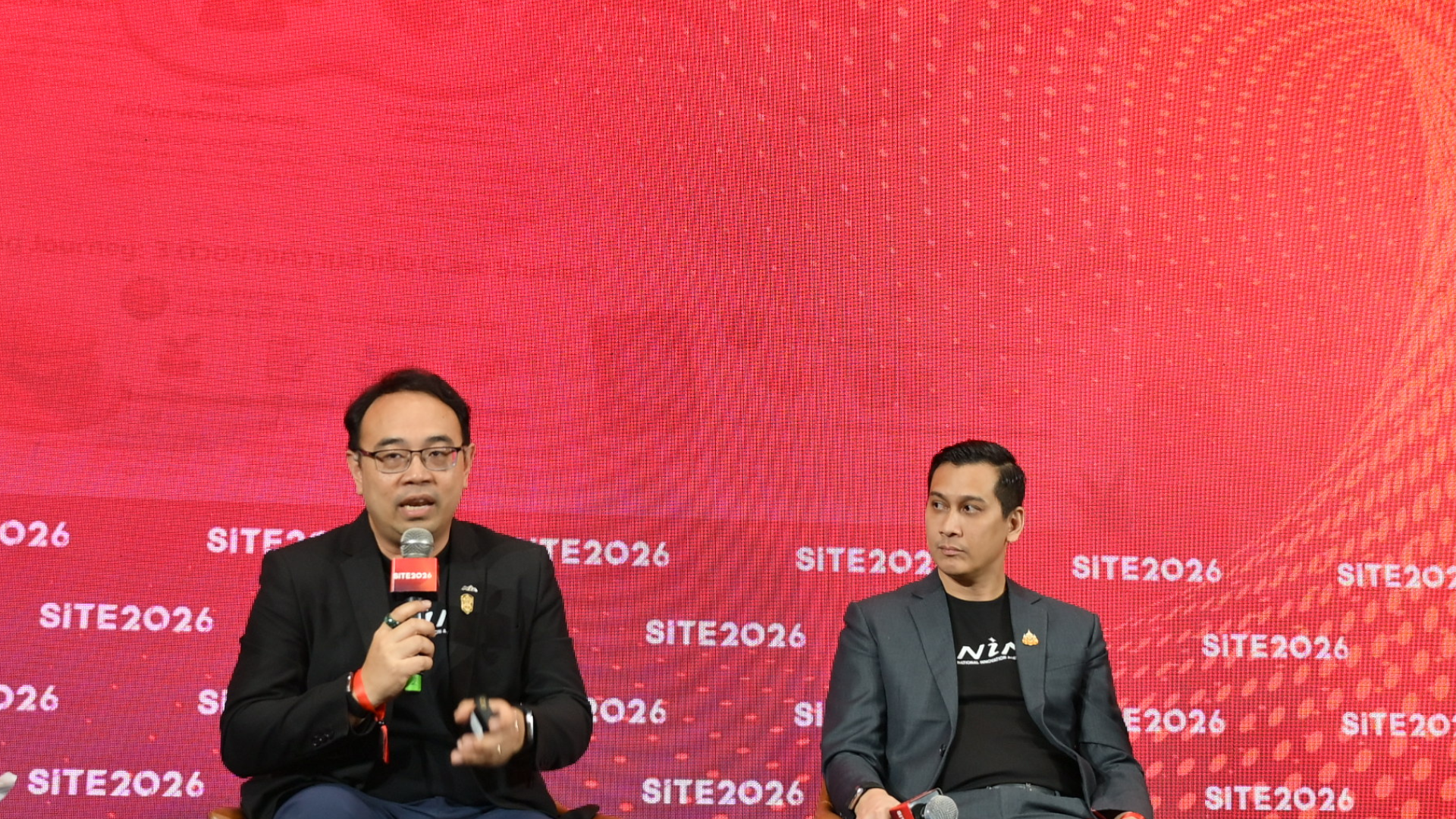
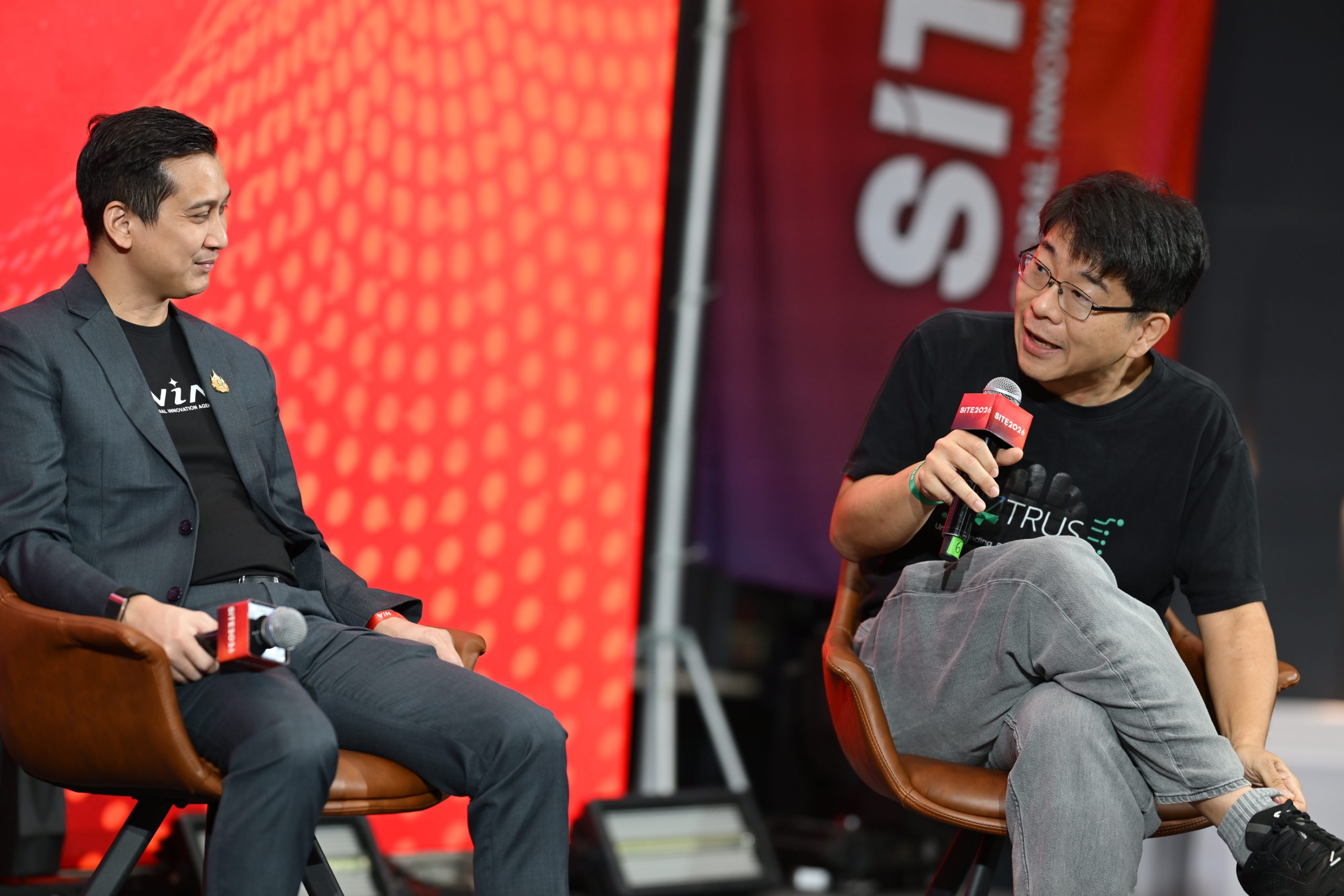
The discussion brought together Dr. Sura-at Supachatturat, Ph.D. (Deputy Executive Director of Innovation Finance, NIA) Mr. Pariwat Wongsamran (Deputy Executive Director of Innovation System, NIA) and Dr. Panachit Kittipanya-ngam (CEO and Co-Founder of ZTRUS) offering perspectives from both the public and private sectors on how Thailand can remove barriers facing innovation-driven businesses and startups.
More broadly, the conversation reflected NIA’s evolving approach: creating mechanisms that enable entrepreneurs to move beyond simply having an innovation and toward connecting that innovation with a real market—turning technological potential into tangible business opportunity.
Government as a Market: Unlocking an Important Opportunity
For startups and innovation-driven businesses, having a strong product does not automatically translate into market access.
This is particularly true when the target customer is the public sector, where procurement procedures, specifications and requirements differ considerably from those of conventional commercial markets.
Mr. Pariwat Wongsamran highlighted one of the fundamental tensions in this process. Startup products are inherently iterative: they evolve through feedback, testing and real-world use. Government procurement, by contrast, traditionally requires clear specifications and predefined deliverables from the outset.
The nature of innovation and the structure of traditional procurement, in other words, do not always fit neatly together.
Opening the government market therefore requires more than simply introducing entrepreneurs to public agencies. Both sides need to be prepared.
For entrepreneurs, that means developing market-ready products, obtaining relevant standards and certifications, and ensuring that solutions can be deployed reliably. For government agencies, it means creating conditions in which innovations can be adopted at appropriate prices, under practical terms and with manageable risk.
When both sides are ready, the public sector has the potential to become an important first market—providing Thai innovation businesses with their first meaningful opportunity to demonstrate value and build momentum.
Build Trust Before Building Sales
One of the most important currencies in bringing innovation to market is trust.
For a government agency considering a new technology or product, the questions are straightforward: Does it work in practice? Does it meet the required standards? Can it deliver the promised outcomes?
Entrepreneurs, meanwhile, need opportunities to prove that their products and solutions can perform under real operating conditions.
Dr. Sura-at Supachatturat pointed to acceptance and confidence in innovative products and services as a major bottleneck in public-sector market access. If agencies can test a solution and become confident in its performance, the likelihood of subsequent procurement and wider adoption can increase significantly.
This thinking underpins NIA’s Market Expansion mechanism, which gives government agencies the opportunity to trial innovative products and services in real settings, with NIA supporting procurement costs for a one-year implementation period.
The objective is not simply to generate a purchase.
It is to create Proof of Use.
Once an agency has deployed an innovation, experienced its performance and seen measurable results, an unfamiliar solution becomes a proven one. That experience can then lead to future procurement and broader market opportunities.
In this sense, government can play an important role as a startup’s first customer—providing not only revenue, but also a real-world reference case, operating experience and credibility that can be carried into conversations with future customers.
Transforming Procurement to Make Innovation More Accessible
Market Expansion is one part of a broader ecosystem of mechanisms designed to help Thai innovations enter the public sector.
Thailand’s Innovation List, for example, provides a channel through which government agencies can procure qualified Thai innovative products. Meanwhile, THAI SME-GP, supported by the Office of Small and Medium Enterprises Promotion (OSMEP), provides a database and support mechanism that makes it easier for Thai SMEs to participate in government procurement, strengthening their ability to compete for public-sector opportunities.
Yet being listed—or having access to a procurement support programme—is not enough on its own.
Building a sustainable innovation market ultimately requires Government Procurement for Innovation: a procurement environment that recognizes and accommodates the distinctive nature of innovative products and services.
This is why NIA is placing greater emphasis on Government Procurement Transformation (GPT).
The aim is to strengthen understanding and connections between solution providers—including startups and innovation-driven businesses—and government agencies, while developing more systematic and efficient pathways for innovative products and services to move into real public-sector use.
When these mechanisms work together, government becomes more than simply another customer segment.
It can become a platform for entrepreneurs to build traction, references and credibility—three assets that can open the door to the next stage of growth.
From Market Access to Capital Access
Once a business has demonstrated that its product works and begun gaining market traction, another challenge quickly emerges capital for scale.
The startup journey does not end at Product-Market Fit.
As a business begins to grow, it needs increasingly substantial resources to expand its team, develop technology, increase production capacity, enter new markets and strengthen its competitive position.
This stage can create a significant funding gap, particularly as businesses attempt to cross the so-called Valley of Death—the difficult transition between proving initial market demand and scaling into a much larger commercial operation.
To address this gap, NIA is moving beyond its traditional role as a granter toward becoming an investor, through the concept of NIA Venture.
The mechanism is intended to help provide growth capital to high-potential innovation businesses, particularly those reaching the Late Seed and Series A stages and beyond.
At the same time, collaboration with VCs, CVCs and co-investment partners can distribute risk and encourage greater participation from private capital in Thailand’s innovation economy.
The growth journey, therefore, cannot be built around Market Access alone.
It must be accompanied by Capital Access, allowing entrepreneurs to convert early traction into the resources required for meaningful scale.
Beyond Capital: The Value of Smart Money
For startups and innovation-driven companies, successful fundraising is not simply about putting more cash on the balance sheet.
Different investors bring different forms of value—industry expertise, operational experience, networks, market knowledge and international connections.
Dr. Panachit Kittipanya-ngam emphasized the importance of seeking Smart Money: capital that comes with the experience and capabilities needed to help a company grow.
This can be particularly valuable when working with venture capital firms that have experience scaling businesses and established networks in international markets.
From this perspective, the public sector can play a role far beyond supplying capital itself. It can help give entrepreneurs an additional advantage by reducing investment risk and creating incentives for high-quality private investors to participate.
When public capital works alongside private-sector investment, expertise and networks, Thai startups gain a stronger foundation from which to move beyond domestic growth and pursue opportunities across the region.
From Thailand to the Global Market
With a market-ready product, customers, credible references and sufficient growth capital in place, the next frontier is international expansion.
Going global, however, is about far more than taking a product developed in Thailand and selling it overseas.
Successful expansion requires an understanding of the target market, strong relationships with local partners and access to the right ecosystem.
NIA is therefore advancing mechanisms such as Scale Up to Global and Global Startup Hub, designed to connect Thai entrepreneurs with international partners, investors, networks and business opportunities.
Another idea raised during the SITE 2026 discussion was the potential role of a Global Innovation Ambassador—someone capable of connecting Thai entrepreneurs with relevant networks in overseas markets and, importantly, helping bridge the gap between making a connection and turning it into a genuine business opportunity.
Because internationalization should not end with attending a trade show or participating in a business-matching session.
The real objective is what comes next: partnerships, customers, revenue and sustained international growth.
SITE 2026: When Innovation Must Find Its Market
Taken as a whole, the SITE 2026 discussion highlighted an important reality facing Thailand’s innovation entrepreneurs today.
The challenge is no longer simply to create more innovation.
It is to build a viable pathway from Innovation to Market.
That represents an important dimension of SITE 2026 itself. A strong innovation ecosystem cannot be measured solely by how many startups it produces or how many promising technologies emerge.
It must also create the conditions in which Innovation can meet Market, Capital and Business Opportunity.
The pathway can be seen as a progression:
Develop Innovation → Test in Real-World Settings → Build Trust → Secure a First Customer → Generate Traction → Access Investment → Scale → Expand into Global Markets
At every stage, a different mechanism is needed to remove a different barrier.
The government market can provide opportunities to secure a first customer.
Market Expansion enables real-world trials and builds Proof of Use.
The Innovation List and procurement mechanisms create routes into the public market.
Government Procurement Transformation works toward a procurement system better suited to innovation.
NIA Venture and co-investment can help close capital gaps at the scaling stage.
And Scale Up to Global and Global Startup Hub connect Thai entrepreneurs with international ecosystems.
Together, these mechanisms form the building blocks of a broader Growth Pathway for Thailand’s startups and innovation-driven businesses.
From Having Innovation to Having a Market
One message from the SITE 2026 discussion stood out clearly: supporting entrepreneurs today cannot end with helping them develop a product or providing early-stage grants.
The larger question is what happens next.
How will that innovation reach the market? And once it does, how will the business continue to grow?
For an entrepreneur, a product is the beginning.
Customers are proof that a market exists.
Traction creates momentum.
Investment provides the fuel for scale.
And global connections open the door to growth beyond national borders.
NIA’s role is increasingly focused on building a system in which these elements reinforce one another—allowing entrepreneurs to move from Innovation to Market, and from Market to Growth.
Because the goal of an innovation ecosystem is not simply to ensure that Thailand produces promising startups and innovation-driven companies.
It is to ensure that those businesses can access real markets, secure capital for growth, scale their operations and create meaningful impact—both in Thailand and across the world.
From innovations built around real needs,
to markets ready to embrace them.
From entrepreneurs ready to grow,
to Thai businesses ready to compete on the global stage.