NICHA CCUS: Flipping Carbon from a Costly Liability to a Circular Revenue Stream
While carbon reduction is traditionally viewed as an expensive compliance burden, Pakorn Intathep from NICHA CCUS turned the narrative on its head. He proved that carbon can become a lucrative revenue stream.
NICHA’s proprietary Carbon Capture, Utilization, and Storage (CCUS) technology captures carbon directly from industrial exhaust stacks and converts it into a stable carbonate solution for localized use. This includes soil enrichment, wastewater treatment, or the manufacturing of low-carbon concrete. By deploying this process directly on-site, logistics costs are eliminated, slashing overall operational expenses to just one-third of traditional systems.
Furthermore, in partnership with PTT Group, NICHA is exploring marine restoration through ocean alkalization to combat ocean acidity. This pioneering initiative creates immense value by generating premium-grade carbon credits—brilliantly turning an environmental crisis into a circular financial windfall.
The Strategy of “Data & AI”: Answering the Tough Questions on Accuracy
During the session, moderator Ratchawoot posed a crucial, often uncomfortable question: “When clients ask exactly how accurate your AI or IoT is, and how many months they have to wait for results, how do you answer?” While many stumble here, these four GreenTech pioneers offered masterclasses in advanced data handling:
- NICHA CCUS employs molecular-level AI analysis (mole-to-mole) to evaluate carbon saturation points precisely, translating the data into an exact cost-per-kilowatt matrix.
- SEMPLY tackles the fragmented energy market by organizing disparate data standards into unified structural patterns. This allows AI to learn faster, driving highly accurate and rapid predictive forecasts.
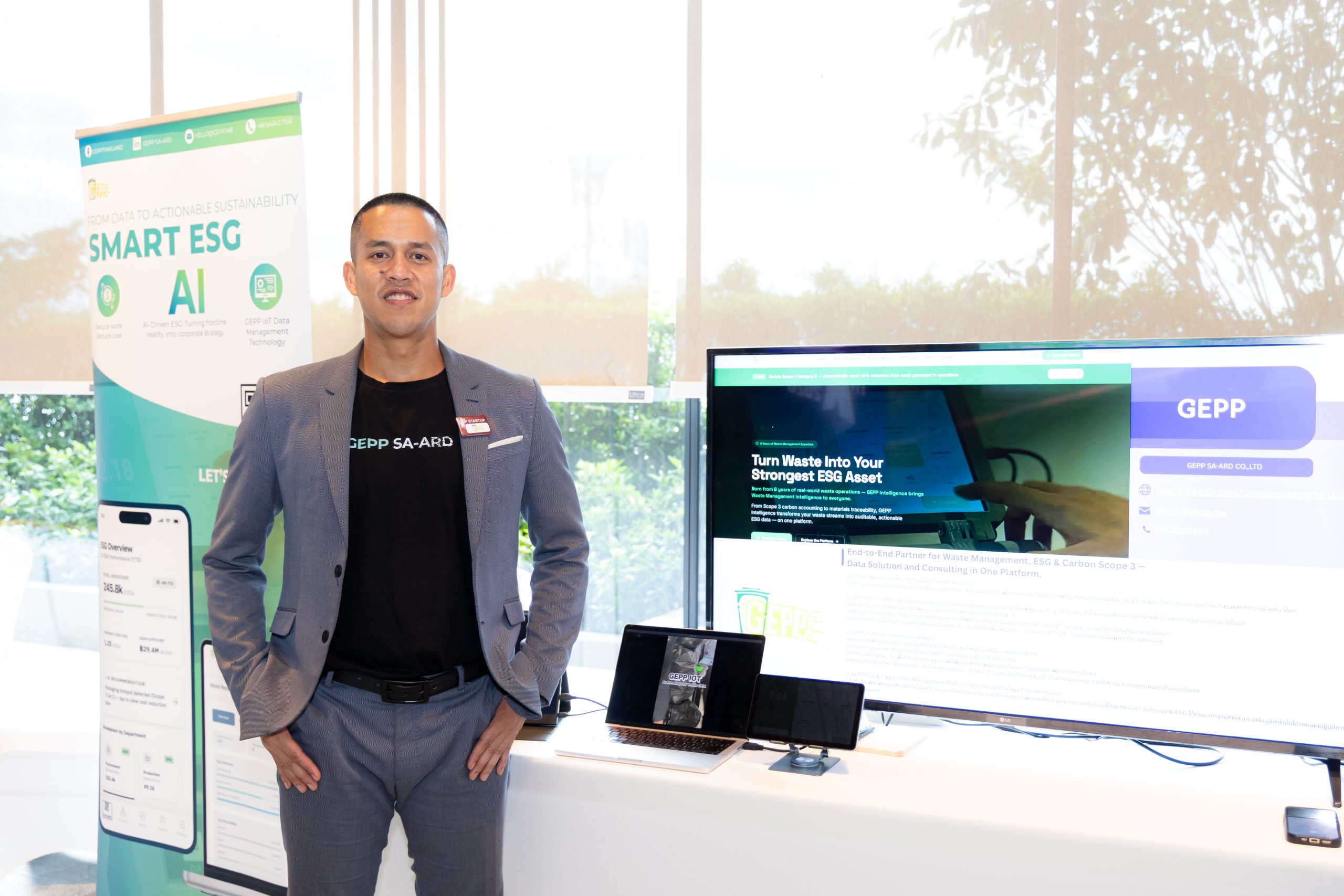
- GEPP Sa-Ard emphasizes that the best data is usable data. Their systems are designed to make the frontline staff’s jobs easier without adding burdens, blending hard data with human intuition to foster genuine behavioral change.
- Merlinium shatters the traditional six-month data collection barrier through Edge Computing. By allowing sensors to calculate data instantly on-site, threats are neutralized long before a catastrophic breakdown occurs, while significantly reducing cloud data costs.
The Domino Effect: What Happens to Thai Businesses That Ignore Data Over the Next 3–5 Years?
To illustrate the stakes,Ruchvuth posed a hypothetical scenario: If a traditional service business—like a home repair company—chooses to ignore carbon footprints, skip smart sensors, and avoid recycling, relying solely on good craftsmanship, can it survive?
The panel’s collective response painted a stark reality for those resistant to change:
- A Severe Loss of Competitiveness: No business operates in a vacuum; every company is a link in someone else’s value chain. As multinational corporations mandate strict carbon accounting, businesses without verifiable data will find themselves abruptly dropped from vendor lists.
- Sunk Costs and Financial Penalties: With energy prices rising and regional neighbors like Malaysia already enforcing energy conservation laws and Carbon Taxes, inaction will turn carbon into a pure financial liability. Meanwhile, proactive competitors will monetize their carbon through credit trading.
- Obsolescence via Predictive Ecosystems: The world is shifting from a “break-and-fix” culture to a “predict-and-prevent” model. Modern technicians armed with real-time data will service systems before the client even realizes a fault exists. Traditional businesses waiting around for a service call will simply find their market share gone.
The Blueprint for Survival: Quick Wins in the Sustainability Arena
In a cooling global economy, ESG compliance has shifted from a marketing luxury to a lean operational necessity. Data analytics and intelligent sensors are no longer optional—they are the tools required to survive.
For businesses seeking a “Quick Win,” the panel unanimously recommended starting with energy monitoring and management. It requires the lowest barrier to entry and yields immediate, undeniable returns reflected on the very first month’s utility bill.