Building Tomorrow:
How AI Is Empowering a New Generation
of Thai Innovators
Why the Future of Thai AI is Human-Centric
For years, conversations surrounding artificial intelligence have been dominated by a familiar question: Will AI replace human jobs?
At the same time, many Thai startups have been wrestling with another concern of their own: Can we truly compete with global technology giants?
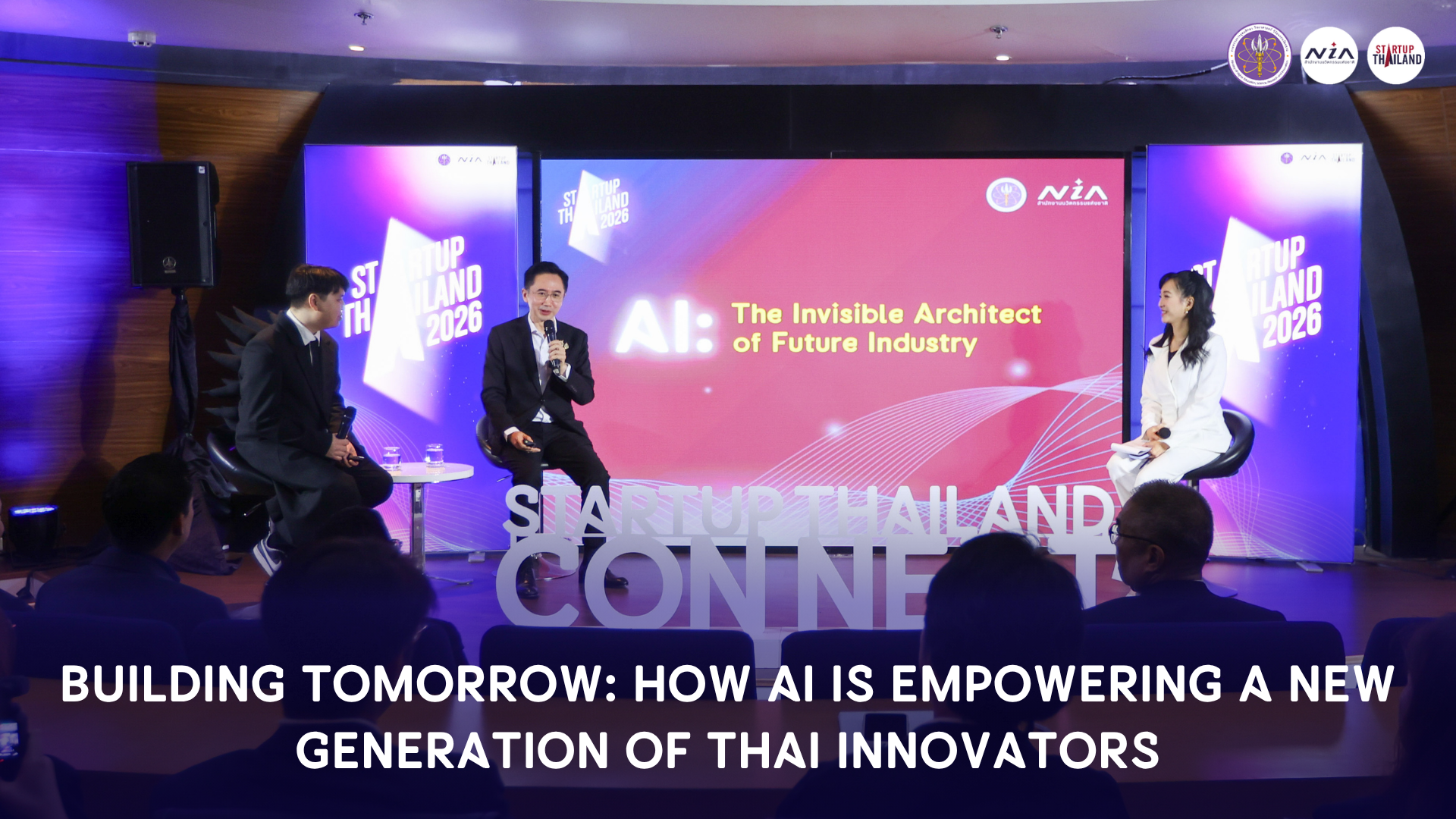
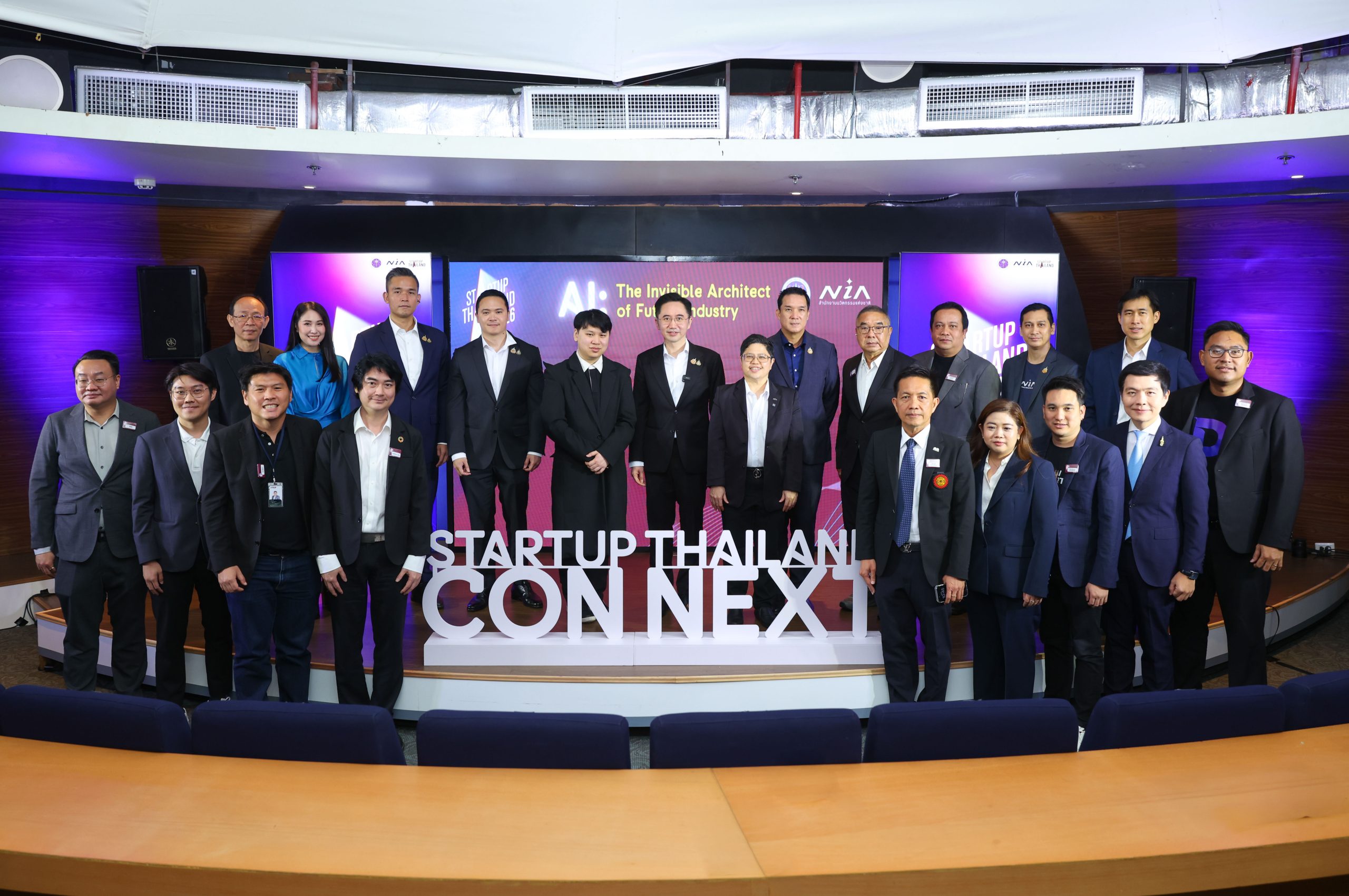
However, a recent panel discussion titled “AI: The Invisible Architect of Future Industry”—hosted by the National Innovation Agency (NIA) under the Ministry of Higher Education, Science, Research and Innovation (MHESI)—shifted the horizon. It invited us to view the future through a different lens: one where AI is not a ruthless competitor, but an invisible architect shaping tomorrow’s industries, economies, and human capabilities.
The compelling dialogue bet
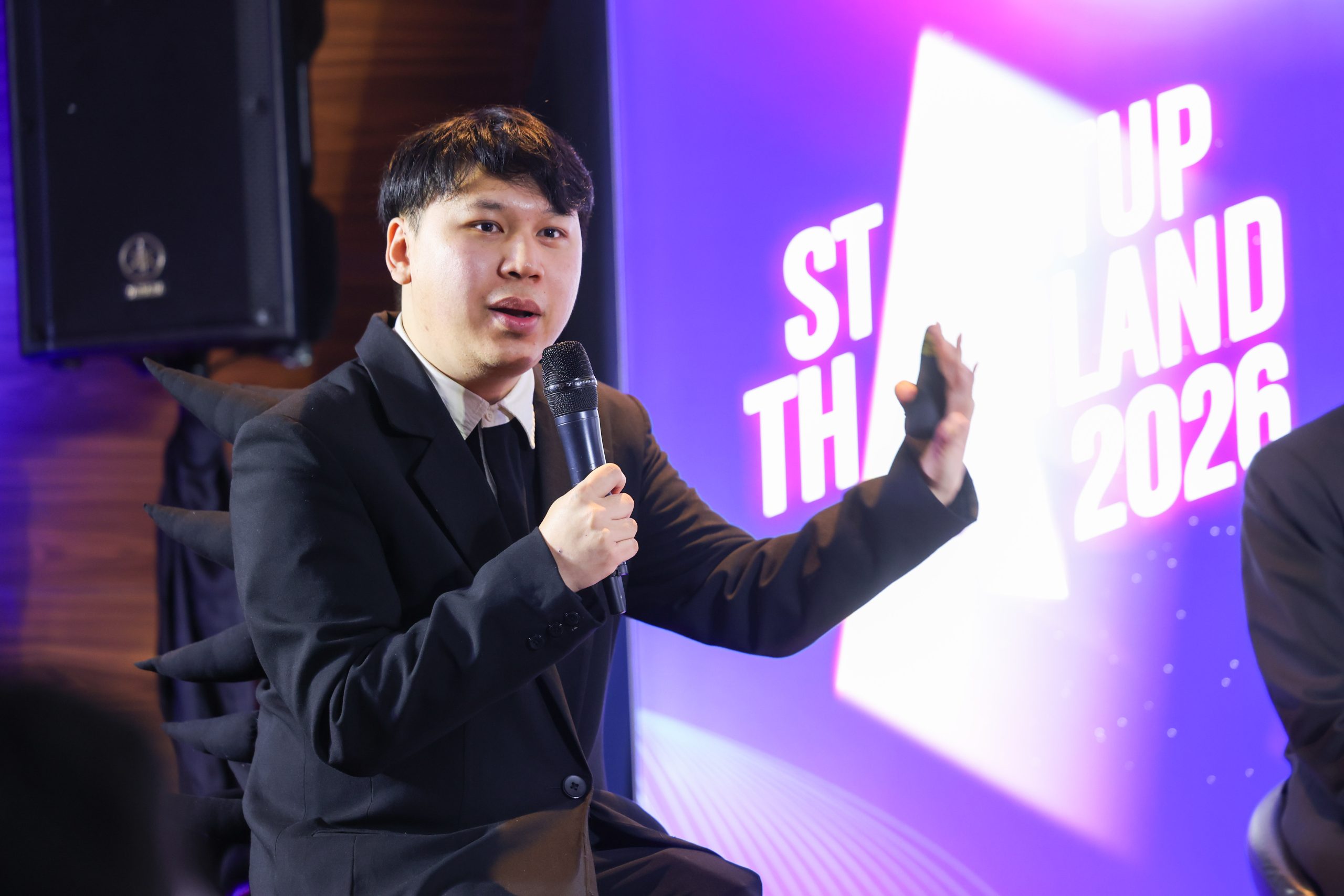
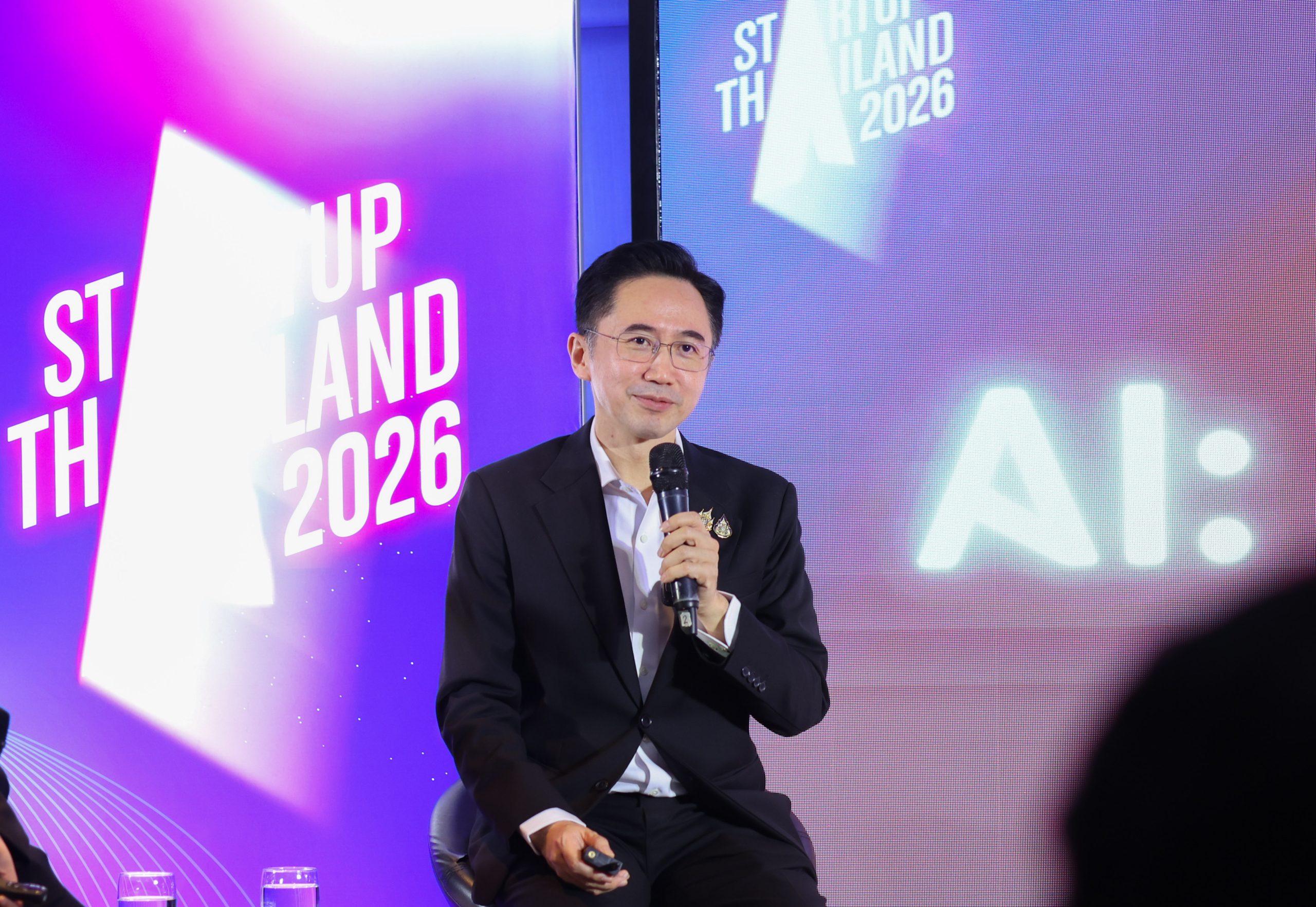
ween Dr. Yodchanan Wongsawat, the Minister of Higher Education, Science, Research and Innovation (MHESI) and “PP” Pat Pataranutaporn from the MIT Media Lab underscored a vital truth: Thailand’s long-term competitive edge lies neither in possessing the most resources nor the smartest AI. Instead, it resides in leveraging technology to amplify human potential and crafting innovations rooted in our unique national strengths.
From AI Substitution to Human Augmentation
One of the most compelling ideas explored during the session was the shift from AI substitution to intelligence augmentation.
While the world races to make machines increasingly human—teaching them to understand language, emotions, and behavior—many organizations continue to design workplaces that reduce people to repetitive, machine-like tasks.
The challenge for future innovation, therefore, is not to create AI capable of replacing humans entirely. It is to design AI that helps people think more deeply, create more boldly, and unlock abilities that may otherwise remain dormant.
Around the world, pioneering research is already bringing this vision to life. Digital Twins, for example, allow individuals to explore potential future scenarios through virtual representations of themselves. AI Watchdogs are being developed to protect users from cyber threats and online deception. Though different in application, both share a common philosophy: AI should expand human capability, not diminish human relevance.
Game-Changing Innovations Begin in the Unknown
A compelling lesson shared from the MIT Media Lab traced the genesis of touchscreen technology.
Decades ago, the concept of interacting with a screen via fingertips was largely dismissed. Critics questioned its cleanliness, accuracy, and commercial viability. Today, touchscreens are seamless extensions of our daily lives and the foundation of a multi-billion-dollar digital economy.
This narrative illustrates a fundamental truth about DeepTech: world-changing research is rarely born to solve tomorrow’s revenue targets. It arises from a long-term vision that spots deep-seated problems and distant opportunities. For Thailand to ignite a new economic S-Curve, investing in advanced research and deep technology is non-negotiable, even if the dividends are not immediate.
The Shortcut for Thai DeepTech: Global Connectivity
The ultimate hurdle for DeepTech startups is resource scarcity—be it computing power, massive data infrastructure, or heavy capital. However, the panel offered a refreshing strategic shortcut: Thailand does not need to build everything from scratch.
The future role of the public sector is to act as a global super-connector. By bridging Thai entrepreneurs with international AI platforms, cutting-edge research tools, and global networks, the nation can bypass structural bottlenecks. In a hyper-connected world, competitive advantage belongs not to those who own everything, but to those who excel at orchestrating the right collaborations.
When Soft Power Becomes a DeepTech Advantage
If Thailand attempts to compete directly with global AI superpowers on their own terms—building massive language models or investing in hyperscale infrastructure—the playing field may remain uneven.
However, an entirely different opportunity emerges when advanced technology is combined with Thailand’s cultural capital, local wisdom, and creative identity.
This is where the concept of HT-AI (Heritage, Technology, Art and Innovation) becomes particularly compelling.
Whether through AI-powered preservation of cultural knowledge, immersive experiences in the creative industries, or the development of a wellness economy that blends biotechnology, health data, and Thailand’s holistic lifestyle traditions, these are areas where the country can create genuine differentiation.
In a world where technology itself is rapidly becoming commoditized, culture, context, and local knowledge may become the most valuable assets of all.

The Future Is Not About AI—It Is About People
Perhaps the most important takeaway from the discussion had little to do with technology itself.
Thailand’s future will not be determined by the number of servers it owns or the number of AI models it develops. It will be shaped by the quality of the people who grow up in an increasingly digital world.
Creating an ecosystem that encourages experimentation, supports research, provides access to global knowledge, and protects intellectual property will be essential to nurturing the next generation of innovators and change makers.
Ultimately, AI may not replace humanity.
Instead, it may become one of the most powerful tools ever created to help people discover what they are truly capable of.
And for Thai startups, the defining question may no longer be “What can AI do?”
But rather:
“What kind of future can we create with AI—for Thailand and for the world?”
Explore more perspectives and insights from the discussion:
- Techsauce: AI: The Invisible Architect of Future Industry — เจาะลึกมุมมอง Tech Ecosystem และการเชื่อมต่อสตาร์ตอัปไทยสู่เวทีสากล
- กรุงเทพธุรกิจ: ถอดรหัสอนาคตอุตสาหกรรมด้วย AI — บทวิเคราะห์นโยบายภาครัฐ แทร็กการวิจัยระยะยาว และยุทธศาสตร์ HT-AI ของกระทรวง อว. และ NIA
- The Story Thailand: ถอดบทเรียนความร่วมมือ MIT Media Lab สู่ความท้าทายใหม่ของระบบนิเวศนวัตกรรมไทย — สรุปประเด็นความร่วมมือระดับสากล และแนวคิดของ “คุณพีพี” ในการปั้นคนรุ่นใหม่เป็น Change Maker บนเวทีโลก