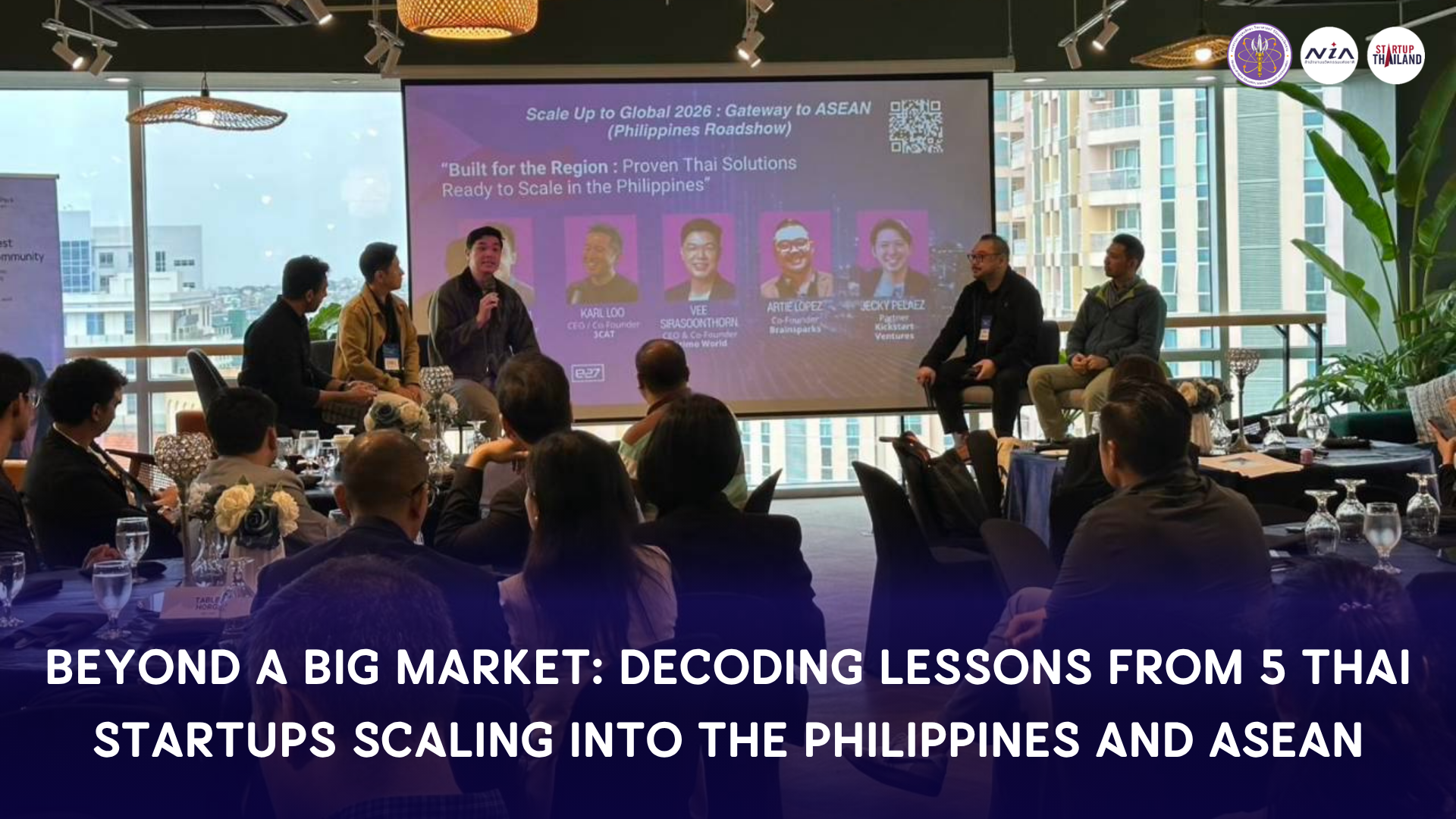
Beyond a Big Market: Decoding Lessons from 5 Thai Startups Scaling into the Philippines and ASEAN
Understand the Market, Build Local Alliances, Validate Early, and Scale Strategically.
Taking a startup beyond its home market is about far more than introducing a product or technology to a new country. The real test is whether a business model that succeeds in one market can still solve real problems, fit customer behavior, and create sustainable value in another.
This is particularly true in ASEAN. Despite their geographic proximity, the region’s markets differ considerably in economic structure, consumer behavior, regulation, business practices, and culture. Understanding the local context is therefore one of the most important factors determining whether a startup can simply enter a market—or truly grow within it.
Among ASEAN’s emerging opportunities, the Philippines stands out as a market worth watching. Its large population, consumption- and service-driven economy, widespread use of English, expanding digital economy, and steadily developing startup ecosystem make it an attractive destination for companies looking to scale regionally.
The StartupBlink Global Startup Ecosystem Index 2026 also reflects the country’s growing potential, with the Philippines continuing to strengthen its position within the global startup landscape. Metro Manila, meanwhile, remains the country’s leading center for startup activity, investment, business, and economic development.
Yet population size and ecosystem rankings tell only part of the story.
Look more closely, and the Philippines reveals a market rich in both opportunity and complexity—one that startups must understand before committing significant capital, talent, or resources.
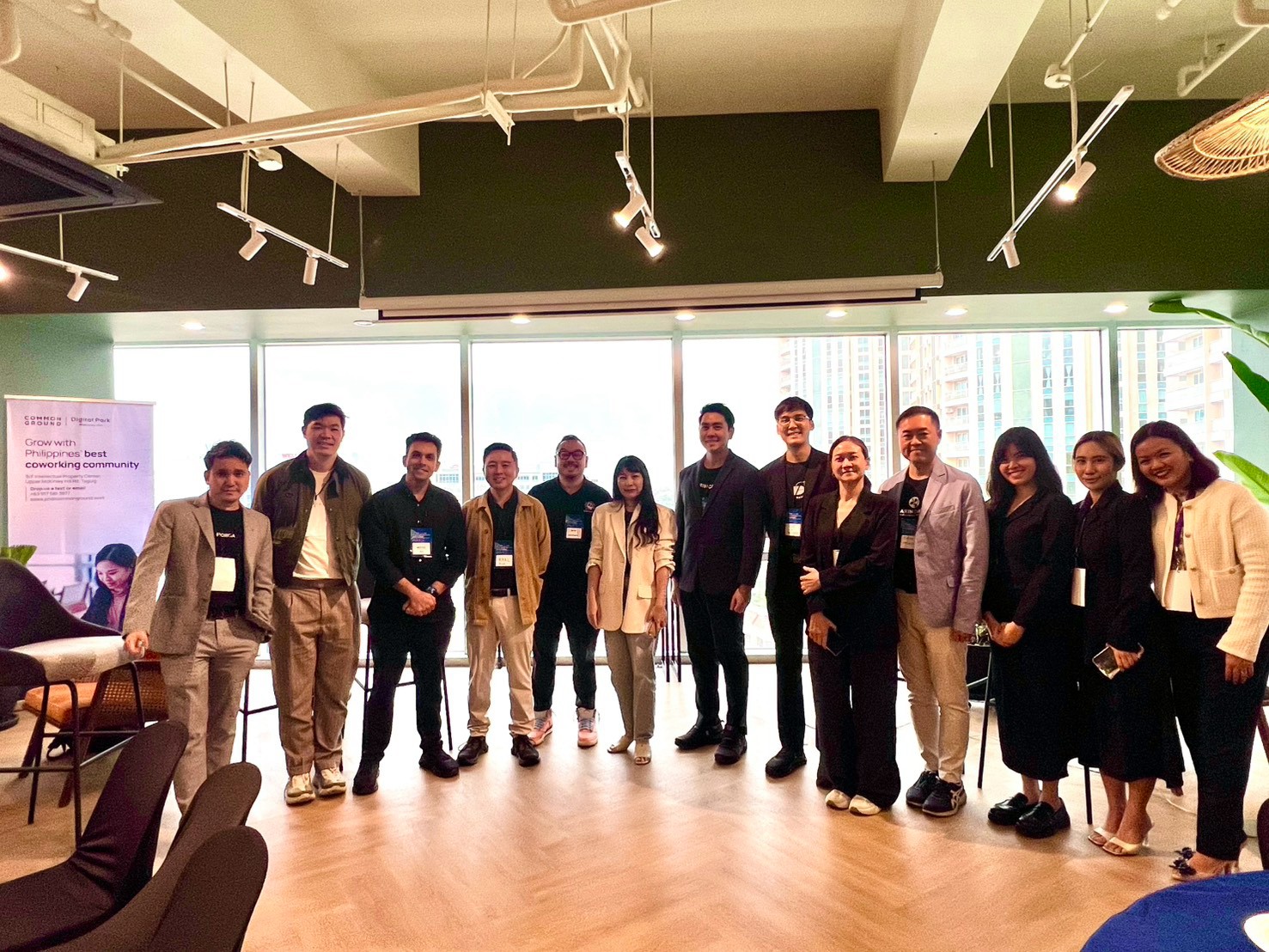
That is precisely what five Thai startups Arincare, PRIMO World, HORGA, Sati, and PAM REAL CDP—set out to explore through Scaleup to Global 2026: Gateway to ASEAN, an initiative by Thailand’s National Innovation Agency (Public Organization), or NIA.
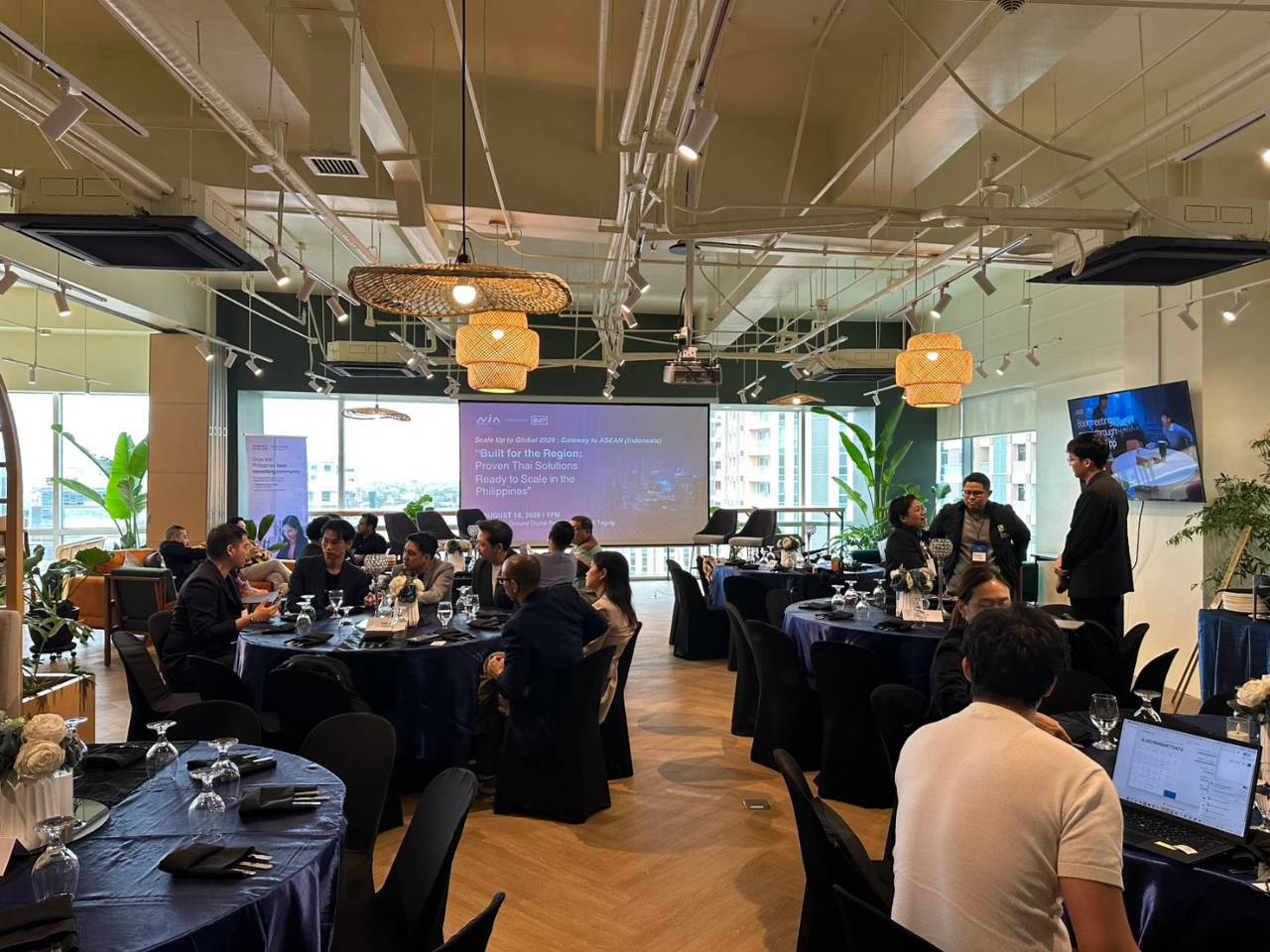
The program gave participating startups the opportunity to explore the Philippine market, engage with ecosystem players, build connections, and identify potential partners.
Through conversations with investors, ecosystem builders, and entrepreneurs from the Philippines, Malaysia, and Thailand, one message became increasingly clear: there is no single formula for entering a new market.
Successful expansion begins with understanding the market, building relationships, testing assumptions, and scaling only when there is sufficient evidence that the business can work.
The Philippines: A Large Market That Demands a Deeper Look
One of the Philippines’ fundamental strengths is an economy driven heavily by domestic consumption and services.
Household spending plays a central role in economic activity, while remittances from Overseas Filipino Workers continue to contribute significantly to purchasing power across the country.
The Philippines also has a strong service-based economy, particularly through the Business Process Outsourcing (BPO)industry, which generates substantial employment and income while drawing on a workforce with high levels of English proficiency.
Together, these characteristics create a promising environment for businesses in digital technology, SaaS, AI, and B2B solutions.
For PRIMO World, a provider of enterprise loyalty and omnichannel solutions, market scale is particularly relevant. Its business model is closely linked to the size of corporate customer bases and end-user populations. Entering a market with a large consumer base therefore offers significant long-term growth potential.
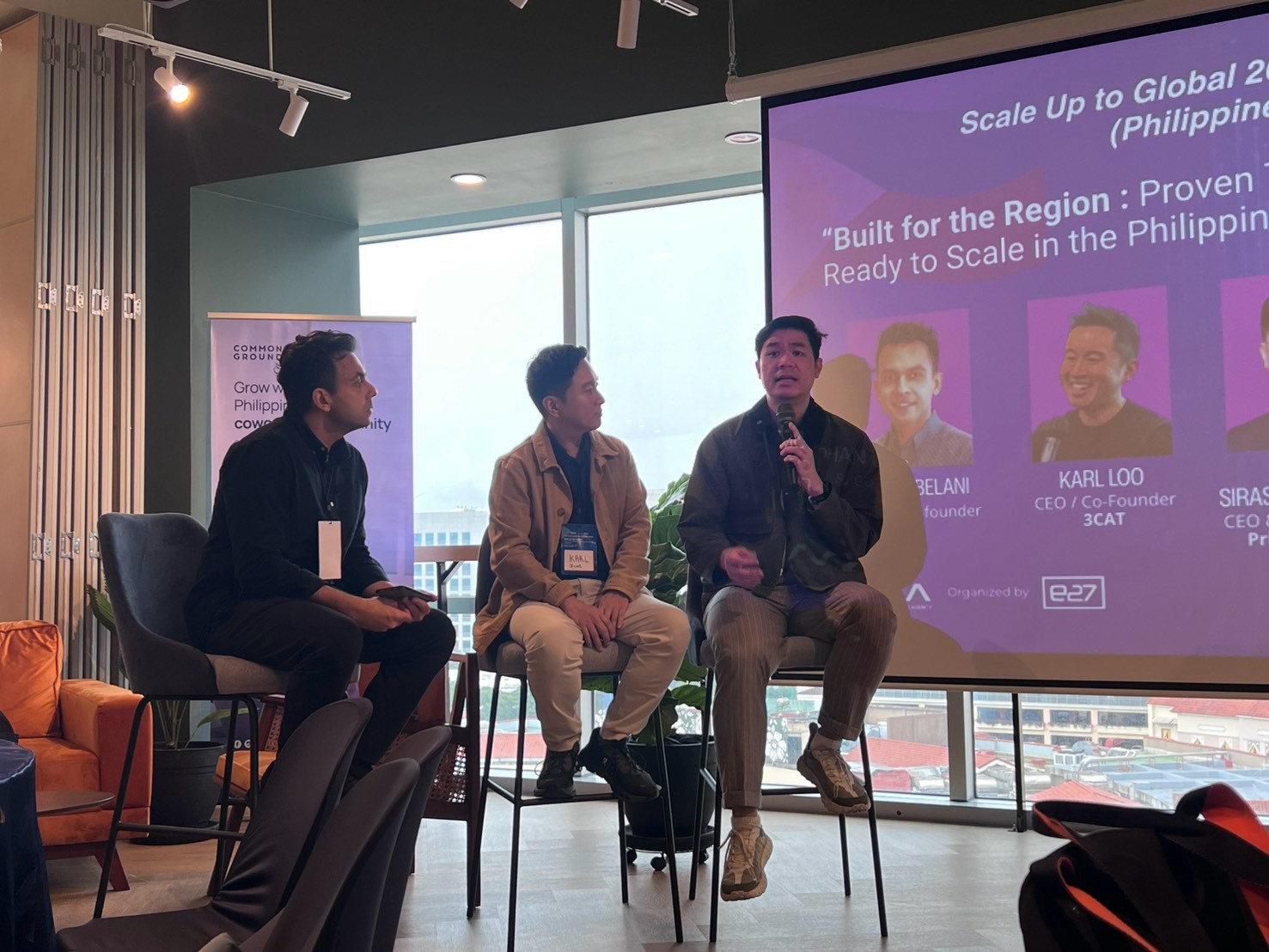
A similar perspective was shared by Karl Loo, Co-founder of Malaysian startup 3CAT, who participated in the exchange sessions. He observed similarities between consumer behavior in Malaysia and the Philippines, particularly the strong culture of shopping malls and consumers’ willingness to move between online and physical retail channels.
These behaviors align naturally with 3CAT’s omnichannel retail model.
But rather than relying on the assumption that the Philippine market “looked right,” the company chose to validate that belief with evidence. 3CAT engaged a market-entry consultant and spent several months studying local consumer behavior before making a final investment decision.
The lesson is simple but important: market size alone is not enough.
Startups need to turn the instinct that “this market should work” into reliable information that can support an investment decision.
Business Matching Must Go Beyond Making Introductions
When startups enter a new market, they need more than customer leads. They need local relationships that can accelerate market understanding and unlock opportunities that would otherwise take years to build independently.
From the perspectives of Artie Lopez, Co-founder of Brainsparks, and Jecky Pelaez, Partner at Kickstart Ventures, one advantage of the Philippine ecosystem is the interconnected nature of its business networks.
The right relationship can lead to introductions not only to potential clients, but also to corporates, investors, and wider ecosystem communities.
This is why business matching should never be viewed simply as an activity designed to help startups meet as many people as possible within a short period of time.
Its value lies in whether those introductions can evolve into meaningful business relationships.
For the five Thai startups participating in Scaleup to Global 2026: Gateway to ASEAN, business matching extended across potential clients, business partners, distributors, trade partners, strategic partners, and technology partners, as well as opportunities for pilots, proof-of-concept projects, and co-development.
The most useful question, therefore, is not simply:
Who did the startup meet?
It is:
What happened after the meeting?
Did the conversation continue? Was information exchanged? Was a proposal or quotation submitted? Did the companies enter negotiations? Was the product tested? Did the relationship progress toward an MOU, MOA, commercial agreement, or actual revenue?
In international expansion, a connection may open the door—but business outcomes determine whether the opportunity moves forward.
Never Assume a New Market Will Behave Like Your Home Market
One of the strongest lessons shared by entrepreneurs in the Philippines is that startups should never transfer a business model from one country to another without adapting it to the local context.
Payment behavior is a clear example.
The Philippines has seen rapid adoption of mobile wallets, particularly GCash, which has become deeply familiar to both consumers and merchants.
B2B payments are evolving as well, with businesses gradually moving away from checks toward bank transfers and electronic invoicing.
These may appear to be operational details, but for startups they can have significant implications for product design, payment models, customer journeys, and go-to-market strategy.
The experience shared during the program reinforced an essential principle:
Success in a new market is not determined by technology alone.
It depends on whether that technology fits the way the market behaves.
More Customers Do Not Automatically Mean a Sustainable Business
Another important lesson is that measuring success only by the number of leads or customers can create a misleading picture of growth.
A case shared during the program involved a spend-management startup that had successfully generated many SME leads and customer meetings.
At first glance, the pipeline looked promising.
But once customers began using the service, the company discovered that many were highly price-sensitive and produced significantly lower transaction volumes than expected.
The problem was therefore not an inability to acquire customers.
It was a question of customer quality and unit economics.
For startups preparing to scale, the right questions go beyond customer count.
Are customers using the product? What is retention? How much revenue does each customer generate? Is the cost of acquiring and servicing that customer justified by the value created over time?
Sustainable growth requires not only greater volume, but economics that can scale with it.
Five Thai Startups, Five Different Market-Entry Challenges
Although all five Thai startups entered the same market, each arrived with a different product, customer segment, and business model.
The Philippines therefore became something of a live testing ground—an opportunity to identify not only where potential exists, but also what each company must prepare before moving to the next stage.

Arincare: Healthcare Expansion Requires Both Technology and Ecosystem Understanding
Arincare provides connected e-pharmacy and telepharmacy solutions designed to help pharmacies and healthcare providers improve operational efficiency and expand access to healthcare services.
The Philippine healthcare market presents clear opportunities for digital health, but it also comes with significant regulatory complexity.
Market entry therefore cannot simply consist of introducing a technology and selling it to customers.
Startups must understand the regulatory landscape, healthcare providers, insurance and HMO structures, and the broader local healthcare ecosystem.
For Arincare, the key lesson is clear:
Healthcare innovation must move in step with both regulation and ecosystem readiness.
PRIMO World: Enterprise Sales Takes Time, but Trust Opens Doors
PRIMO World provides enterprise loyalty and omnichannel solutions that help brands better understand their customers, strengthen engagement, and improve customer retention.
Its primary challenge in a new market is the length of the enterprise sales cycle.
Large corporations rarely make purchasing decisions after a single product presentation. Deals develop through a longer process involving trust-building, solution evaluation, internal alignment, commercial assessment, and stakeholder approval.
One of PRIMO World’s advantages is its track record with large enterprises and global brands in Thailand. These existing customers can serve as valuable references when approaching enterprise prospects in a new market.
The company has also adopted an expansion strategy that begins by placing experienced personnel from Thailand in the market before building a local team.
Because the product is sophisticated and requires deep understanding, sending people who already know the solution well can help establish the business more effectively during the early stages.
The lesson from PRIMO World is that enterprise expansion takes patience.
But strong references, combined with a team that understands the product in depth, can significantly reduce market-entry risk.

HORGA: PropTech Needs a Testing Ground Before It Scales
HORGA develops PropTech software for managing rental properties, dormitories, and commercial spaces, helping property owners and managers operate more efficiently.
In the Philippines—particularly in Metro Manila and major urban centers such as Cebu and Davao—property management represents a potentially attractive area for digital solutions.
HORGA’s immediate challenge is therefore not to capture the entire market at once, but to identify property owners, developers, property managers, and strategic partners whose pain points closely match the company’s solution.
Starting with a carefully selected pilot or proof of concept can help validate product-market fit, generate local evidence, and establish credible references before broader expansion.
In other words, the first objective is not scale.
It is finding the right place to prove that scale is possible.

Sati: AI in Healthcare Must Demonstrate Measurable Impact
Sati uses artificial intelligence to support healthcare professionals, improve workflows, reduce administrative burden, and enable more effective use of healthcare data.
The Philippines has significant healthcare needs and considerable room for technological innovation.
Yet introducing AI into healthcare requires a high degree of trust from hospitals, healthcare professionals, administrators, and other stakeholders.
The question therefore cannot simply be:
What can the AI do?
The more relevant question is:
What measurable outcomes can it create for hospitals, healthcare professionals, and patients?
For Sati, pilot projects and proof-of-concept programs can play a critical role in building evidence—demonstrating impact before attempting broader adoption.
In healthcare, especially, credibility is built through outcomes.

PAM REAL CDP: Product Fit Must Be Matched by Enterprise Fit
PAM REAL CDP provides AI-powered marketing and customer data infrastructure, enabling enterprises to consolidate customer information and use data to deliver better customer experiences.
The Philippines is home to large enterprises and major conglomerates operating across multiple industries. This creates opportunities for technologies that support customer data management and digital transformation.
But entering the enterprise market requires more than strong product fit.
A company may have a clear customer pain point, yet still be unable to close a deal if the prospective organization lacks the necessary data infrastructure, a decision-maker with sufficient authority, or the budget to implement the technology.
The challenge is therefore to identify companies with three conditions in place:
a real pain point, organizational readiness, and sufficient purchasing power.
The right opportunity is not simply an enterprise that needs the solution.
It is an enterprise that is ready and able to act on that need.
A Local Partner Should Be Someone Who Moves with You
Selecting the right local partner is another critical part of international expansion.
A strong local partner can shorten the learning curve, establish credibility, and connect a startup with customers and organizations that may otherwise be difficult to reach.
But startups should not choose partners based solely on reputation or the size of their network.
The right partner must also have incentives and commitment that align with the startup’s goals.
Before signing an agreement, startups should examine issues such as exclusivity, sales commitments, payment terms, and their impact on cash flow.
Ultimately, a good partner is not simply someone who says:
“We can help.”
It is someone who can clearly demonstrate how they will help—and why they have an incentive to make the relationship work.
Investors Bring More Than Capital. They Can Provide Market Access.
The Philippines also has an active ecosystem of venture capital and corporate venture capital, particularly among large conglomerates with interests spanning multiple industries.
According to Jecky Pelaez of Kickstart Ventures, investment structures can follow internationally recognized models such as SAFE agreements, convertible notes, and equity investments.
But local investors can contribute something potentially even more valuable than capital:
networks, relationships, and corporate access.
This is particularly important for startups selling to major enterprises, where a sales cycle can sometimes last far longer than a fundraising cycle.
An investor or CVC that can build long-term relationships and open doors into a corporate ecosystem may therefore become a strategic partner whose value extends well beyond the investment itself.
Reducing Market-Entry Risk: Begin with a Beachhead, Then Scale
Another lesson from the Philippines is that startups do not need to approach the country as one single market from day one.
The Philippines is an archipelago, and geographic fragmentation can create different levels of cost and complexity in distribution, team deployment, operations, and customer support.
Choosing a beachhead market can therefore be an effective way to concentrate resources in an area where customer demand and ecosystem support are strongest.
Metro Manila can serve as an initial base for developing a customer portfolio and partner network.
Once the business model has been validated, the company can then consider expanding to Cebu, Davao, or other markets.
The principle is straightforward:
Enter gradually—but enter deliberately.
From Go Global to Go Local—and Then Go Further
The journeys of the five Thai startups participating in Scaleup to Global 2026: Gateway to ASEAN demonstrate that there is no single path to succeeding in the Philippines.
Arincare must navigate the healthcare ecosystem and its regulatory environment.
PRIMO World must build trust and use strong customer references to unlock enterprise opportunities.
HORGA must identify the right partners and testing environments for its initial pilots.
Sati must demonstrate the real-world impact of AI in healthcare.
And PAM REAL CDP must identify enterprises that possess not only a customer pain point, but also the data readiness and organizational capability required for digital transformation.
What all five companies have in common is the recognition that entering a new market requires far more than a strong product.
It demands market understanding, local connections, market validation, and disciplined business execution.
Business matching is therefore only the beginning.
The real value is created when connections evolve into partnership negotiations, pilots, proof-of-concept projects, commercial contracts, revenue, investment, and long-term collaboration.
Ultimately, Going ASEAN is not necessarily about entering a market as quickly as possible.
It is about knowing how to enter, why you are entering, and when the evidence is strong enough to scale.
International growth does not come simply from taking what already works at home and placing it in a new market.
It comes from learning how to adapt what you have so that it genuinely works for the people, businesses, and realities of that market.
That may be the most important lesson from the Philippines—and one that reaches far beyond a single country:
Understand the market. Build the right partnerships. Validate what works. Then scale with strategy.
Because when expansion is built on local insight rather than assumption, ASEAN becomes more than a collection of new markets. It becomes a pathway for Thai startups to build sustainable regional businesses.