Turning Pain Points
into Opportunities:
3 Innovations from
Startup Thailand League 2026
Startup Thailand League 2026, organized by the National Innovation Agency (Public Organization) or NIA, is evolving beyond a university competition. It is becoming an important platform for transforming academic knowledge, research and creativity into market-ready products and businesses.
This shift comes at a critical moment for Thailand, as the country confronts challenges ranging from environmental pressures and industrial transformation to the need to strengthen agricultural competitiveness.
What makes this year’s competition particularly compelling is not simply the novelty of the technologies presented. It is the way each team began with a real-world problem and applied knowledge and innovation to develop solutions with genuine commercial potential—from industrial materials and advanced textiles to agricultural productivity.
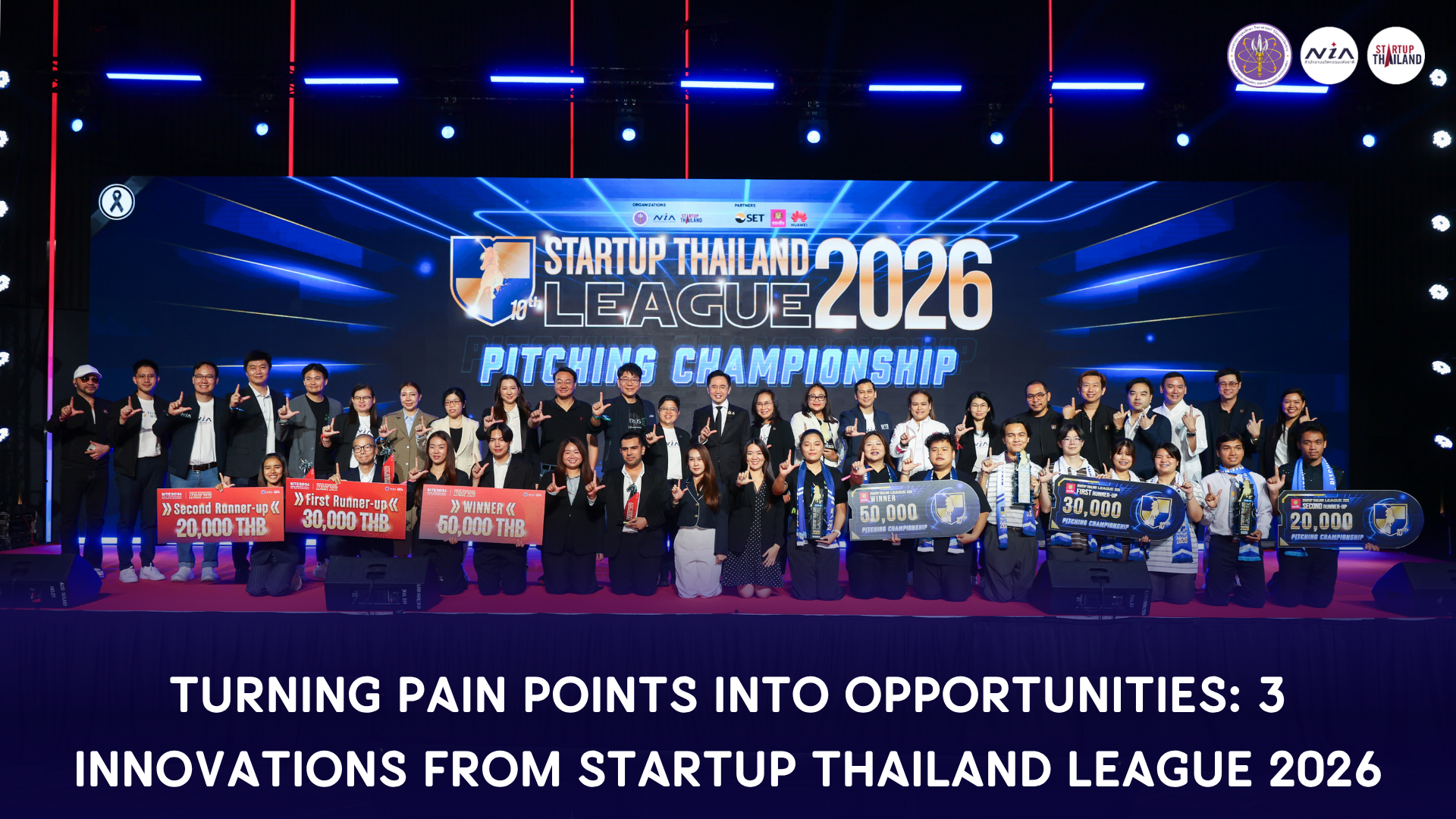
The three finalists highlighted below demonstrate how a new generation of innovators is creating fresh value for Thailand’s economy.
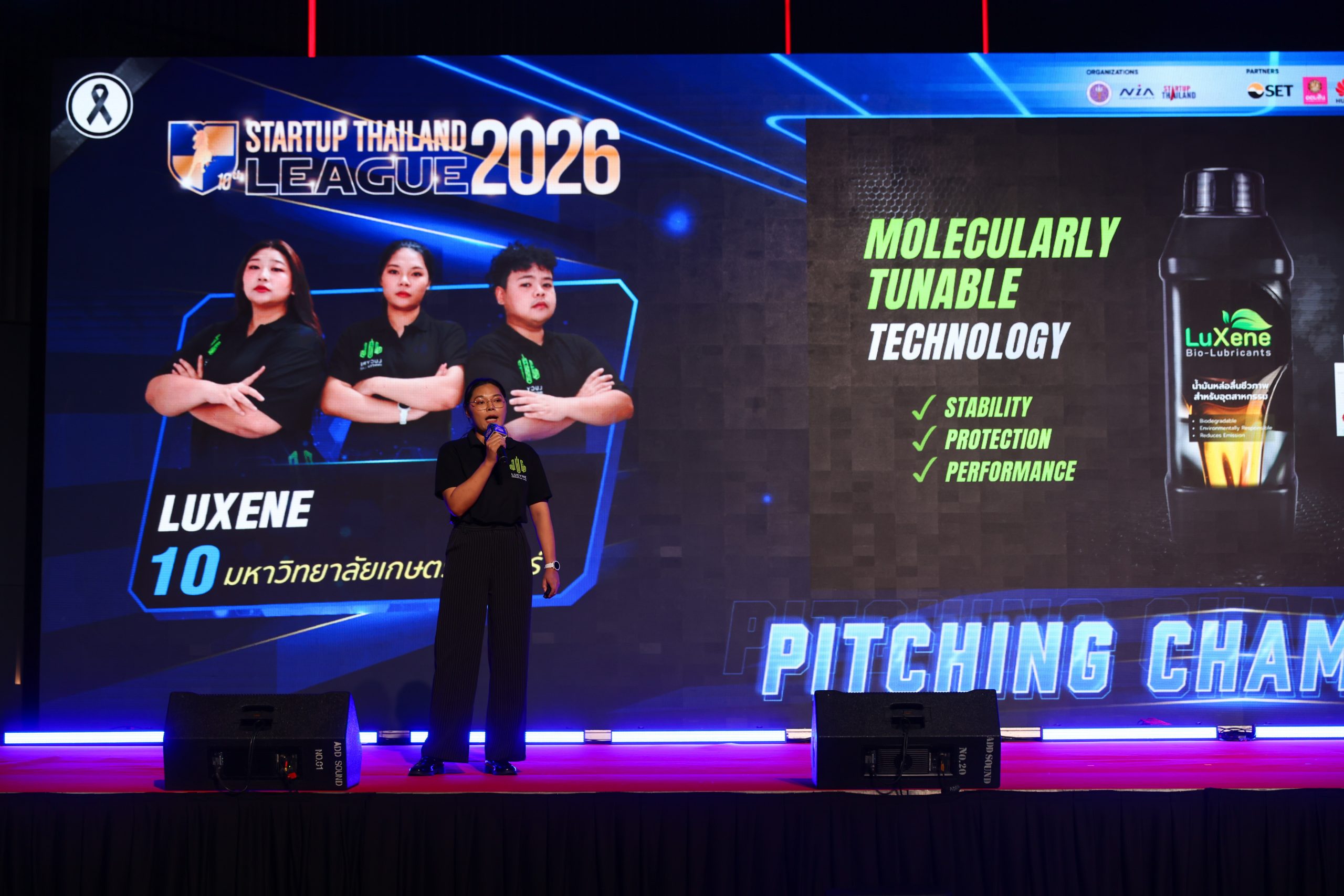
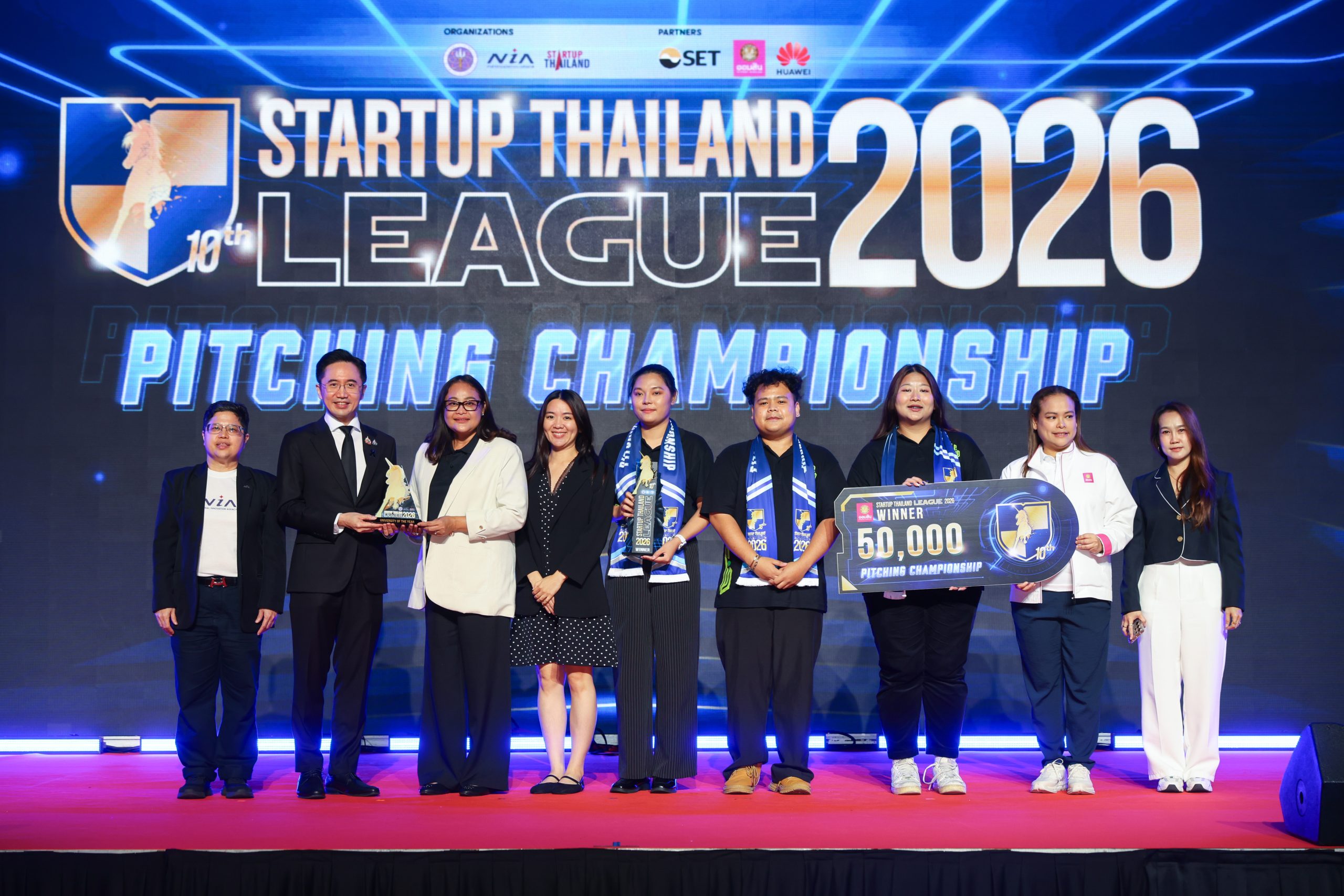
LuXene: Turning Waste into Lubrication for a Greener Industry
The first prize went to LuXene from Kasetsart University, a Deep Tech team developing bio-based industrial lubricants under a Waste-to-Value concept. Its mission is to transform industrial waste into high-value products.
Reducing dependence on fossil-based resources while lowering environmental impact has become a key priority for manufacturers. At the same time, lubricants remain essential to industrial production. LuXene addresses both challenges by converting lipid-based industrial waste—including materials derived from palm oil—into bio-based lubricants, initially focusing on cutting fluids for metalworking applications.
The team’s distinctive advantage lies in its use of molecular-level design to tailor lubricant properties for different machines and operating conditions. The resulting product also offers strong environmental benefits, with biodegradability of up to 69.2 per cent and a carbon footprint of less than 0.30 kilograms of carbon dioxide equivalent per litre—helping reduce the impact associated with petroleum-based lubricants.
LuXene is therefore more than an alternative lubricant. It is an example of how science and technology can unlock new value from existing resources—turning waste into raw materials and connecting university research with the needs of industry. This is precisely the kind of innovation that can help Thai manufacturing move towards greater efficiency and environmental responsibility.
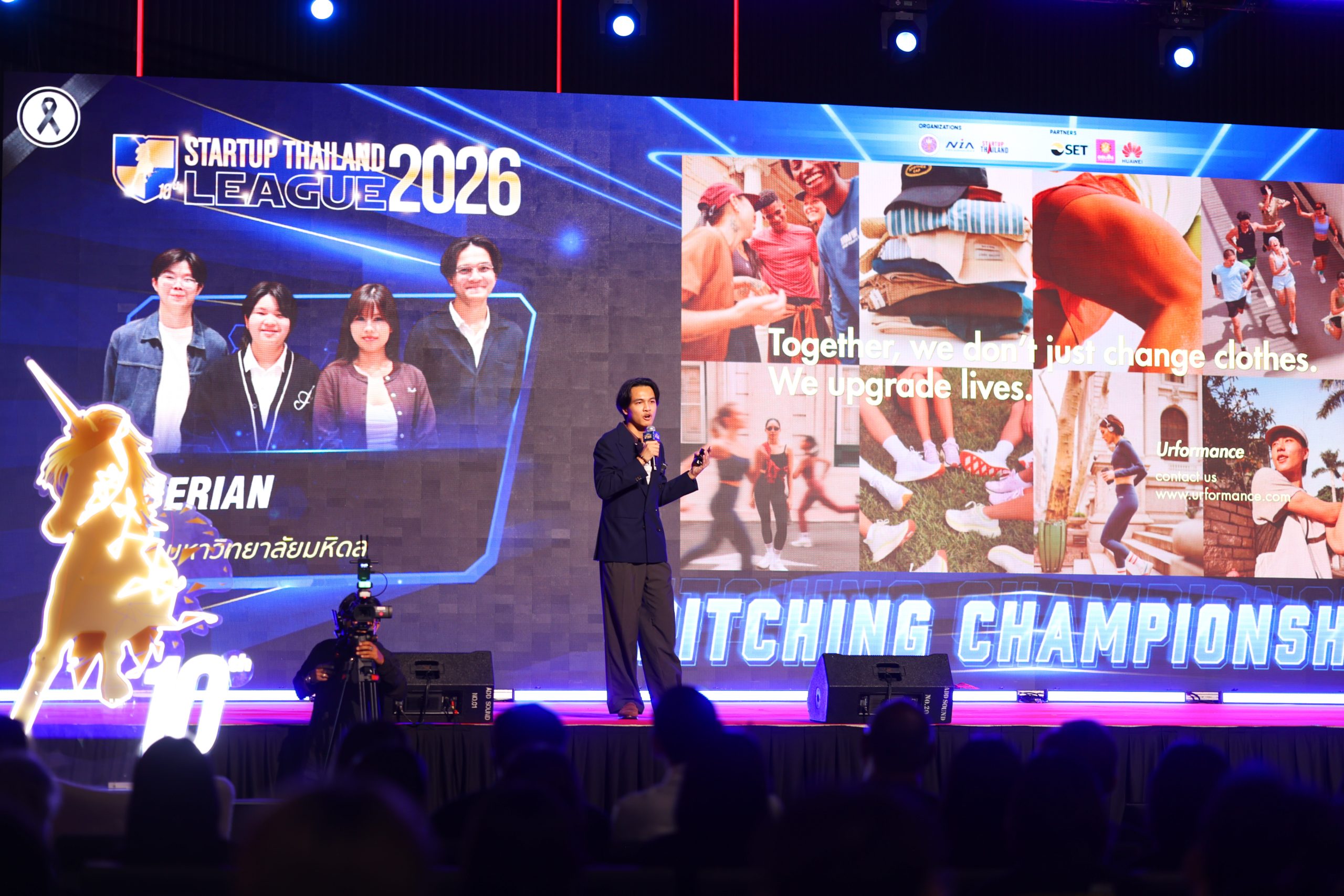
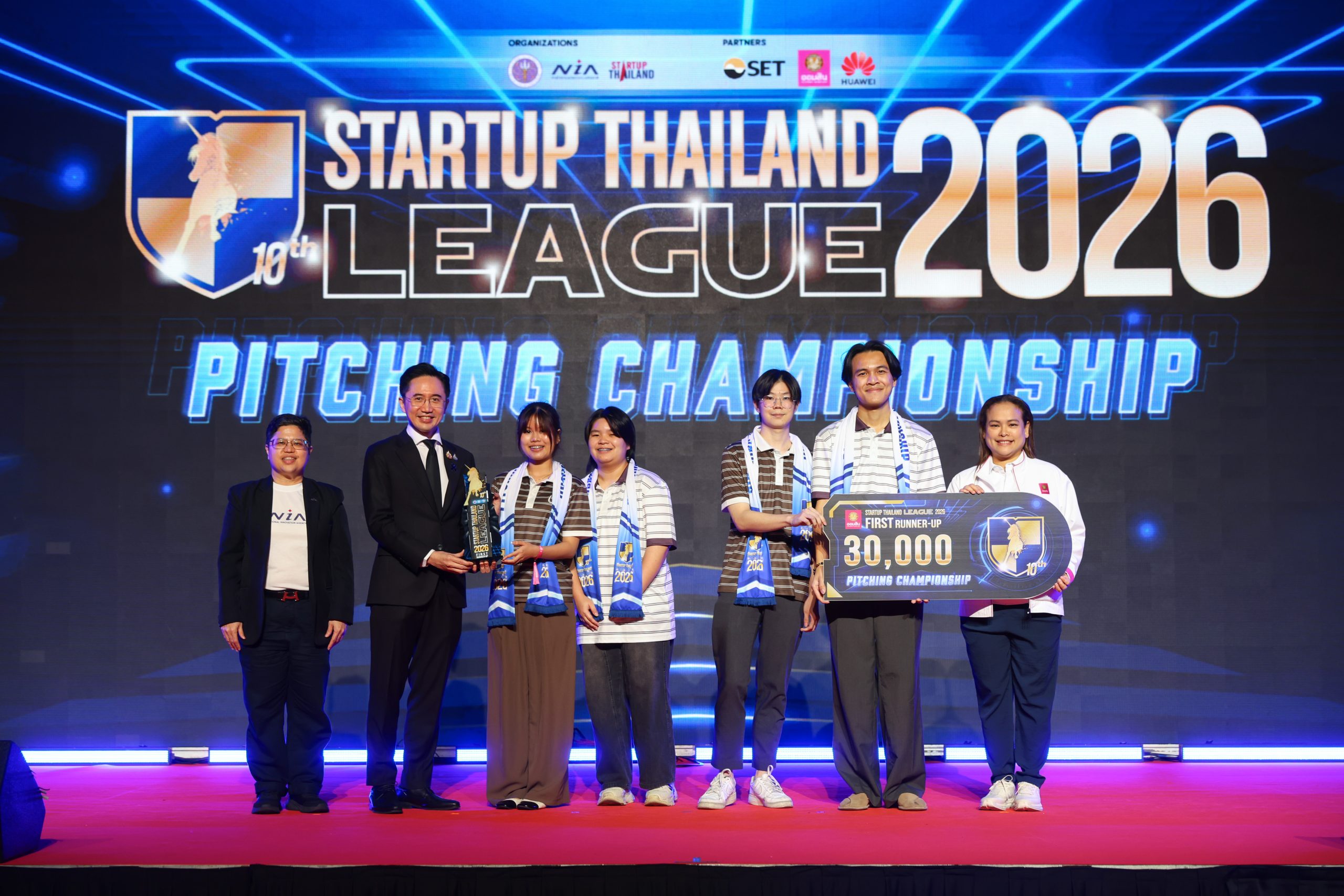
urformance: Textile Technology Designed for a Hot and Humid Climate
Another standout was Siberian from Mahidol University, whose project, urformance, received first runner-up honours. The team applied textile technology to develop clothing suited to Thailand’s hot, humid climate and the increasingly active lifestyles of modern consumers.
Heat and humidity often lead to sweat accumulation, discomfort and unpleasant odours. urformance addresses these issues through a two-layer fabric structure. One layer draws moisture away from the skin, while the other spreads the moisture and accelerates evaporation, helping the wearer stay drier and more comfortable.
The fabric also incorporates micro-encapsulated fragrance technology, releasing a scent through movement and friction. Additional features include UV protection, antibacterial properties and odour control, allowing the product to serve purposes beyond conventional sportswear.
The concept, “One Outfit All Day,” reflects a product design philosophy rooted in consumer behavior. The aim is to create clothing that can move seamlessly from a morning workout into the rest of the day.
At the same time, urformance demonstrates how research and textile science can differentiate Thai products, respond to local environmental conditions and add new value to the country’s textile industry.
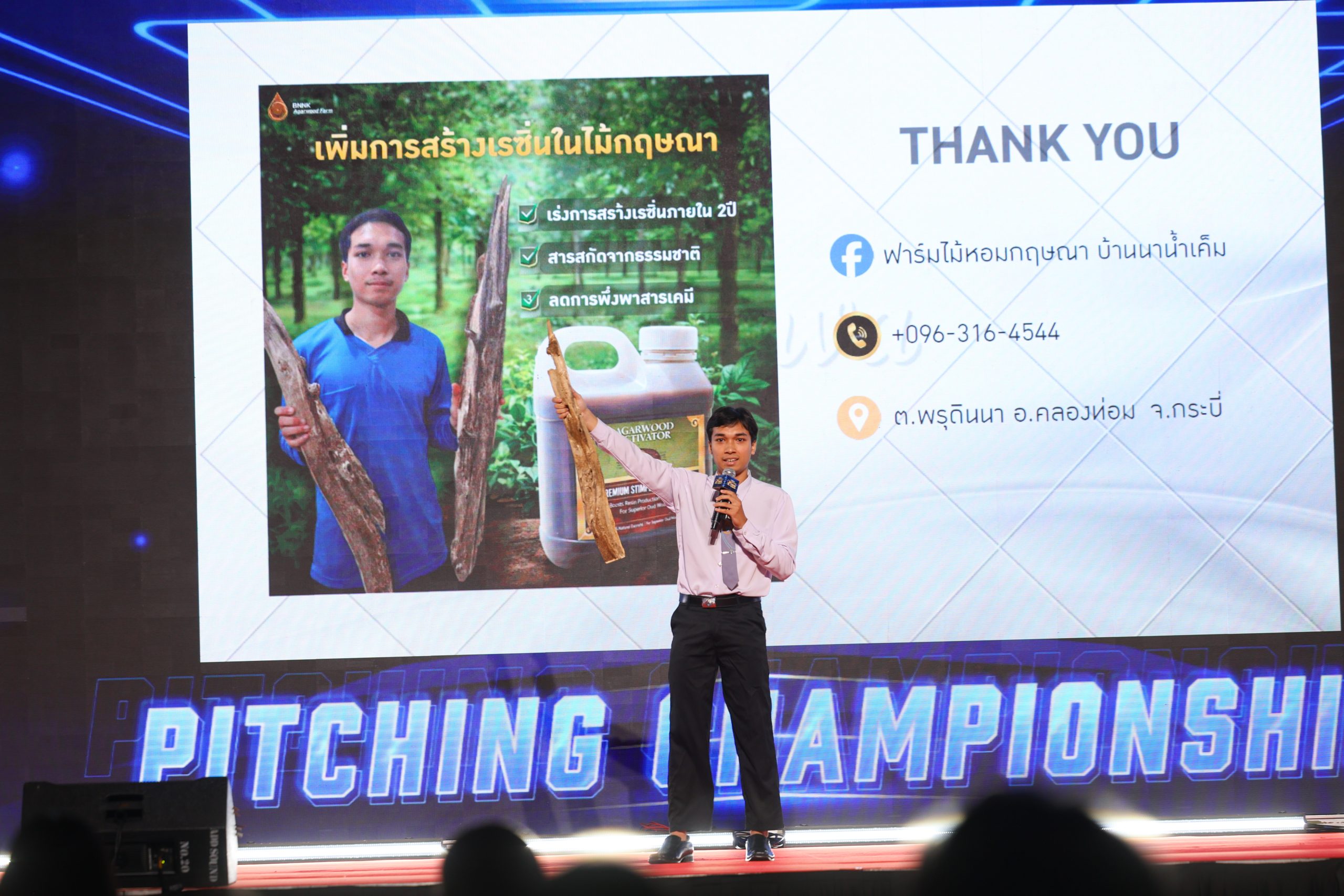
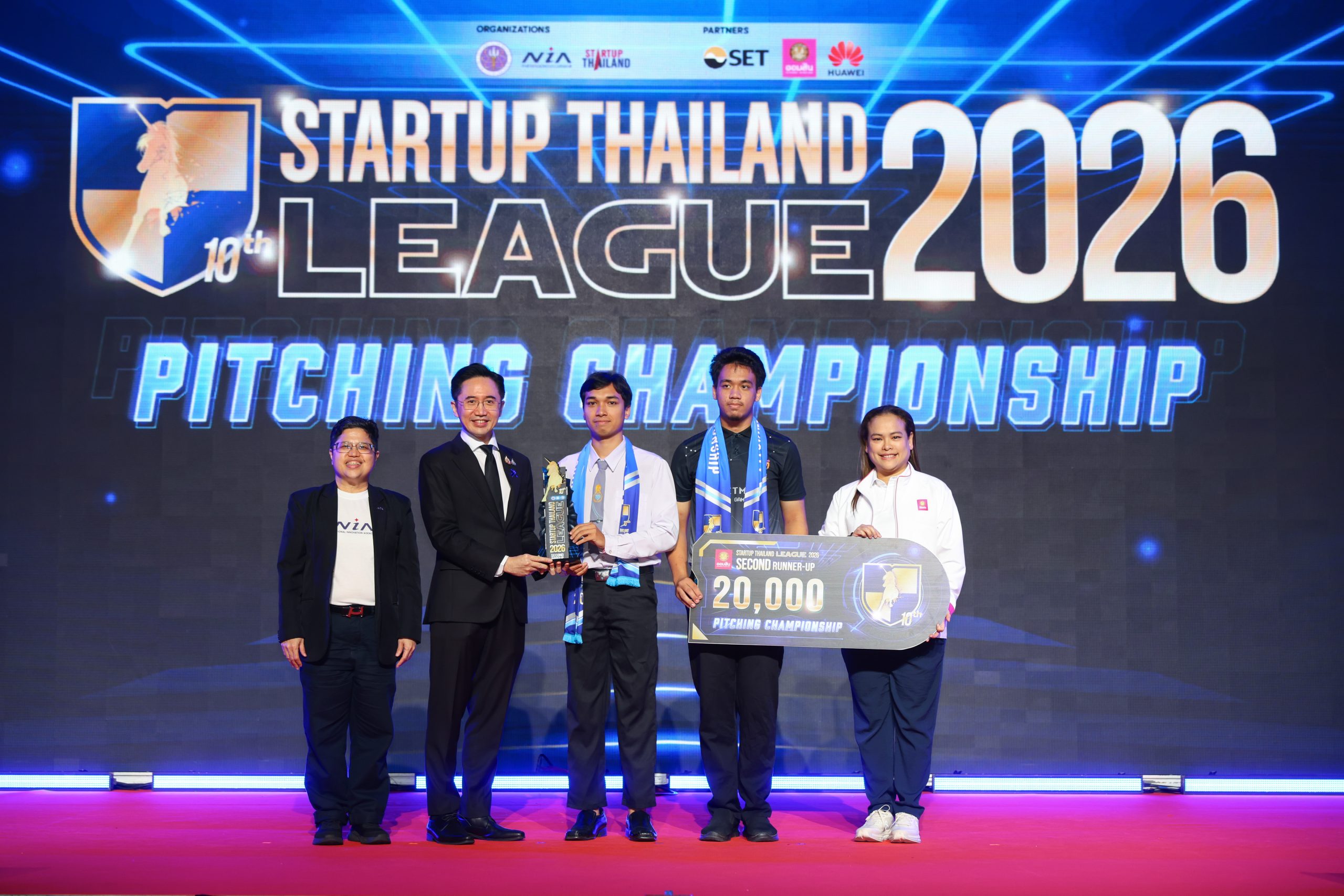
BNNK: Accelerating Agarwood Formation and Creating Greater Agricultural Value
The second runner-up award went to BNNK, the team behind Baan Na Nam Khem Agarwood Farm from Thaksin University. The team developed an agricultural technology designed to address one of the sector’s most significant challenges: the long time required to form agarwood heartwood.
Agarwood is a high-value agricultural product used in perfumes, incense and premium lifestyle products. However, natural heartwood formation can take as long as six to seven years, leaving farmers to bear the costs of cultivation and maintenance while waiting for their harvest.
BNNK has developed a resin-inducing agent that can reduce the formation period to approximately two years.
Beyond shortening the production cycle, the innovation focuses on preserving wood quality and improving product safety. It also supports more effective prediction of essential oil formation and heartwood quality, helping farmers manage production with greater confidence.
The result is not merely higher agricultural output. It is a reduction in time—a critical cost for farmers. Shorter production cycles can improve planning, strengthen income opportunities and support the cultivation of premium-quality agarwood for markets across Asia and the Middle East.
BNNK illustrates how technology can strengthen agriculture at its source without replacing local resources or erasing regional identity. Instead, it brings scientific knowledge into the equation to improve the efficiency and value of what farmers already have.
From Three Innovations to a New Vision for Thailand’s Economy
Although the three teams come from different disciplines and address different challenges, they share one defining characteristic: each transforms knowledge into new economic value.
LuXene demonstrates how Deep Tech can convert waste into products for a greener industrial economy.
urformanceshows how textile research can respond to both environmental conditions and changing consumer behavior.
BNNK illustrates how science can overcome agricultural constraints, improve productivity and create stronger income opportunities for farmers.
Together, the teams embody a powerful progression:
Knowledge → Innovation → Product → Business
This is at the heart of moving research from the laboratory into the marketplace. Innovation does not end with the creation of something new. Its true value lies in its ability to work in the real world, solve meaningful problems and generate economic and social impact.
The achievements of the Startup Thailand League 2026 therefore represent far more than the results of a competition. They reflect the potential of a new generation that is helping shape Thailand’s innovation-driven economy—one in which universities serve not only as sources of knowledge, but also as launchpads for entrepreneurs and businesses.
As Thailand faces intensifying competition driven by technological change, climate pressures and shifting economic structures, the ability to create value from knowledge will become increasingly important to the country’s competitiveness.
The three innovations emerging from the Startup Thailand League 2026 offer a clear reminder that meaningful change may begin closer than we think—within university campuses where young people are given the opportunity to turn ideas into innovations with real-world potential.
And when it comes to expanding into international markets, the starting point is not simply the question, “What can we sell in a new market?”
The more important question is:
“What problems is that market facing—and can our technology genuinely solve them?”