12

Building Tomorrow: How AI Is Empowering a New Generation of Thai Innovators

Building Tomorrow:

How AI Is Empowering a New Generation

of Thai Innovators

Why the Future of Thai AI is Human-Centric

For years, conversations surrounding artificial intelligence have been dominated by a familiar question: Will AI replace human jobs?

At the same time, many Thai startups have been wrestling with another concern of their own: Can we truly compete with global technology giants?

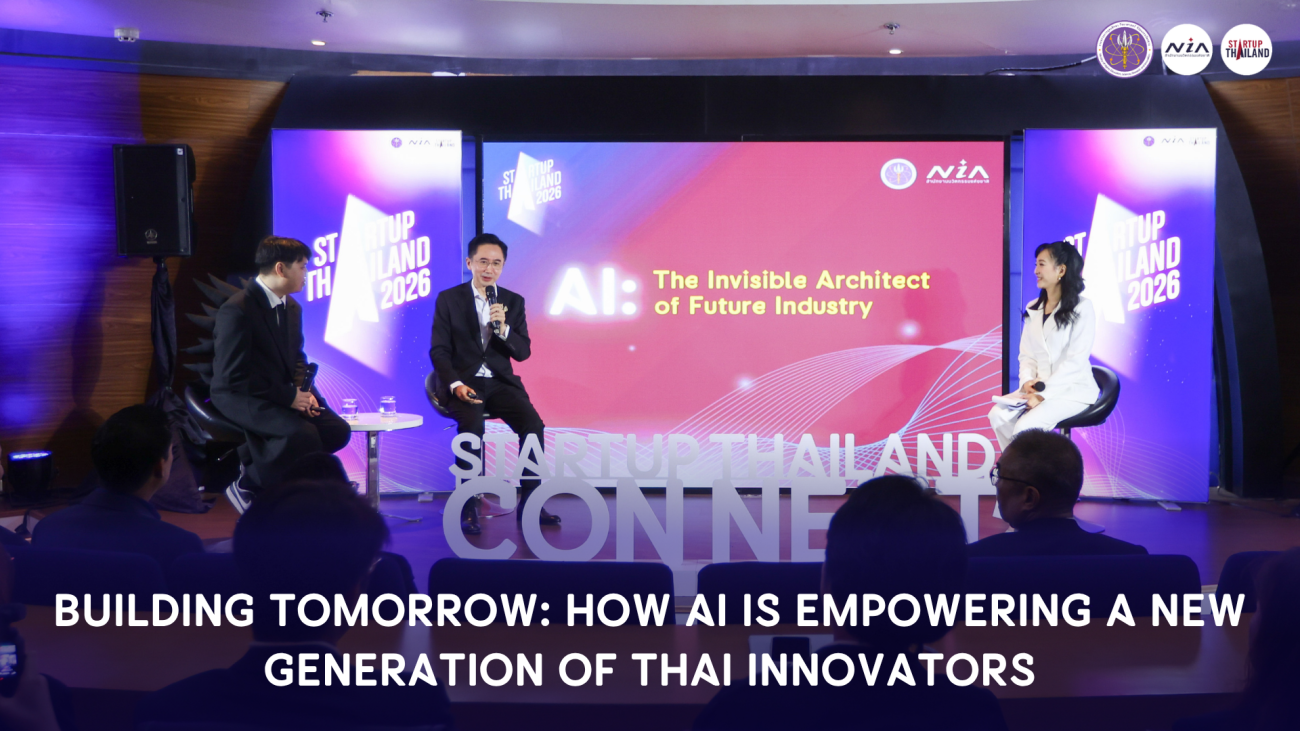
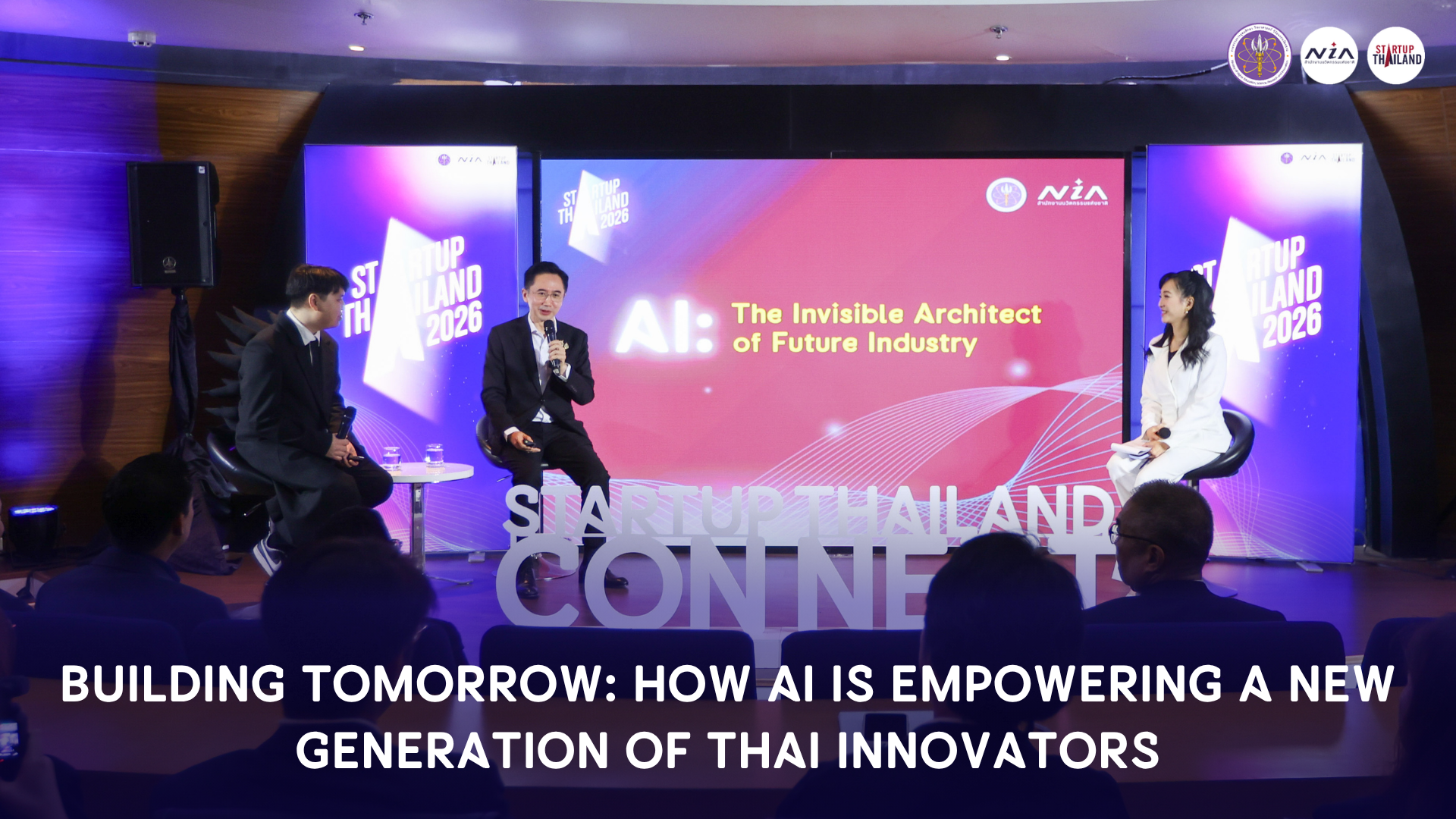
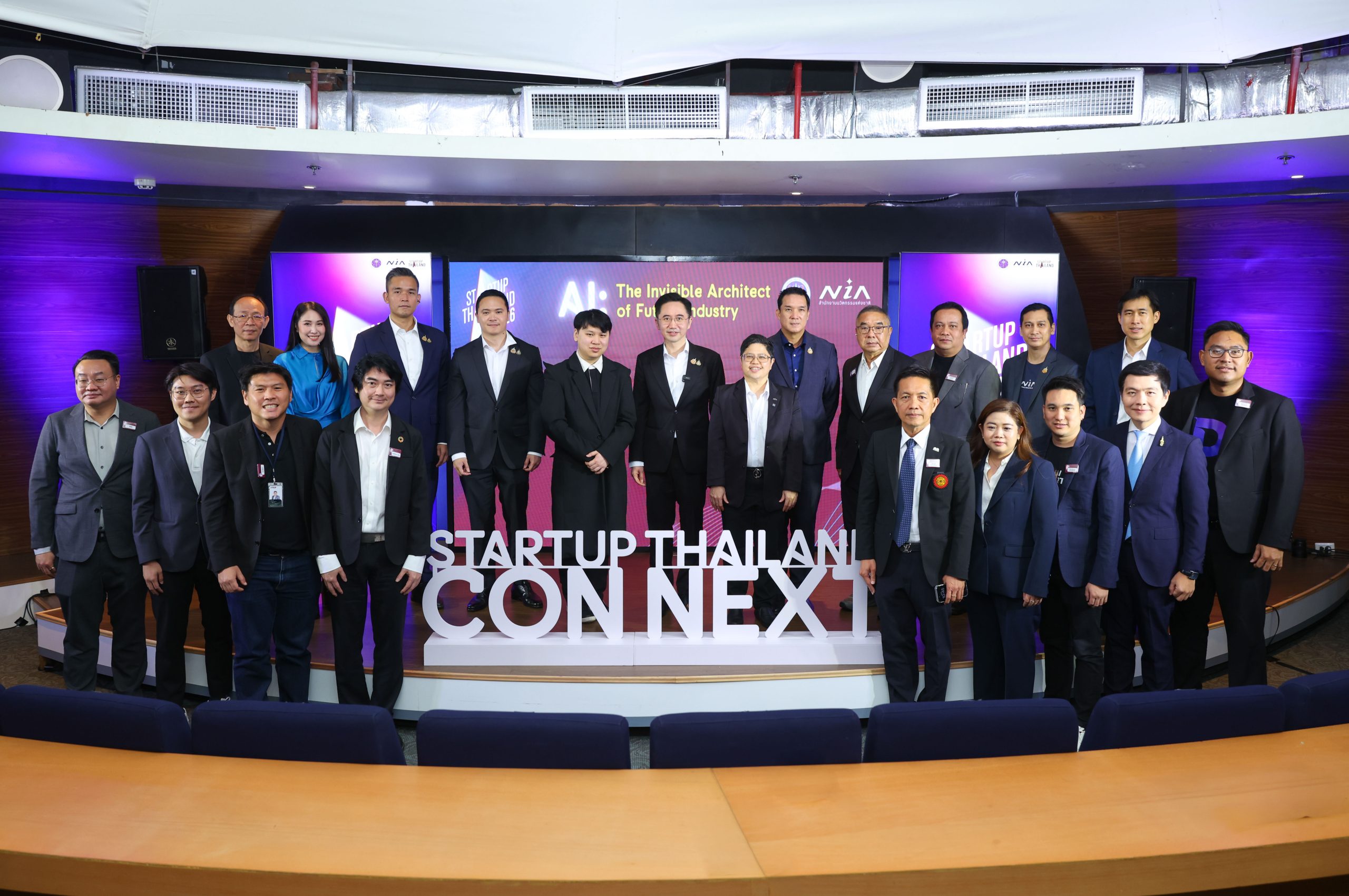
However, a recent panel discussion titled “AI: The Invisible Architect of Future Industry”—hosted by the National Innovation Agency (NIA) under the Ministry of Higher Education, Science, Research and Innovation (MHESI)—shifted the horizon. It invited us to view the future through a different lens: one where AI is not a ruthless competitor, but an invisible architect shaping tomorrow’s industries, economies, and human capabilities.

The compelling dialogue bet

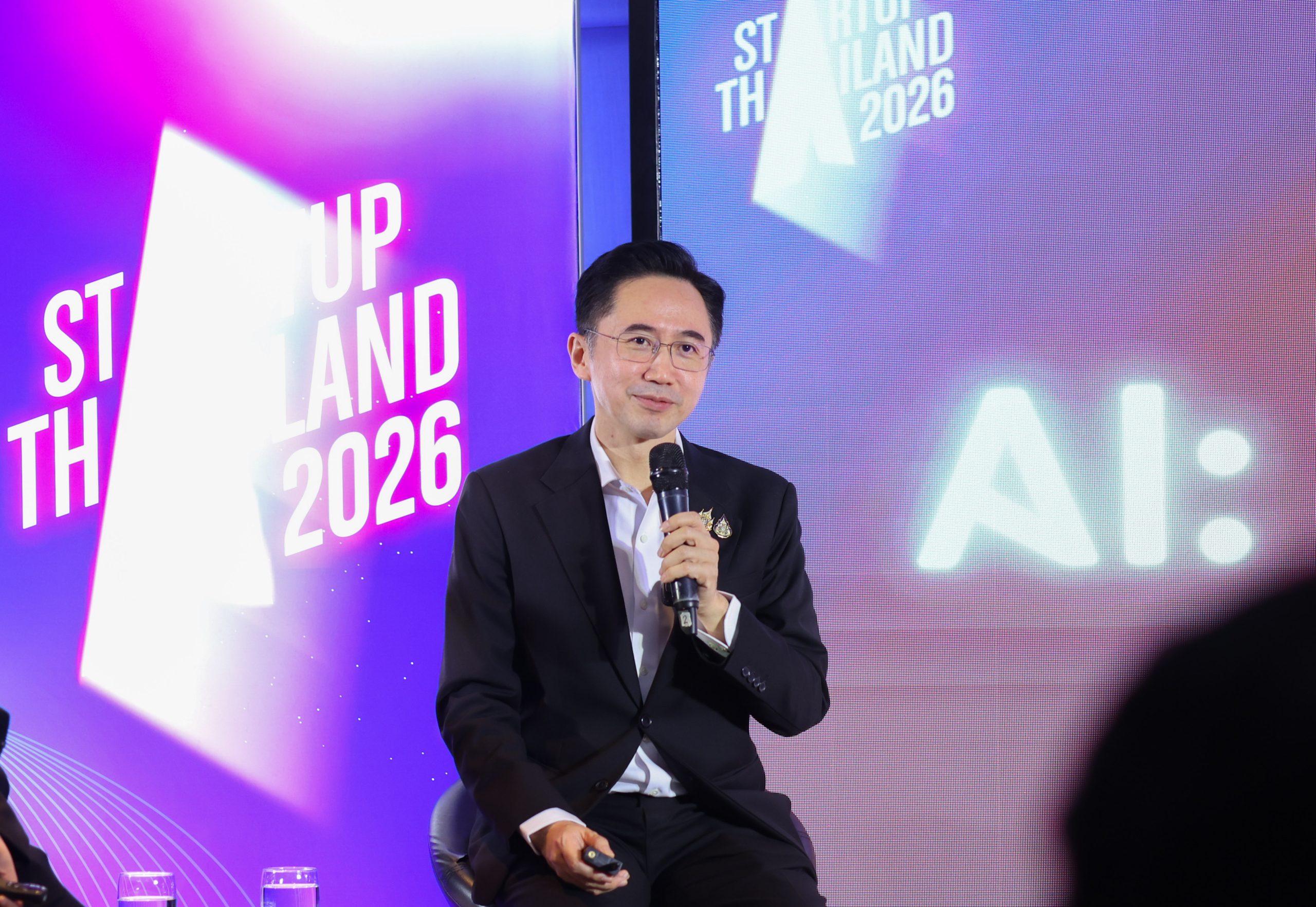
ween Dr. Yodchanan Wongsawat, the Minister of Higher Education, Science, Research and Innovation (MHESI) and “PP” Pat Pataranutaporn from the MIT Media Lab underscored a vital truth: Thailand’s long-term competitive edge lies neither in possessing the most resources nor the smartest AI. Instead, it resides in leveraging technology to amplify human potential and crafting innovations rooted in our unique national strengths.
From AI Substitution to Human Augmentation

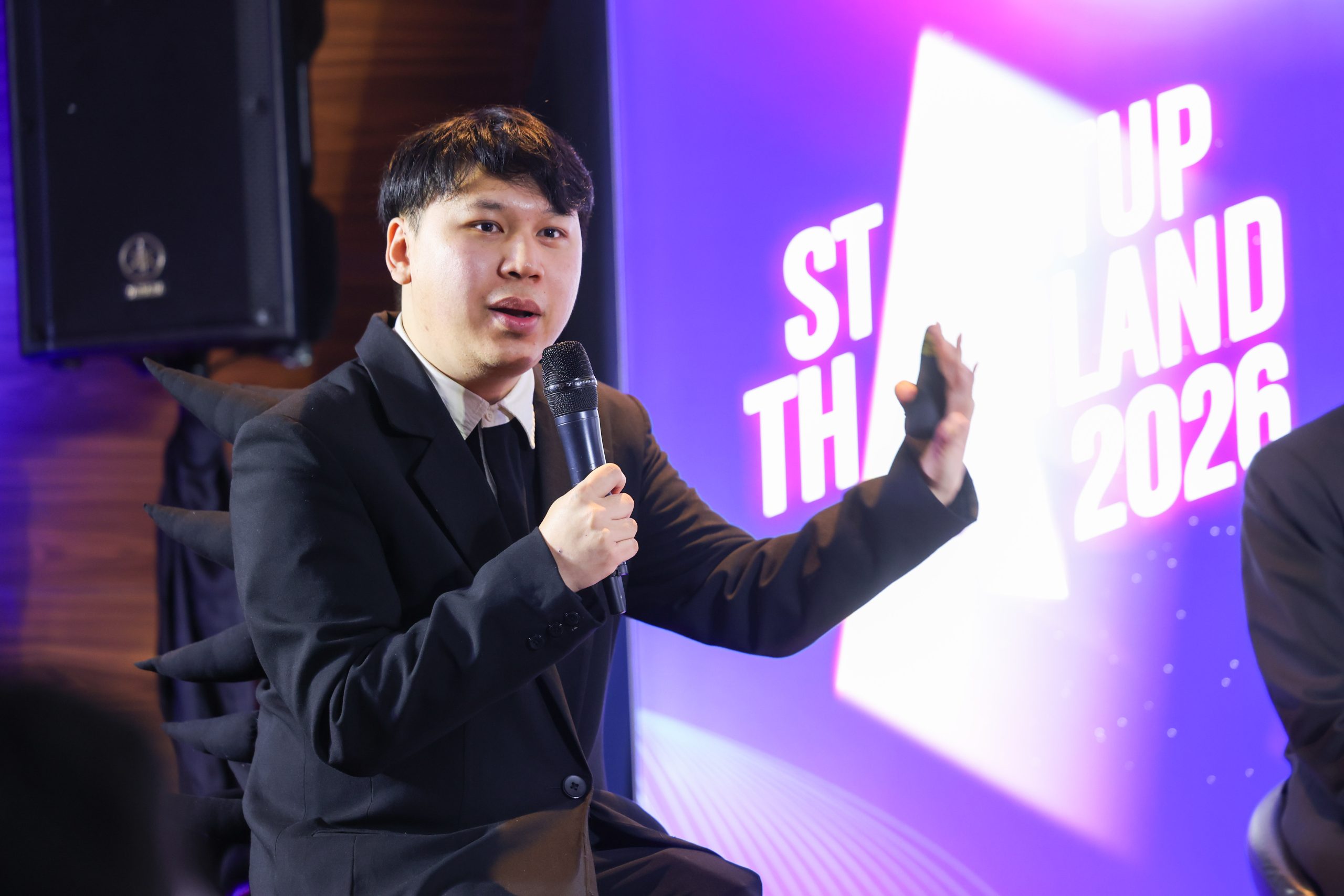
One of the most compelling ideas explored during the session was the shift from AI substitution to intelligence augmentation.

While the world races to make machines increasingly human—teaching them to understand language, emotions, and behavior—many organizations continue to design workplaces that reduce people to repetitive, machine-like tasks.

The challenge for future innovation, therefore, is not to create AI capable of replacing humans entirely. It is to design AI that helps people think more deeply, create more boldly, and unlock abilities that may otherwise remain dormant.

Around the world, pioneering research is already bringing this vision to life. Digital Twins, for example, allow individuals to explore potential future scenarios through virtual representations of themselves. AI Watchdogs are being developed to protect users from cyber threats and online deception. Though different in application, both share a common philosophy: AI should expand human capability, not diminish human relevance.

Game-Changing Innovations Begin in the Unknown

A compelling lesson shared from the MIT Media Lab traced the genesis of touchscreen technology.

Decades ago, the concept of interacting with a screen via fingertips was largely dismissed. Critics questioned its cleanliness, accuracy, and commercial viability. Today, touchscreens are seamless extensions of our daily lives and the foundation of a multi-billion-dollar digital economy.

This narrative illustrates a fundamental truth about DeepTech: world-changing research is rarely born to solve tomorrow’s revenue targets. It arises from a long-term vision that spots deep-seated problems and distant opportunities. For Thailand to ignite a new economic S-Curve, investing in advanced research and deep technology is non-negotiable, even if the dividends are not immediate.

The Shortcut for Thai DeepTech: Global Connectivity

The ultimate hurdle for DeepTech startups is resource scarcity—be it computing power, massive data infrastructure, or heavy capital. However, the panel offered a refreshing strategic shortcut: Thailand does not need to build everything from scratch.

The future role of the public sector is to act as a global super-connector. By bridging Thai entrepreneurs with international AI platforms, cutting-edge research tools, and global networks, the nation can bypass structural bottlenecks. In a hyper-connected world, competitive advantage belongs not to those who own everything, but to those who excel at orchestrating the right collaborations.
When Soft Power Becomes a DeepTech Advantage

If Thailand attempts to compete directly with global AI superpowers on their own terms—building massive language models or investing in hyperscale infrastructure—the playing field may remain uneven.

However, an entirely different opportunity emerges when advanced technology is combined with Thailand’s cultural capital, local wisdom, and creative identity.

This is where the concept of HT-AI (Heritage, Technology, Art and Innovation) becomes particularly compelling.

Whether through AI-powered preservation of cultural knowledge, immersive experiences in the creative industries, or the development of a wellness economy that blends biotechnology, health data, and Thailand’s holistic lifestyle traditions, these are areas where the country can create genuine differentiation.

In a world where technology itself is rapidly becoming commoditized, culture, context, and local knowledge may become the most valuable assets of all.

The Future Is Not About AI—It Is About People

Perhaps the most important takeaway from the discussion had little to do with technology itself.

Thailand’s future will not be determined by the number of servers it owns or the number of AI models it develops. It will be shaped by the quality of the people who grow up in an increasingly digital world.

Creating an ecosystem that encourages experimentation, supports research, provides access to global knowledge, and protects intellectual property will be essential to nurturing the next generation of innovators and change makers.

Ultimately, AI may not replace humanity.

Instead, it may become one of the most powerful tools ever created to help people discover what they are truly capable of.

And for Thai startups, the defining question may no longer be “What can AI do?”

But rather:

“What kind of future can we create with AI—for Thailand and for the world?”
Explore more perspectives and insights from the discussion:

IPT2026-002 Global Startup Hub 2026-3

When Profits Aren’t Enough: Redefining Growth Through the Lens of Thai GreenTech Pioneers

When Profits Aren’t Enough:

Redefining Growth Through

the Lens of Thai GreenTech Pioneers

When Data and Emissions Dictate New Metrics of Success

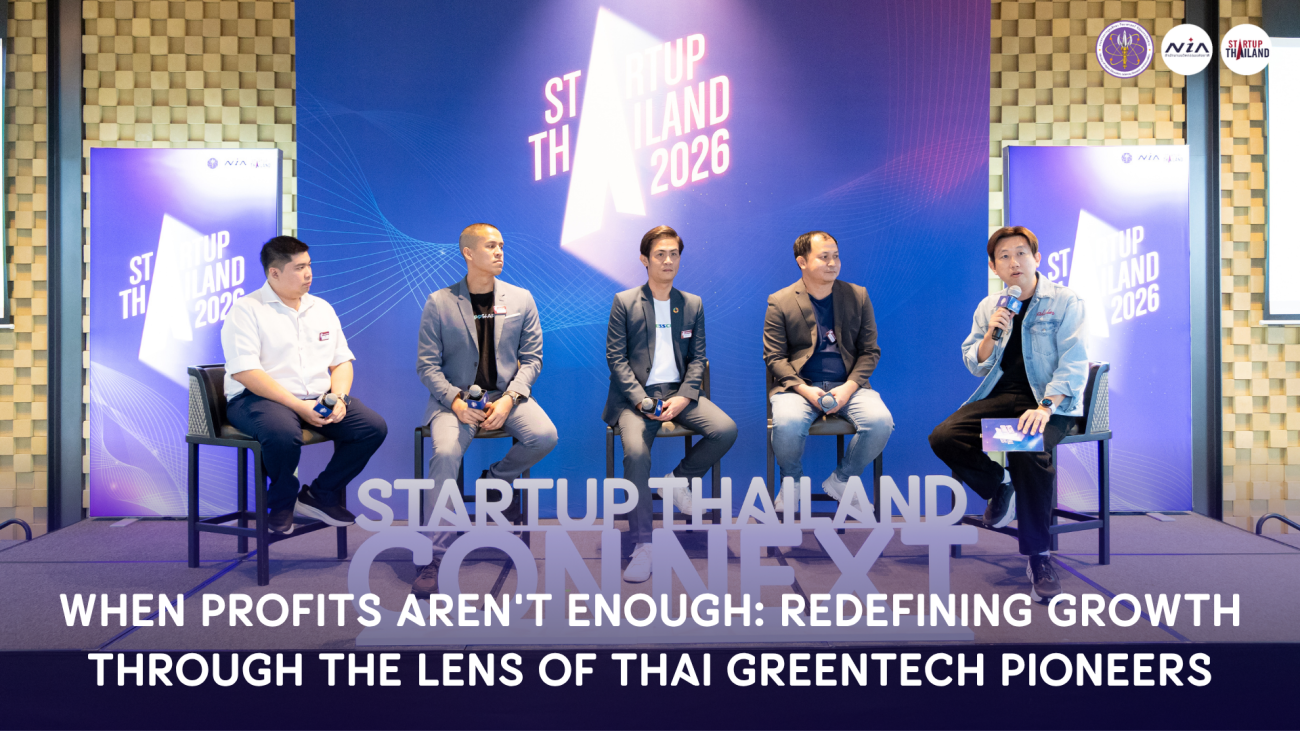
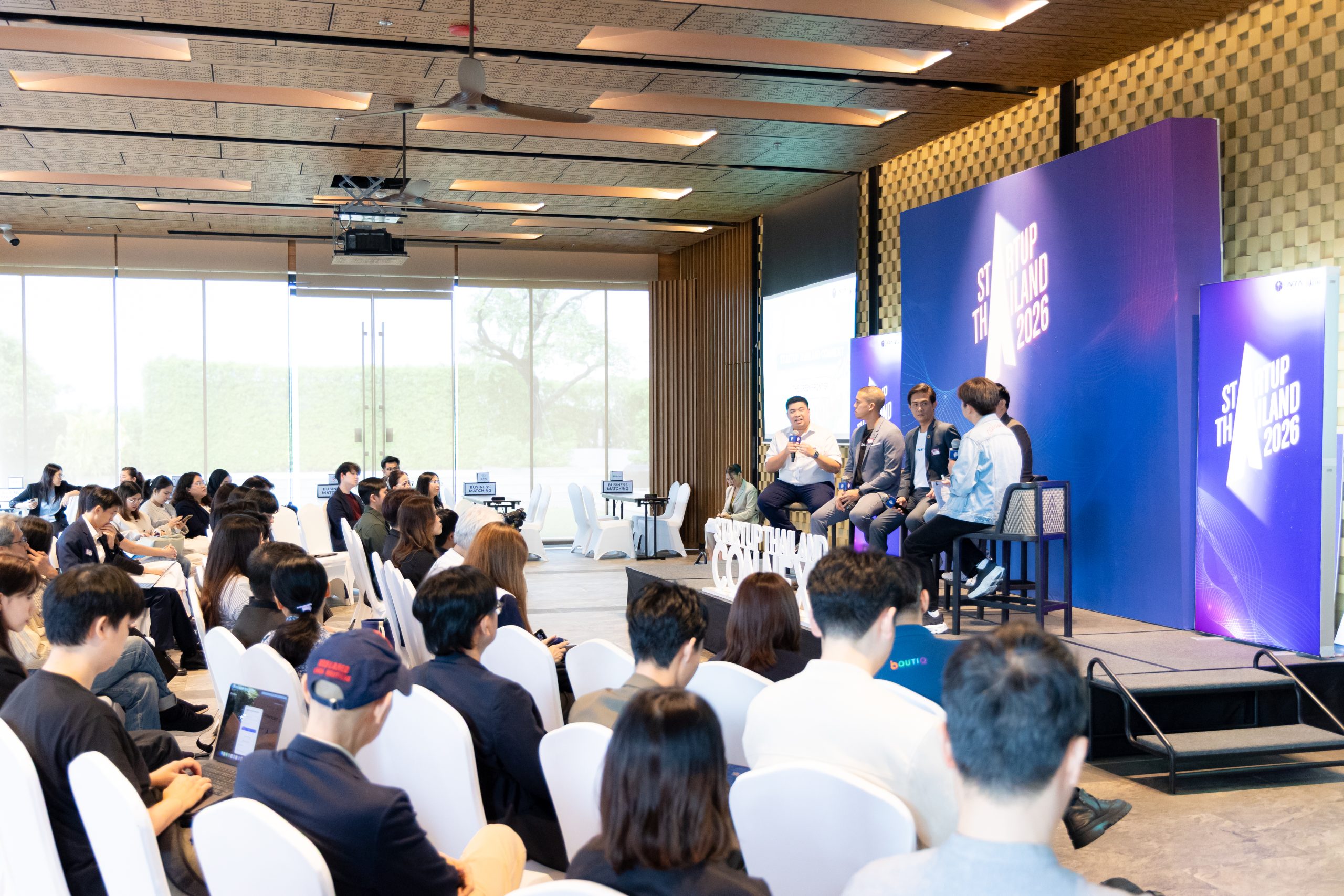
At the recent panel discussion, “Redefining Growth – GreenTech Startups Leading the Change” hosted by the Global Startup Hub 2026, Ruchvuth Pichayapan  (Founder of Fixzy) kicked off the session with a striking revelation: the sheer abundance of data around us—from personal health biometrics to visible pollution metrics like PM 2.5—has effectively shattered the old adage, “ignorance is bliss.” Today, data brings clarity, and clarity demands action.

The same reality applies to the corporate playground. Data has permeated every facet of business, elevating competition beyond mere tech adoption to the strategic mastery of data. The goal is no longer just about cutting unseen costs but driving environmental and social sustainability simultaneously. In this session, four visionary Thai GreenTech startups stepped onto the stage to share their real-world, tangible solutions.

SEMPLY: Visualizing the Invisible to Slash Energy Costs in Real-Time

When it comes to volatile industrial expenses, fluctuating electricity bills and catastrophic machine downtime are a business owner’s worst nightmares. Addressing this, Vichit Polsungnoen  from SEMPLY introduced a game-changing energy and smart building management platform.

By integrating solar rooftops, battery storage, EV chargers, and machinery operations into a single, cohesive dashboard, SEMPLY transforms abstract electricity data into intuitive, real-time visuals. Executives no longer must wait for the dreaded end-of-month bill to react; they can intercept anomalies instantly.

For instance, SEMPLY uncovered a mystery for a client whose power consumption spiked predictably between 3:00 PM and 4:00 PM daily. By cross-referencing the data, the system revealed that as daylight faded and solar output dropped, a heavy-duty machine simultaneously hit its peak operation. This insight allowed the business to proactively shift its operational schedule, successfully curbing costs before they happened.

Merlinium: Predictive Maintenance and the Smart Sensors That Know Before It Breaks

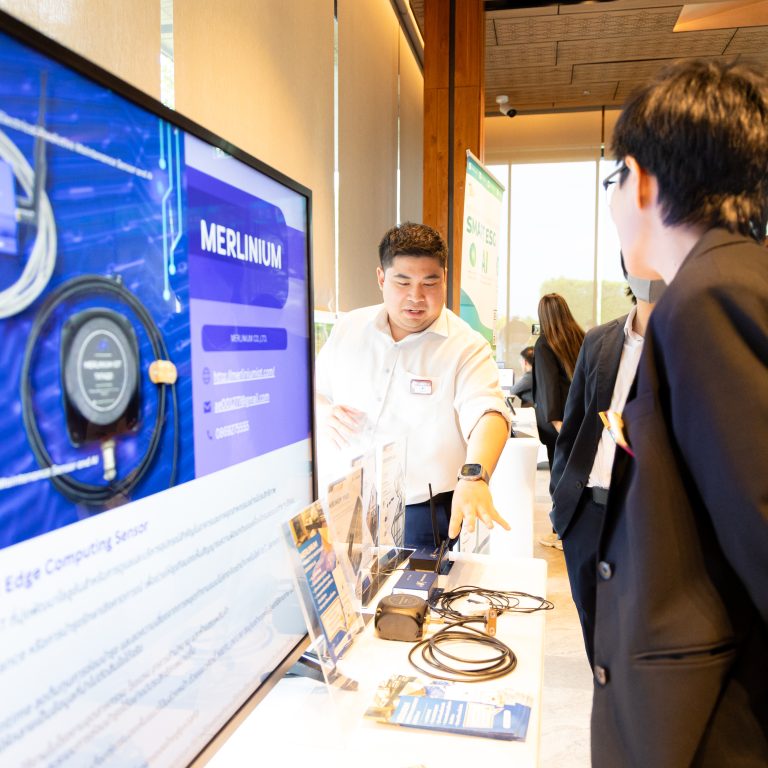
Addressing physical operational vulnerabilities, Narucha Amorndit from Merlinium showcased the power of advanced semiconductor technology coupled with Predictive Maintenance. Merlinium tackles machine failure at the source by developing intelligent edge modules that empower on-site sensors to process data faster and deeper.

Gone are the days of waiting through six months of data collection, only for the machine to break down anyway. This ultra-fast processing shortens the machine’s behavioral learning curve, transmitting only essential data to minimize bandwidth costs.

As a result, factory owners gain foresight into which components are straining or wearing out. Maintenance can then be seamlessly scheduled during scheduled downtime. This not only eliminates the risk of costly production halts but also prevents the excess energy drain caused by degrading machinery.

GEPP Sa-Ard: Turning Floor-by-Floor Waste Data into Actionable Corporate Strategy

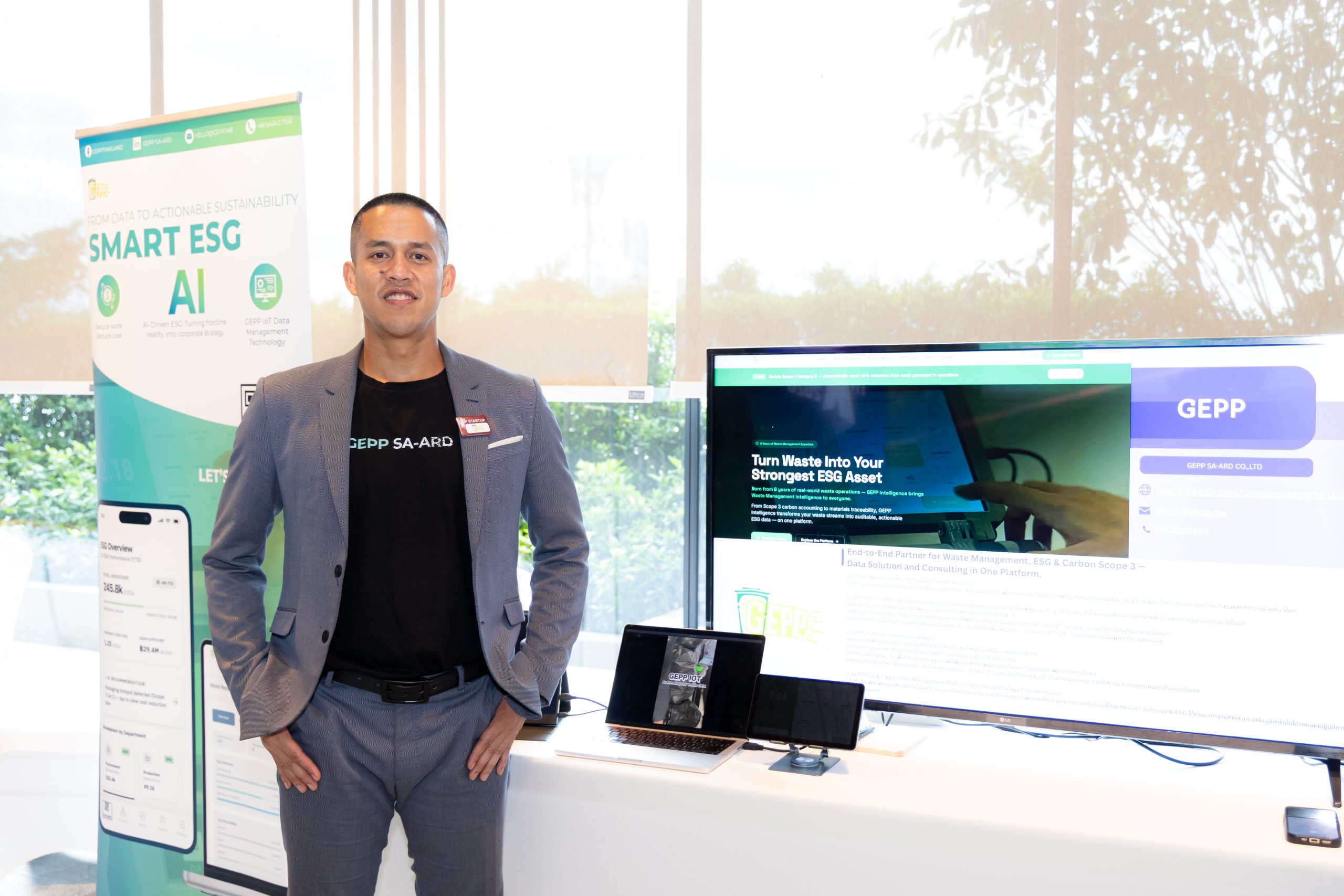
Beyond energy and hardware, “waste” represents a massive, often invisible environmental cost—one that is increasingly scrutinized under global frameworks like Scope 3 emissions within supply chains. Dome Boonyanurak from GEPP Sa-Ard notes that a great data system is defined entirely by its real-world utility.

To bridge the gap, GEPP Sa-Ard developed flexible IoT hardware, such as smart waste scales, paired with intuitive software designed for frontline workers. This setup allows corporate headquarters to track waste metrics down to the exact floor, inspiring targeted policy shifts.

A prime example is a major corporate headquarters in Bangkok. By analyzing GEPP Sa-Ard’s data, they discovered that the pantry zone generated the most waste, and zero recycling was taking place due to restrictive vendor contracts. Armed with this insight, management restructured the contract to make vendors accountable for their own waste. This fairly distributed the burden of waste management costs—which have skyrocketed fourfold—while transforming sporadic eco-campaigns into a natural part of daily operations.

NICHA CCUS: Flipping Carbon from a Costly Liability to a Circular Revenue Stream

While carbon reduction is traditionally viewed as an expensive compliance burden, Pakorn  Intathep from NICHA CCUS turned the narrative on its head. He proved that carbon can become a lucrative revenue stream.

NICHA’s proprietary Carbon Capture, Utilization, and Storage (CCUS) technology captures carbon directly from industrial exhaust stacks and converts it into a stable carbonate solution for localized use. This includes soil enrichment, wastewater treatment, or the manufacturing of low-carbon concrete. By deploying this process directly on-site, logistics costs are eliminated, slashing overall operational expenses to just one-third of traditional systems.

Furthermore, in partnership with PTT Group, NICHA is exploring marine restoration through ocean alkalization to combat ocean acidity. This pioneering initiative creates immense value by generating premium-grade carbon credits—brilliantly turning an environmental crisis into a circular financial windfall.


The Strategy of “Data & AI”: Answering the Tough Questions on Accuracy

During the session, moderator Ratchawoot posed a crucial, often uncomfortable question: “When clients ask exactly how accurate your AI or IoT is, and how many months they have to wait for results, how do you answer?” While many stumble here, these four GreenTech pioneers offered masterclasses in advanced data handling:

  • NICHA CCUS employs molecular-level AI analysis (mole-to-mole) to evaluate carbon saturation points precisely, translating the data into an exact cost-per-kilowatt matrix.
  • SEMPLY tackles the fragmented energy market by organizing disparate data standards into unified structural patterns. This allows AI to learn faster, driving highly accurate and rapid predictive forecasts.
  • GEPP Sa-Ard emphasizes that the best data is usable data. Their systems are designed to make the frontline staff’s jobs easier without adding burdens, blending hard data with human intuition to foster genuine behavioral change.
  • Merlinium shatters the traditional six-month data collection barrier through Edge Computing. By allowing sensors to calculate data instantly on-site, threats are neutralized long before a catastrophic breakdown occurs, while significantly reducing cloud data costs.

The Domino Effect: What Happens to Thai Businesses That Ignore Data Over the Next 3–5 Years?

To illustrate the stakes,Ruchvuth posed a hypothetical scenario: If a traditional service business—like a home repair company—chooses to ignore carbon footprints, skip smart sensors, and avoid recycling, relying solely on good craftsmanship, can it survive?

The panel’s collective response painted a stark reality for those resistant to change:

  1. A Severe Loss of Competitiveness: No business operates in a vacuum; every company is a link in someone else’s value chain. As multinational corporations mandate strict carbon accounting, businesses without verifiable data will find themselves abruptly dropped from vendor lists.
  2. Sunk Costs and Financial Penalties: With energy prices rising and regional neighbors like Malaysia already enforcing energy conservation laws and Carbon Taxes, inaction will turn carbon into a pure financial liability. Meanwhile, proactive competitors will monetize their carbon through credit trading.
  3. Obsolescence via Predictive Ecosystems: The world is shifting from a “break-and-fix” culture to a “predict-and-prevent” model. Modern technicians armed with real-time data will service systems before the client even realizes a fault exists. Traditional businesses waiting around for a service call will simply find their market share gone.

The Blueprint for Survival: Quick Wins in the Sustainability Arena

In a cooling global economy, ESG compliance has shifted from a marketing luxury to a lean operational necessity. Data analytics and intelligent sensors are no longer optional—they are the tools required to survive.

For businesses seeking a “Quick Win,” the panel unanimously recommended starting with energy monitoring and management. It requires the lowest barrier to entry and yields immediate, undeniable returns reflected on the very first month’s utility bill.

The Final Takeaway

Growth in the modern business era is no longer measured solely by short-term profits. True leadership lies in the strategic deployment of data to optimize costs while stewarding the planet.

Every business is an interconnected link in a global value chain. Embracing ESG frameworks today—before they become rigid legal mandates—empowers companies to discover hidden cost savings and unlock entirely new revenue streams. By treating energy efficiency as a starting point, Thai entrepreneurs can collectively accelerate the nation toward its Net Zerogoals. Ultimately, sustainability will not be a burden; it will be the very armor that safeguards and sustains Thai businesses in the global market of tomorrow.