13

Building Tomorrow: How AI Is Empowering a New Generation of Thai Innovators

Building Tomorrow:

How AI Is Empowering a New Generation

of Thai Innovators

Why the Future of Thai AI is Human-Centric

For years, conversations surrounding artificial intelligence have been dominated by a familiar question: Will AI replace human jobs?

At the same time, many Thai startups have been wrestling with another concern of their own: Can we truly compete with global technology giants?

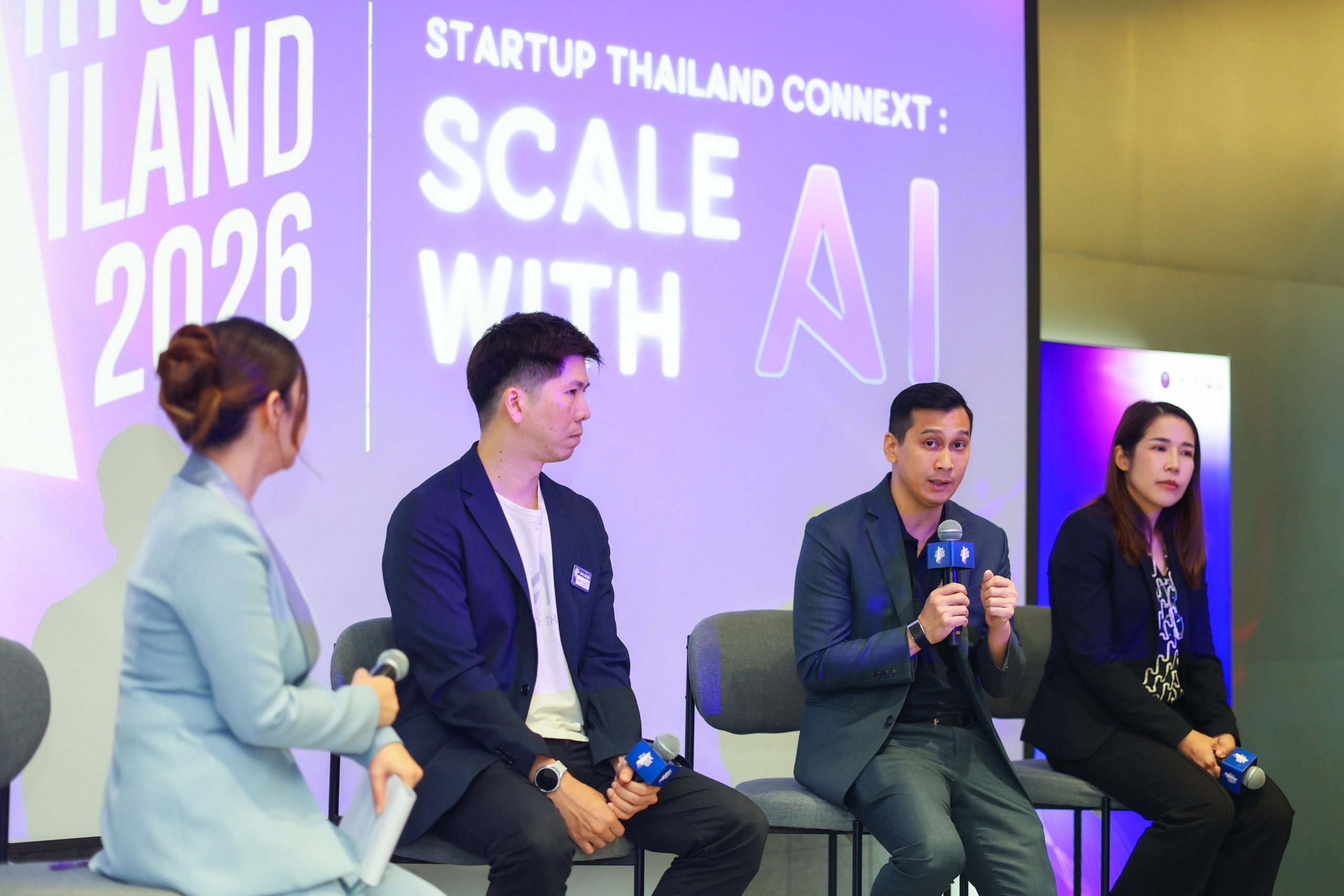
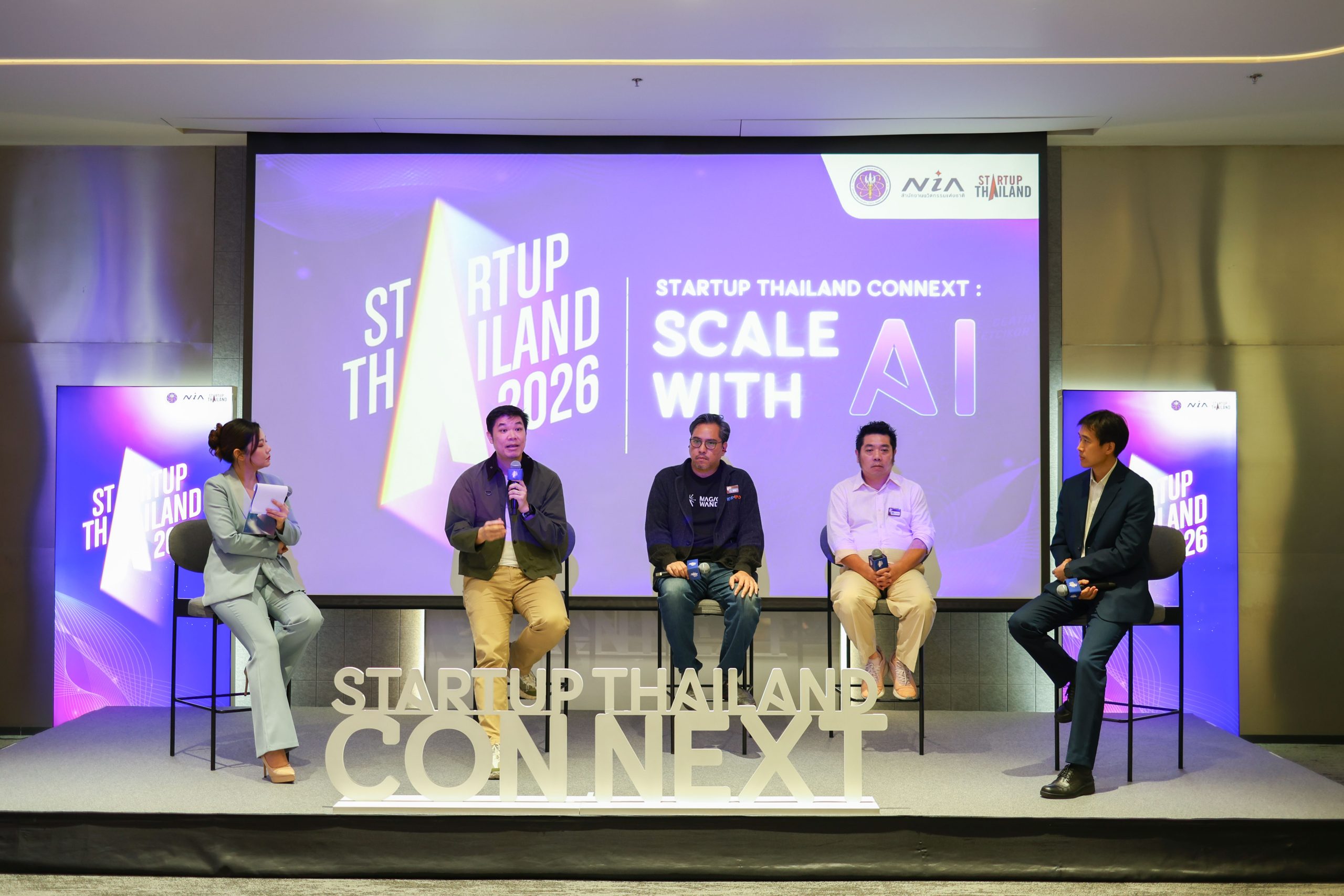
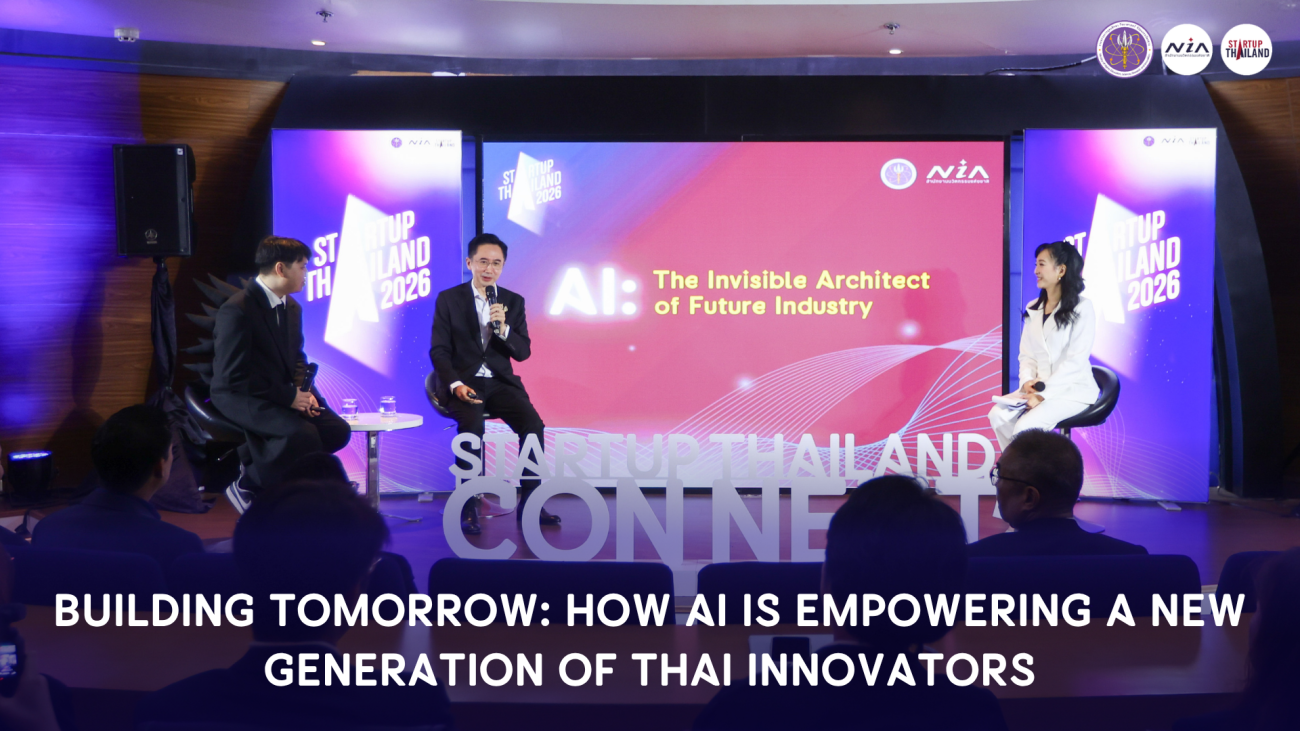
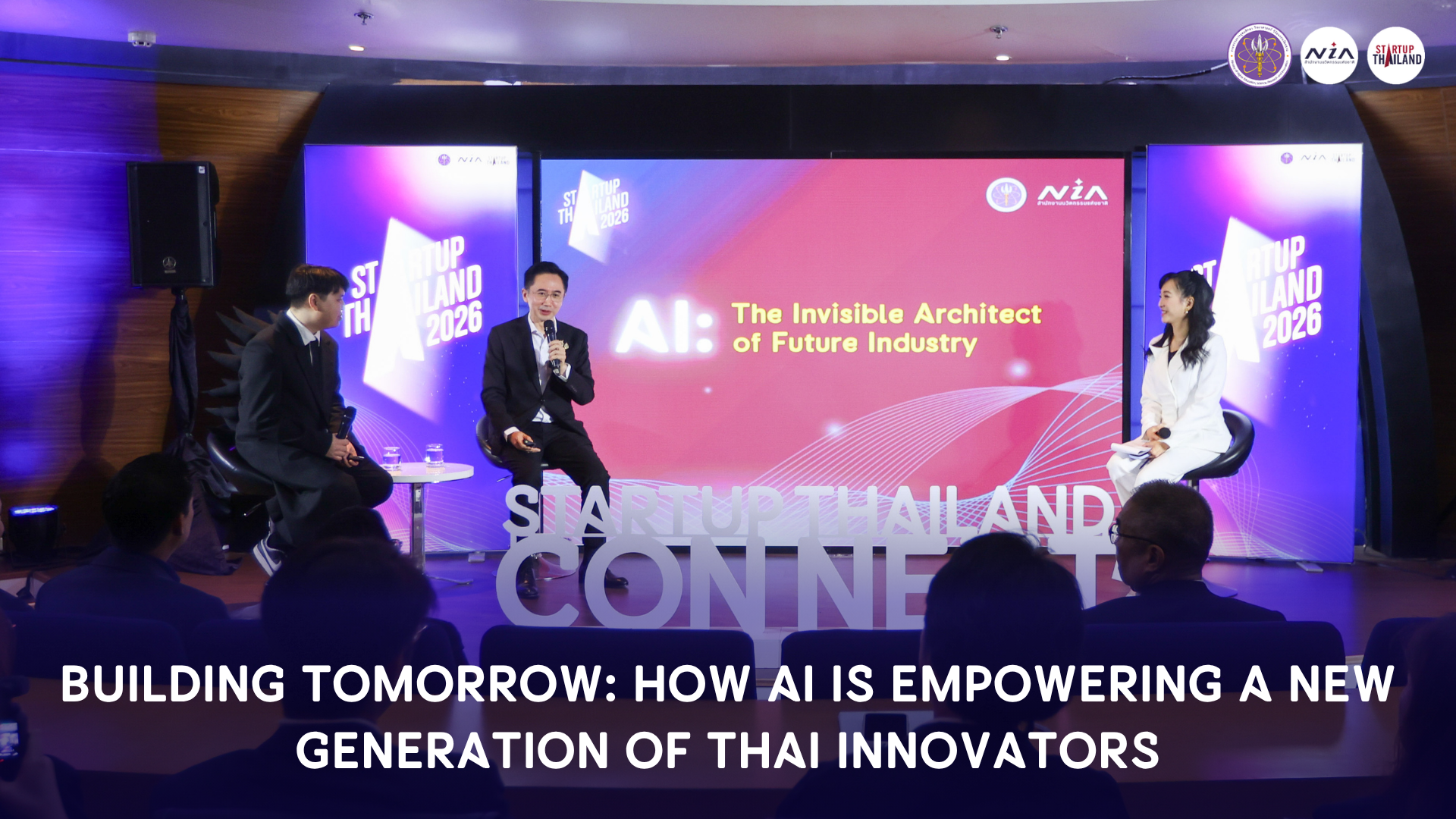
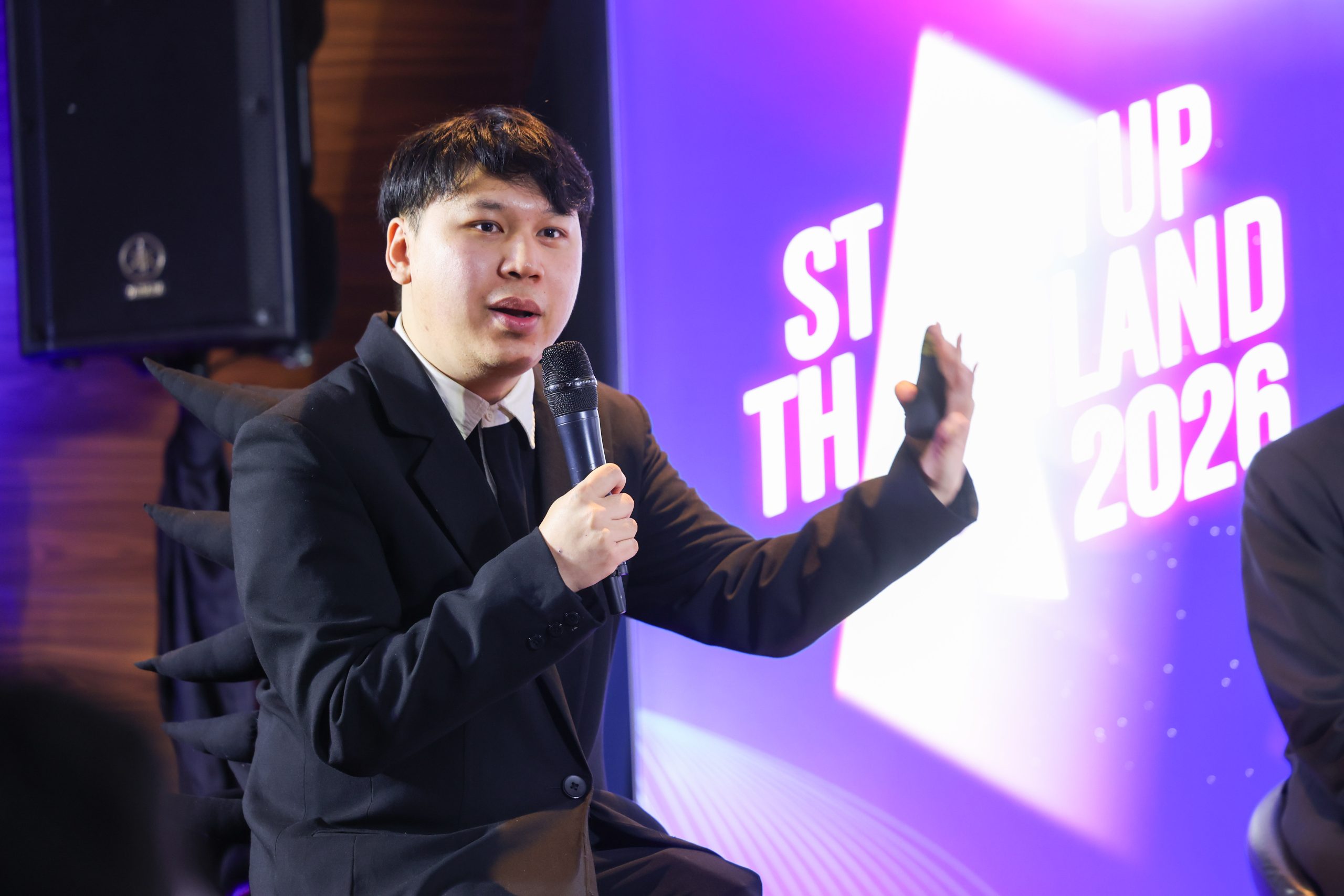
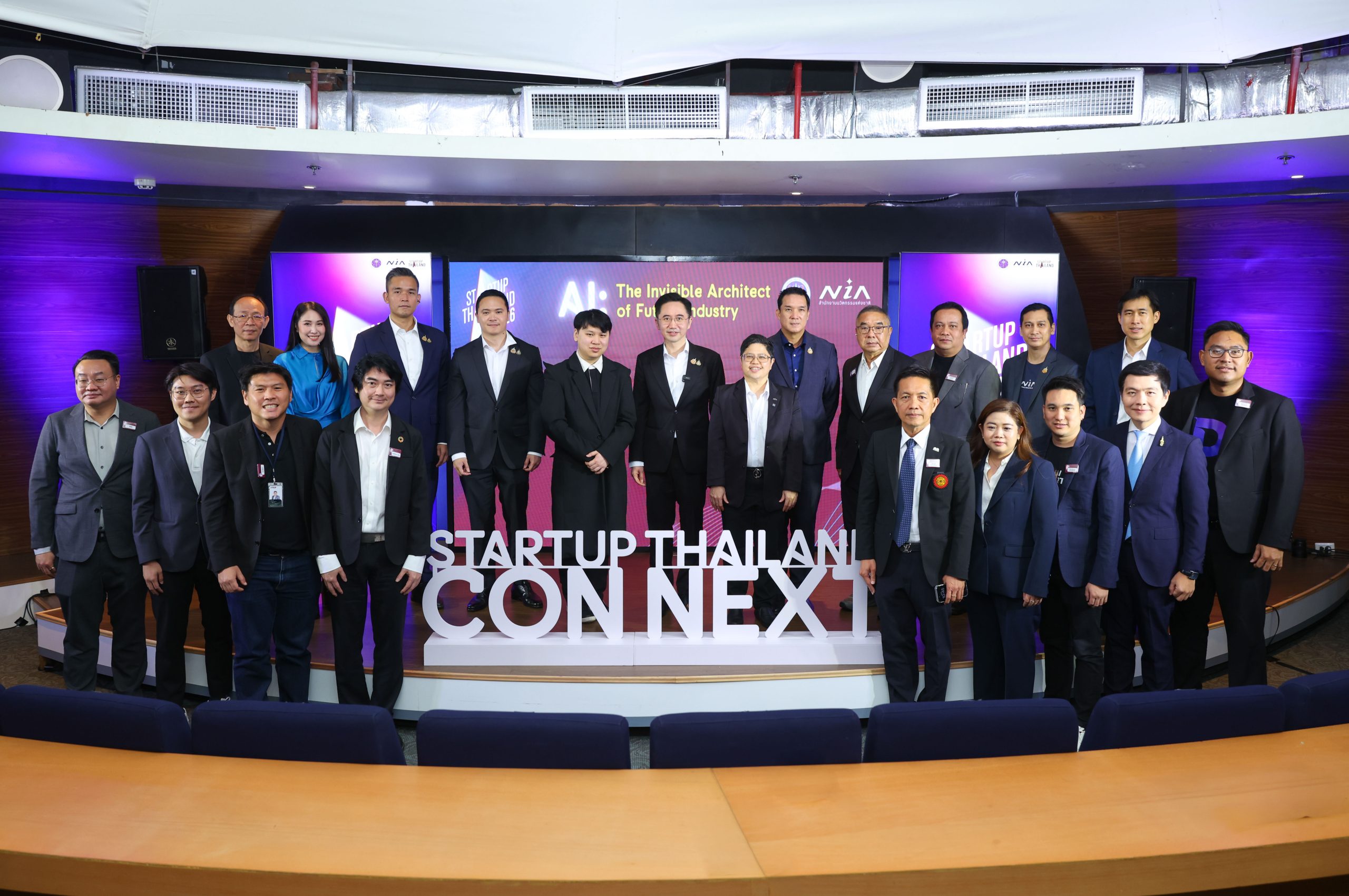
However, a recent panel discussion titled “AI: The Invisible Architect of Future Industry”—hosted by the National Innovation Agency (NIA) under the Ministry of Higher Education, Science, Research and Innovation (MHESI)—shifted the horizon. It invited us to view the future through a different lens: one where AI is not a ruthless competitor, but an invisible architect shaping tomorrow’s industries, economies, and human capabilities.

The compelling dialogue bet

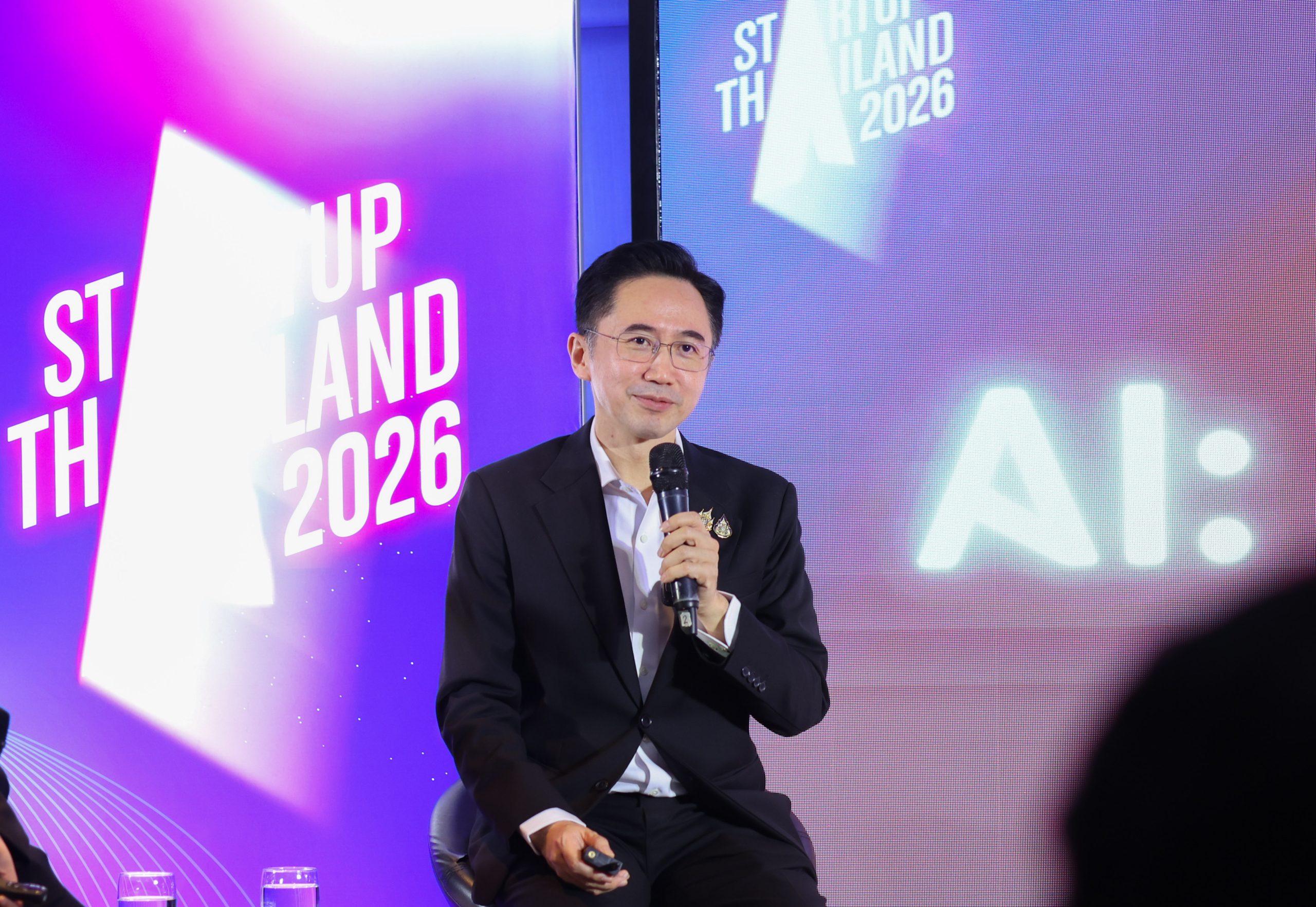
ween Dr. Yodchanan Wongsawat, the Minister of Higher Education, Science, Research and Innovation (MHESI) and “PP” Pat Pataranutaporn from the MIT Media Lab underscored a vital truth: Thailand’s long-term competitive edge lies neither in possessing the most resources nor the smartest AI. Instead, it resides in leveraging technology to amplify human potential and crafting innovations rooted in our unique national strengths.

From AI Substitution to Human Augmentation

One of the most compelling ideas explored during the session was the shift from AI substitution to intelligence augmentation.

While the world races to make machines increasingly human—teaching them to understand language, emotions, and behavior—many organizations continue to design workplaces that reduce people to repetitive, machine-like tasks.

The challenge for future innovation, therefore, is not to create AI capable of replacing humans entirely. It is to design AI that helps people think more deeply, create more boldly, and unlock abilities that may otherwise remain dormant.

Around the world, pioneering research is already bringing this vision to life. Digital Twins, for example, allow individuals to explore potential future scenarios through virtual representations of themselves. AI Watchdogs are being developed to protect users from cyber threats and online deception. Though different in application, both share a common philosophy: AI should expand human capability, not diminish human relevance.

Game-Changing Innovations Begin in the Unknown

A compelling lesson shared from the MIT Media Lab traced the genesis of touchscreen technology.

Decades ago, the concept of interacting with a screen via fingertips was largely dismissed. Critics questioned its cleanliness, accuracy, and commercial viability. Today, touchscreens are seamless extensions of our daily lives and the foundation of a multi-billion-dollar digital economy.

This narrative illustrates a fundamental truth about DeepTech: world-changing research is rarely born to solve tomorrow’s revenue targets. It arises from a long-term vision that spots deep-seated problems and distant opportunities. For Thailand to ignite a new economic S-Curve, investing in advanced research and deep technology is non-negotiable, even if the dividends are not immediate.

The Shortcut for Thai DeepTech: Global Connectivity

The ultimate hurdle for DeepTech startups is resource scarcity—be it computing power, massive data infrastructure, or heavy capital. However, the panel offered a refreshing strategic shortcut: Thailand does not need to build everything from scratch.

The future role of the public sector is to act as a global super-connector. By bridging Thai entrepreneurs with international AI platforms, cutting-edge research tools, and global networks, the nation can bypass structural bottlenecks. In a hyper-connected world, competitive advantage belongs not to those who own everything, but to those who excel at orchestrating the right collaborations.

When Soft Power Becomes a DeepTech Advantage

If Thailand attempts to compete directly with global AI superpowers on their own terms—building massive language models or investing in hyperscale infrastructure—the playing field may remain uneven.

However, an entirely different opportunity emerges when advanced technology is combined with Thailand’s cultural capital, local wisdom, and creative identity.

This is where the concept of HT-AI (Heritage, Technology, Art and Innovation) becomes particularly compelling.

Whether through AI-powered preservation of cultural knowledge, immersive experiences in the creative industries, or the development of a wellness economy that blends biotechnology, health data, and Thailand’s holistic lifestyle traditions, these are areas where the country can create genuine differentiation.

In a world where technology itself is rapidly becoming commoditized, culture, context, and local knowledge may become the most valuable assets of all.

The Future Is Not About AI—It Is About People

Perhaps the most important takeaway from the discussion had little to do with technology itself.

Thailand’s future will not be determined by the number of servers it owns or the number of AI models it develops. It will be shaped by the quality of the people who grow up in an increasingly digital world.

Creating an ecosystem that encourages experimentation, supports research, provides access to global knowledge, and protects intellectual property will be essential to nurturing the next generation of innovators and change makers.

Ultimately, AI may not replace humanity.

Instead, it may become one of the most powerful tools ever created to help people discover what they are truly capable of.

And for Thai startups, the defining question may no longer be “What can AI do?”

But rather:

“What kind of future can we create with AI—for Thailand and for the world?”

Explore more perspectives and insights from the discussion:

11

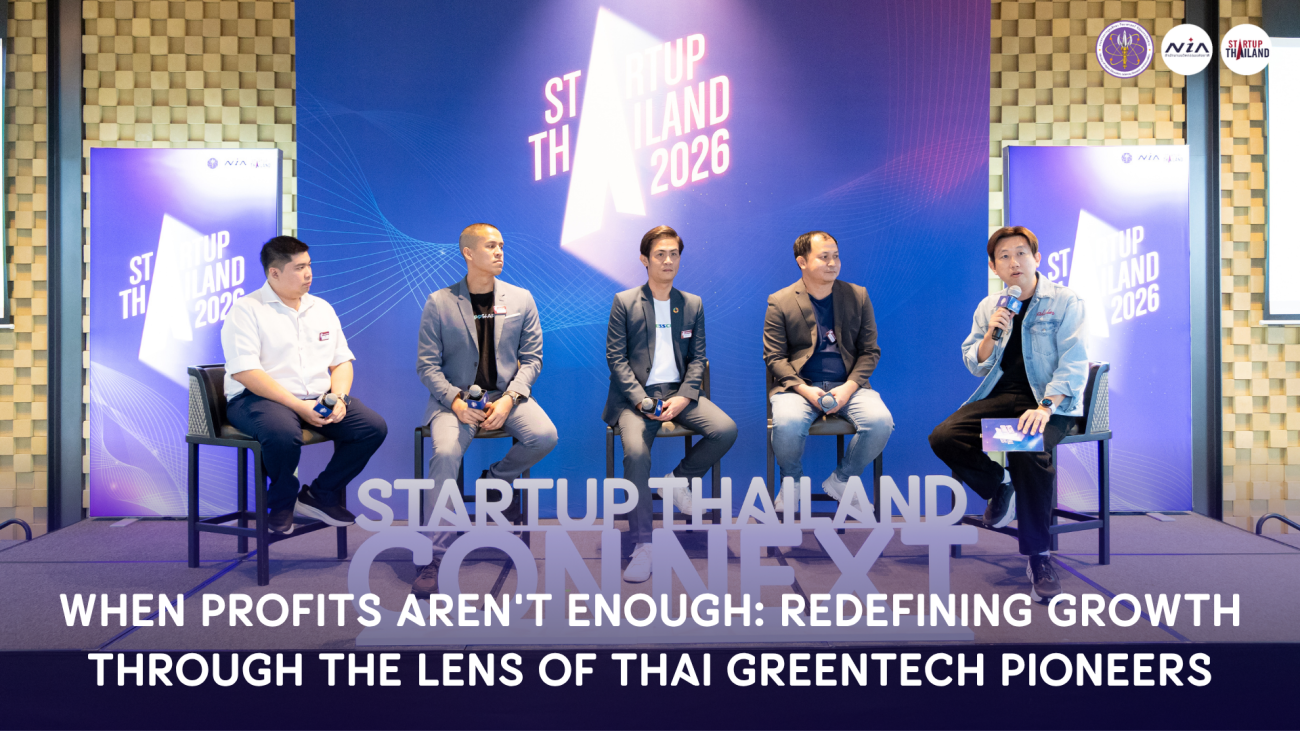
When Profits Aren’t Enough: Redefining Growth Through the Lens of Thai GreenTech Pioneers

When Profits Aren’t Enough:

Redefining Growth Through

the Lens of Thai GreenTech Pioneers

When Data and Emissions Dictate New Metrics of Success

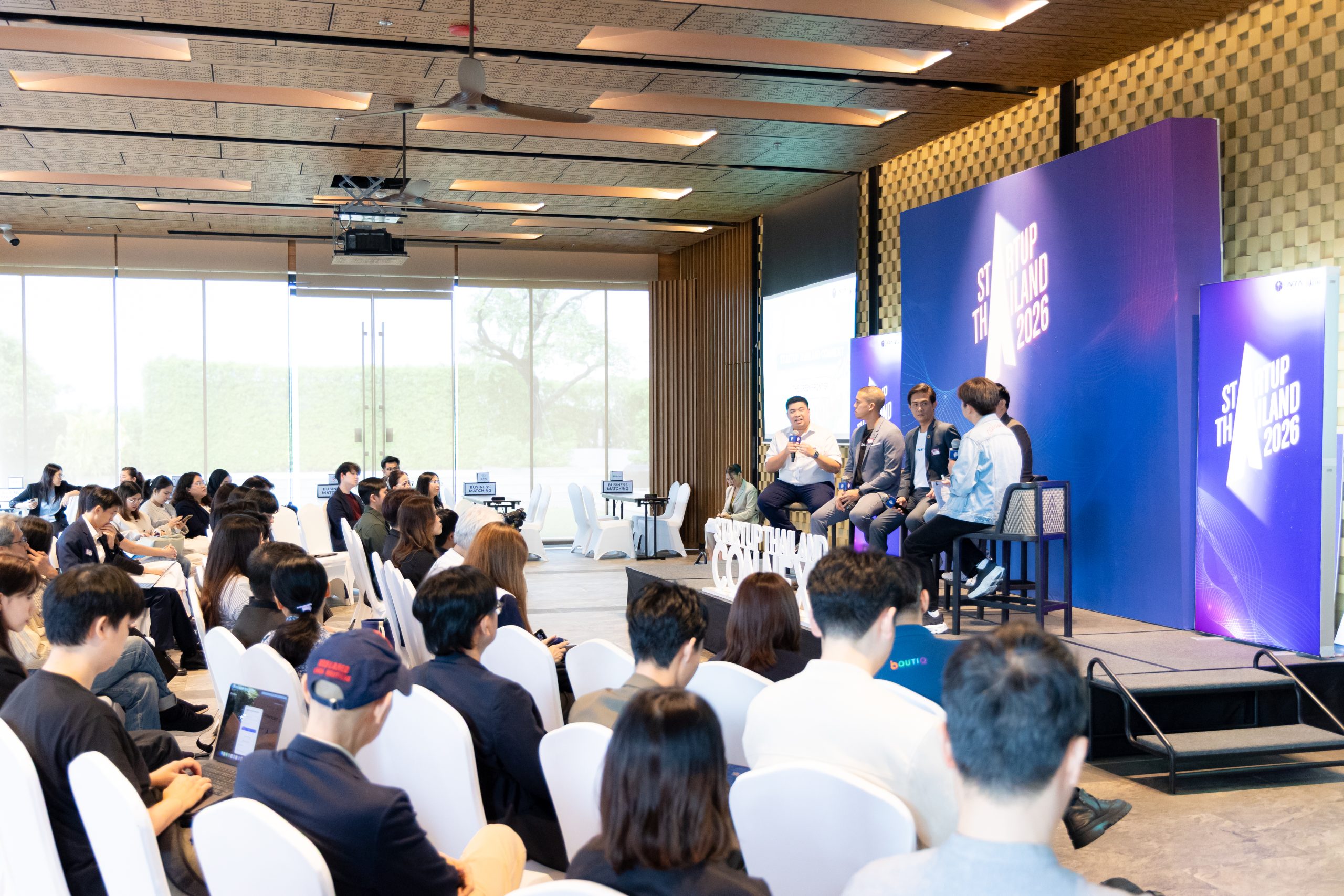
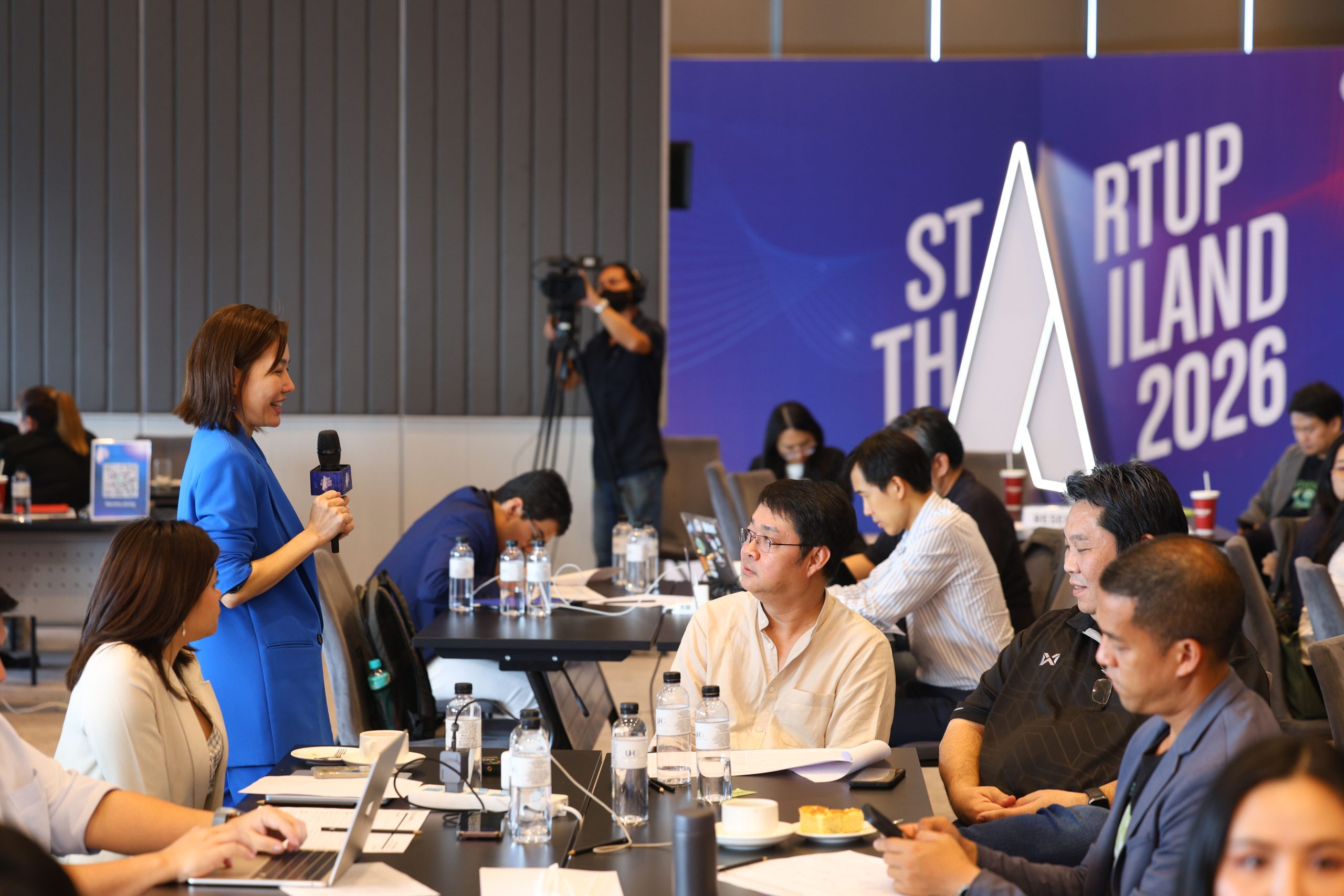
At the recent panel discussion, “Redefining Growth – GreenTech Startups Leading the Change” hosted by the Global Startup Hub 2026, Ruchvuth Pichayapan  (Founder of Fixzy) kicked off the session with a striking revelation: the sheer abundance of data around us—from personal health biometrics to visible pollution metrics like PM 2.5—has effectively shattered the old adage, “ignorance is bliss.” Today, data brings clarity, and clarity demands action.

The same reality applies to the corporate playground. Data has permeated every facet of business, elevating competition beyond mere tech adoption to the strategic mastery of data. The goal is no longer just about cutting unseen costs but driving environmental and social sustainability simultaneously. In this session, four visionary Thai GreenTech startups stepped onto the stage to share their real-world, tangible solutions.

SEMPLY: Visualizing the Invisible to Slash Energy Costs in Real-Time

When it comes to volatile industrial expenses, fluctuating electricity bills and catastrophic machine downtime are a business owner’s worst nightmares. Addressing this, Vichit Polsungnoen  from SEMPLY introduced a game-changing energy and smart building management platform.

By integrating solar rooftops, battery storage, EV chargers, and machinery operations into a single, cohesive dashboard, SEMPLY transforms abstract electricity data into intuitive, real-time visuals. Executives no longer must wait for the dreaded end-of-month bill to react; they can intercept anomalies instantly.

For instance, SEMPLY uncovered a mystery for a client whose power consumption spiked predictably between 3:00 PM and 4:00 PM daily. By cross-referencing the data, the system revealed that as daylight faded and solar output dropped, a heavy-duty machine simultaneously hit its peak operation. This insight allowed the business to proactively shift its operational schedule, successfully curbing costs before they happened.

Merlinium: Predictive Maintenance and the Smart Sensors That Know Before It Breaks

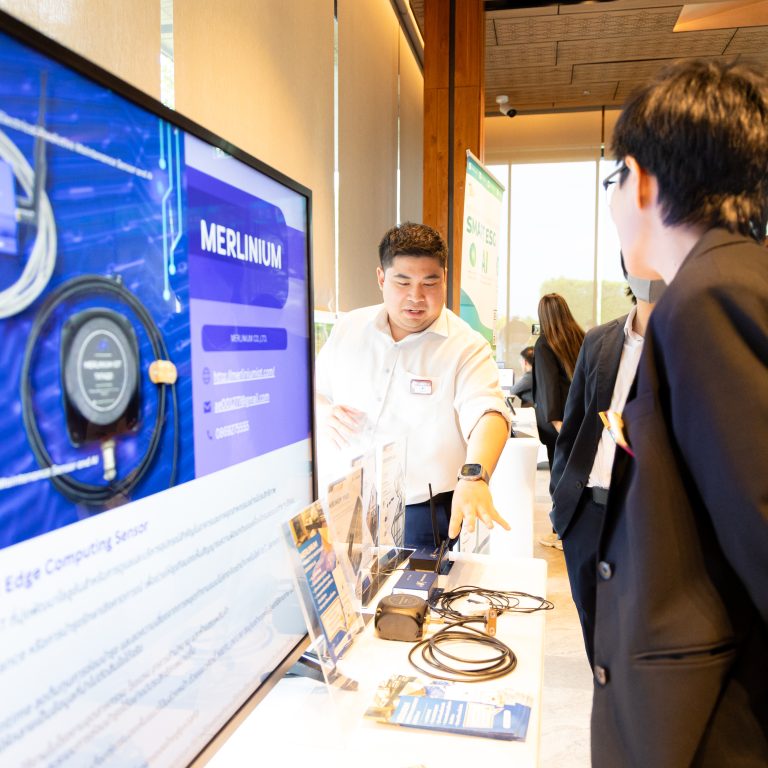
Addressing physical operational vulnerabilities, Narucha Amorndit from Merlinium showcased the power of advanced semiconductor technology coupled with Predictive Maintenance. Merlinium tackles machine failure at the source by developing intelligent edge modules that empower on-site sensors to process data faster and deeper.

Gone are the days of waiting through six months of data collection, only for the machine to break down anyway. This ultra-fast processing shortens the machine’s behavioral learning curve, transmitting only essential data to minimize bandwidth costs.

As a result, factory owners gain foresight into which components are straining or wearing out. Maintenance can then be seamlessly scheduled during scheduled downtime. This not only eliminates the risk of costly production halts but also prevents the excess energy drain caused by degrading machinery.

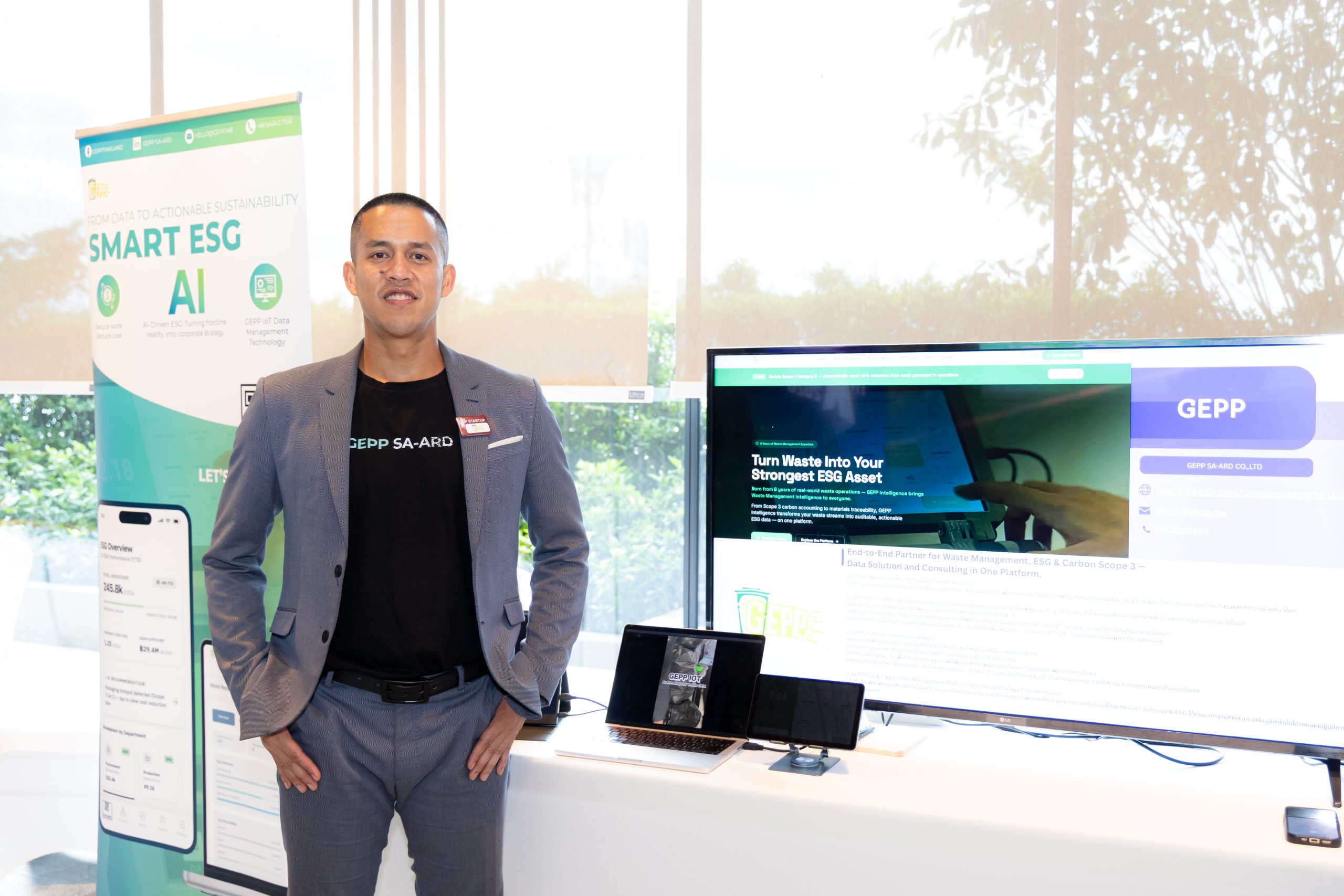
GEPP Sa-Ard: Turning Floor-by-Floor Waste Data into Actionable Corporate Strategy

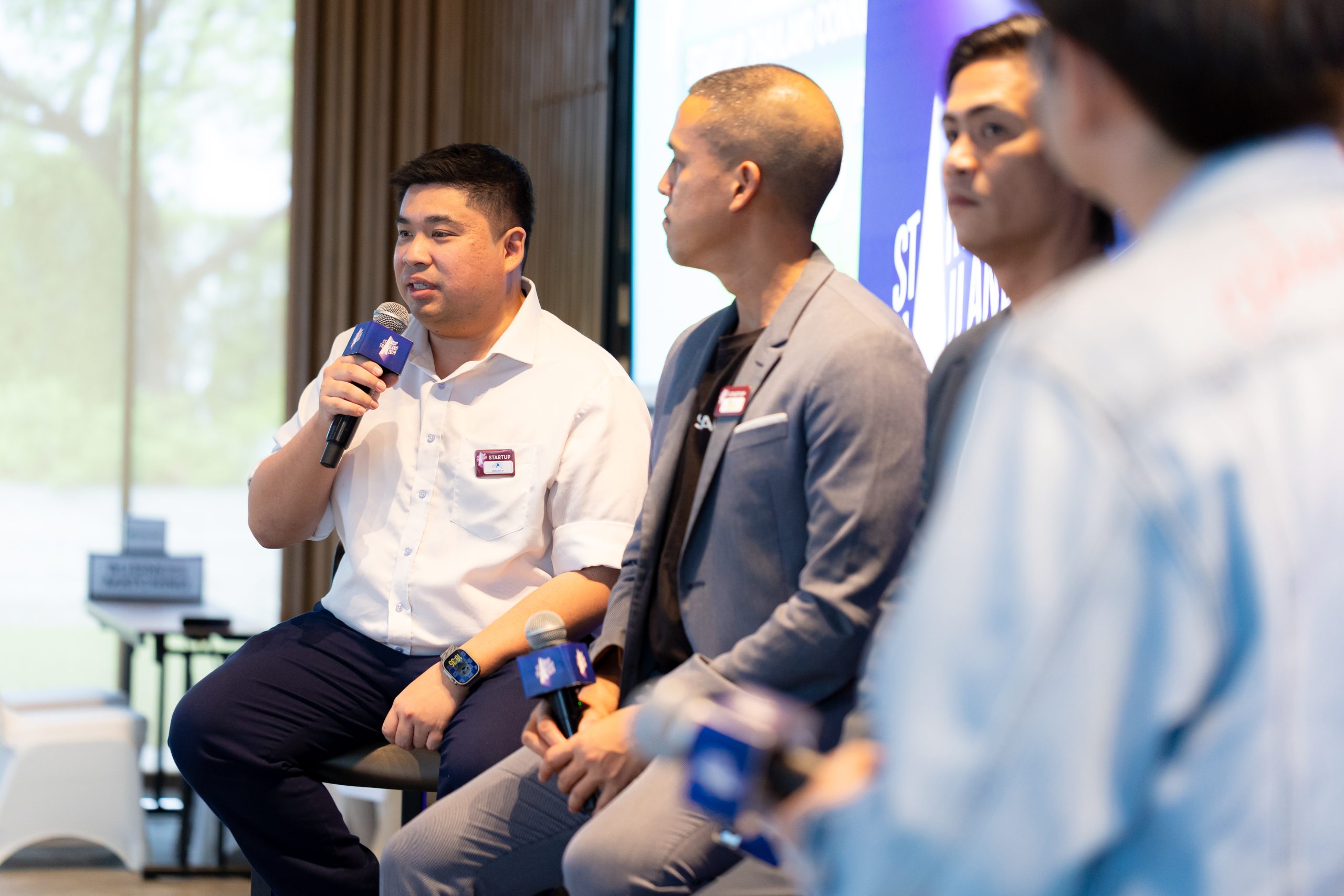
Beyond energy and hardware, “waste” represents a massive, often invisible environmental cost—one that is increasingly scrutinized under global frameworks like Scope 3 emissions within supply chains. Dome Boonyanurak from GEPP Sa-Ard notes that a great data system is defined entirely by its real-world utility.

To bridge the gap, GEPP Sa-Ard developed flexible IoT hardware, such as smart waste scales, paired with intuitive software designed for frontline workers. This setup allows corporate headquarters to track waste metrics down to the exact floor, inspiring targeted policy shifts.

A prime example is a major corporate headquarters in Bangkok. By analyzing GEPP Sa-Ard’s data, they discovered that the pantry zone generated the most waste, and zero recycling was taking place due to restrictive vendor contracts. Armed with this insight, management restructured the contract to make vendors accountable for their own waste. This fairly distributed the burden of waste management costs—which have skyrocketed fourfold—while transforming sporadic eco-campaigns into a natural part of daily operations.

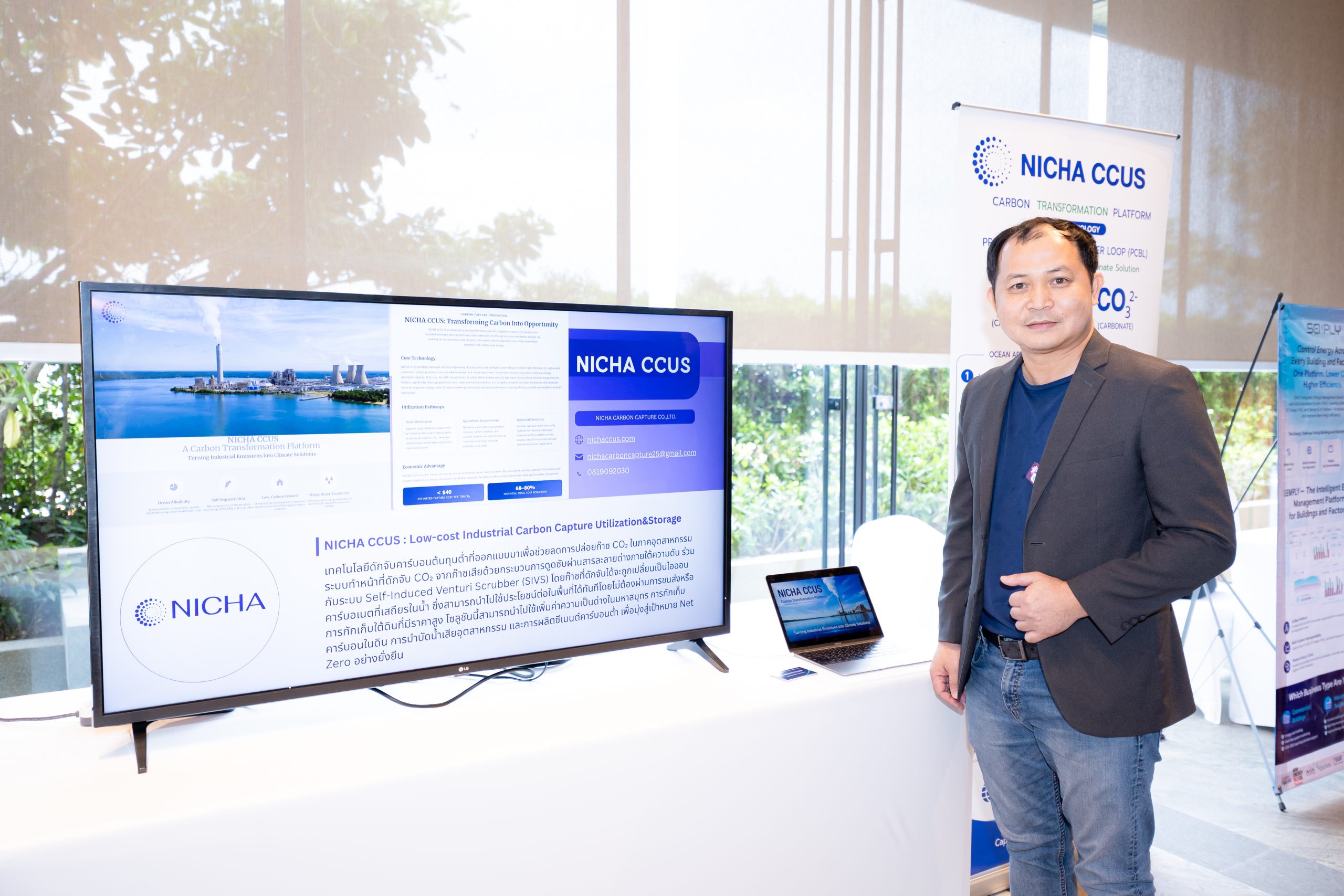
NICHA CCUS: Flipping Carbon from a Costly Liability to a Circular Revenue Stream

While carbon reduction is traditionally viewed as an expensive compliance burden, Pakorn  Intathep from NICHA CCUS turned the narrative on its head. He proved that carbon can become a lucrative revenue stream.

NICHA’s proprietary Carbon Capture, Utilization, and Storage (CCUS) technology captures carbon directly from industrial exhaust stacks and converts it into a stable carbonate solution for localized use. This includes soil enrichment, wastewater treatment, or the manufacturing of low-carbon concrete. By deploying this process directly on-site, logistics costs are eliminated, slashing overall operational expenses to just one-third of traditional systems.

Furthermore, in partnership with PTT Group, NICHA is exploring marine restoration through ocean alkalization to combat ocean acidity. This pioneering initiative creates immense value by generating premium-grade carbon credits—brilliantly turning an environmental crisis into a circular financial windfall.


The Strategy of “Data & AI”: Answering the Tough Questions on Accuracy

During the session, moderator Ratchawoot posed a crucial, often uncomfortable question: “When clients ask exactly how accurate your AI or IoT is, and how many months they have to wait for results, how do you answer?” While many stumble here, these four GreenTech pioneers offered masterclasses in advanced data handling:

  • NICHA CCUS employs molecular-level AI analysis (mole-to-mole) to evaluate carbon saturation points precisely, translating the data into an exact cost-per-kilowatt matrix.
  • SEMPLY tackles the fragmented energy market by organizing disparate data standards into unified structural patterns. This allows AI to learn faster, driving highly accurate and rapid predictive forecasts.
  • GEPP Sa-Ard emphasizes that the best data is usable data. Their systems are designed to make the frontline staff’s jobs easier without adding burdens, blending hard data with human intuition to foster genuine behavioral change.
  • Merlinium shatters the traditional six-month data collection barrier through Edge Computing. By allowing sensors to calculate data instantly on-site, threats are neutralized long before a catastrophic breakdown occurs, while significantly reducing cloud data costs.

The Domino Effect: What Happens to Thai Businesses That Ignore Data Over the Next 3–5 Years?

To illustrate the stakes,Ruchvuth posed a hypothetical scenario: If a traditional service business—like a home repair company—chooses to ignore carbon footprints, skip smart sensors, and avoid recycling, relying solely on good craftsmanship, can it survive?

The panel’s collective response painted a stark reality for those resistant to change:

  1. A Severe Loss of Competitiveness: No business operates in a vacuum; every company is a link in someone else’s value chain. As multinational corporations mandate strict carbon accounting, businesses without verifiable data will find themselves abruptly dropped from vendor lists.
  2. Sunk Costs and Financial Penalties: With energy prices rising and regional neighbors like Malaysia already enforcing energy conservation laws and Carbon Taxes, inaction will turn carbon into a pure financial liability. Meanwhile, proactive competitors will monetize their carbon through credit trading.
  3. Obsolescence via Predictive Ecosystems: The world is shifting from a “break-and-fix” culture to a “predict-and-prevent” model. Modern technicians armed with real-time data will service systems before the client even realizes a fault exists. Traditional businesses waiting around for a service call will simply find their market share gone.

The Blueprint for Survival: Quick Wins in the Sustainability Arena

In a cooling global economy, ESG compliance has shifted from a marketing luxury to a lean operational necessity. Data analytics and intelligent sensors are no longer optional—they are the tools required to survive.

For businesses seeking a “Quick Win,” the panel unanimously recommended starting with energy monitoring and management. It requires the lowest barrier to entry and yields immediate, undeniable returns reflected on the very first month’s utility bill.

The Final Takeaway

Growth in the modern business era is no longer measured solely by short-term profits. True leadership lies in the strategic deployment of data to optimize costs while stewarding the planet.

Every business is an interconnected link in a global value chain. Embracing ESG frameworks today—before they become rigid legal mandates—empowers companies to discover hidden cost savings and unlock entirely new revenue streams. By treating energy efficiency as a starting point, Thai entrepreneurs can collectively accelerate the nation toward its Net Zerogoals. Ultimately, sustainability will not be a burden; it will be the very armor that safeguards and sustains Thai businesses in the global market of tomorrow.


9

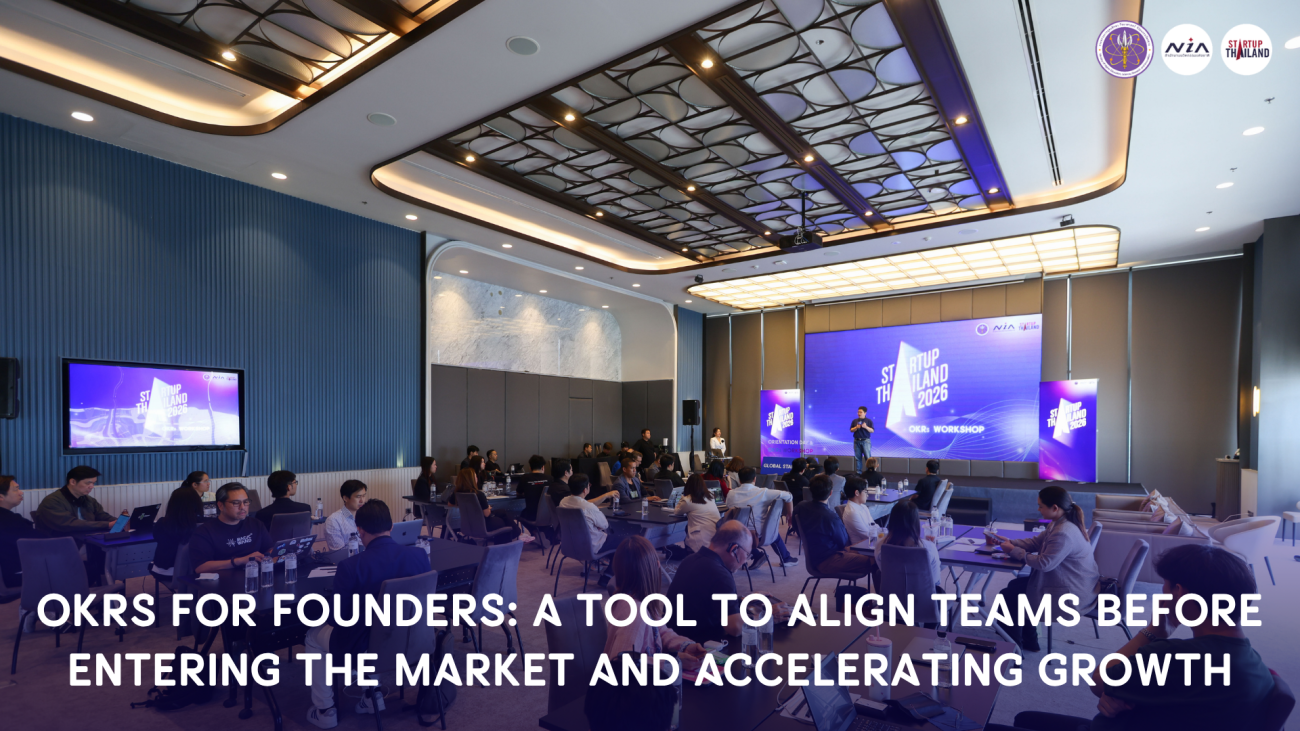
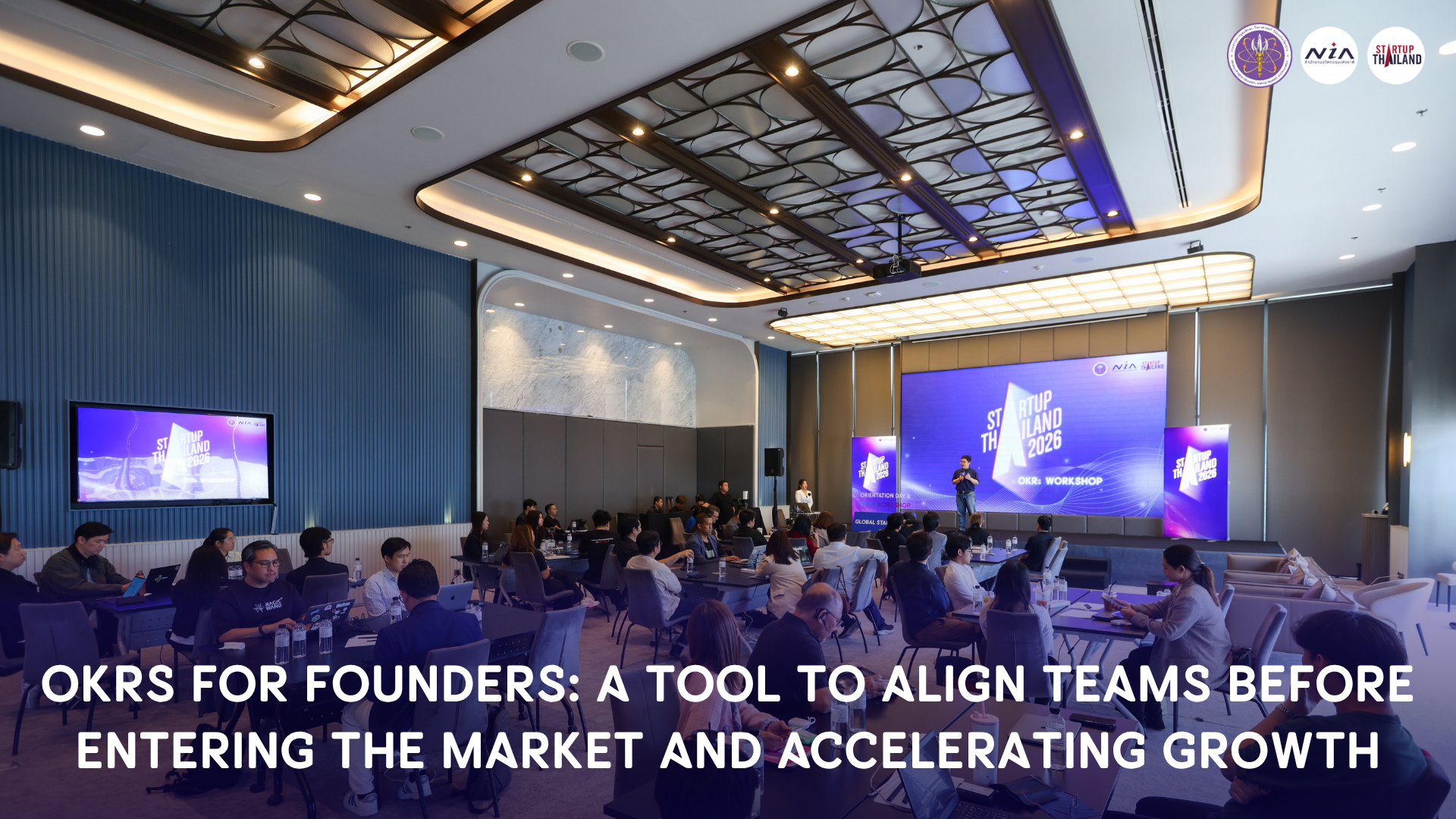
OKRs for Founders: A Tool to Align Teams Before Entering the Market and Accelerating Growth

OKRs for Founders: A Tool

to Align Teams Before Entering 

the Market and Accelerating Growth

Amid the ongoing crises over the past several years, including COVID-19, wars, and economic volatility, startup growth is no longer easy. Running a business today is filled with uncertainty, while the rise of AI has intensified competition even further, becoming both an “opportunity” and a “challenge” that pushes startups to adapt quickly and build advantages for survival.

In this context, having a tool that helps teams “focus on the right priorities” and “move in the same direction” is no longer optional, it is essential. One of the tools widely used by global tech companies is OKR (Objectives and Key Results).

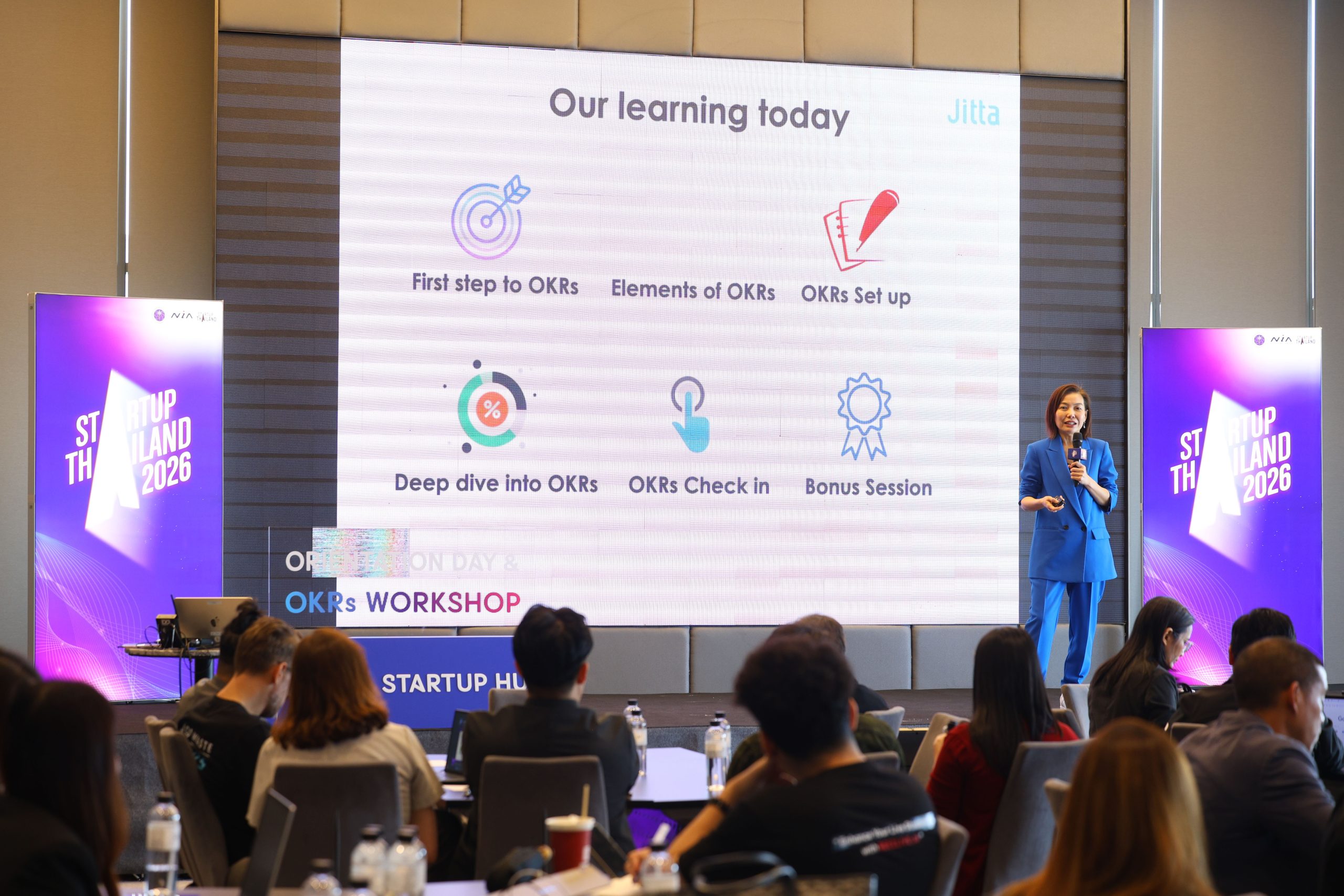
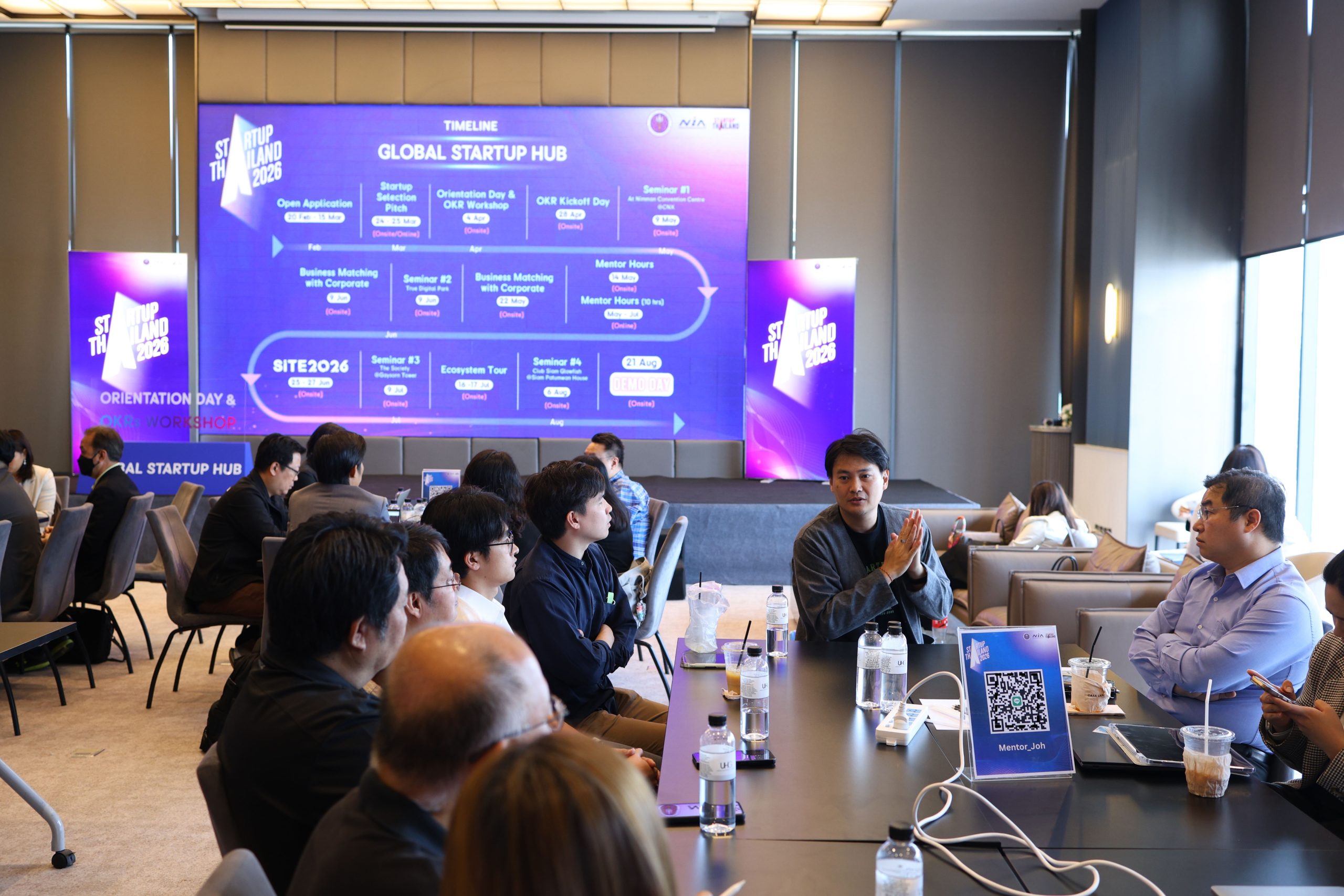
Ms. Pornthip Kongchun, Co-Founder of Jitta, one of the pioneers of Thailand’s first-generation startup founders, had the opportunity to learn OKRs directly from Google, at a time when only a few organizations worldwide had access to this concept. She has since shared this experience with more than 30 Thai startups through the Global Startup Hub 2026program, helping Thai entrepreneurs implement OKRs effectively and drive their businesses toward global growth.

OKRs, or Objectives and Key Results, are tools that help an entire organization “see the same goal” and move clearly in the same direction. Especially for startups that are growing or preparing to expand into new markets, having clear goals is not a luxury, it is a critical condition for growth. Many companies struggle because teams work hard without fully understanding what the organization is truly trying to achieve. OKRs solve this problem by transforming goals into clear, measurable outcomes that everyone can understand, track, and contribute to together.

Elements of OKRs

OKRs consist of two core components that must work together: Objectives and Key Results.

Objective is “what you want to achieve.” It is a clear, directional goal that motivates the team, such as becoming a market leader or expanding internationally. Objectives can be set for both the short and long term, but they must be clear, easy to understand, and inspiring enough to unite the team around a common purpose.

Key Results are the “measurable outcomes” that indicate how close the organization is to achieving the Objective. They answer the question: “How do we know we are moving in the right direction and getting closer to success?” Key Results must be clearly measurable, such as sales numbers, user growth, growth rates, or market share.

Most importantly, Key Results must reflect “outcomes,” not “activities.” For example, instead of setting “run a marketing campaign,” it should be reframed as “increase users by 30%,” because what organizations truly want are measurable results. In general, startups should have around 3–5 OKRs within a given period so teams can stay fully focused on the most important priorities.

OKRs SET UP

Setting effective OKRs is not just about writing attractive goals, it requires a clear structure and practical implementation.

The process should begin with defining annual goals and then breaking them down into quarterly objectives so progress can be tracked and adjustments can be made in response to business changes.

Another key factor is creating alignment within the organization, which must come from both Top-down (leadership setting direction) and Bottom-up (team participation), so everyone feels ownership of shared goals.

In practice, a single Key Result often requires collaboration across multiple teams, such as Marketing, Sales, and Customer Support. Therefore, clear and continuous communication is essential. Most importantly, OKRs must be translated into concrete Action Plans to ensure real execution.

DEEP DIVE INTO OKRs

One of the core concepts behind OKRs is setting “10X” or Moonshot goals, which are highly ambitious targets designed to drive breakthrough growth.

However, OKRs are not designed to be achieved at 100%, especially when goals are highly ambitious. Achieving around 70–80% is already considered excellent because it indicates the team is setting goals that are truly meaningful and challenging.

The concept of “Think Big, Start Small” is therefore important: think ambitiously, but start with what is realistically achievable, then continuously refine based on data and outcomes.

Another important point is “flexibility,” especially regarding Key Results, which can be adjusted according to circumstances. If a better approach is discovered, adapting is not failure, it increases the chances of reaching the ultimate goal.

OKRs CHECK-IN

Even the best OKRs are meaningless without consistent follow-up. Check-ins are team discussions focused on reviewing the progress of OKRs, with emphasis on “results” rather than just “tasks completed.” Being busy does not necessarily mean the team is getting closer to its goals. Check-ins should happen regularly, such as weekly or monthly, so problems can be identified and plans adjusted in time.

Equally important is building a culture of open communication, where teams can honestly discuss progress, challenges, and obstacles.

When practiced consistently, OKRs become more than just a management tool, they evolve into an “organizational operating system” that helps startups grow with clear direction.

.

Ultimately, OKRs are not merely a goal-setting tool; they are a mindset framework that helps startups “focus on what truly matters” and eliminate unnecessary distractions in a world where everything changes rapidly.

For startups seeking growth, do not wait for everything to become perfect before starting. Clarity does not come from thinking longer, it comes from “taking action, measuring results, and adapting quickly.”

In the startup game, the people who go farthest are not simply those with the best ideas, but those who “set clear goals, measure real outcomes, and lead their teams in the same direction.”

IPT2026-002 Global Startup Hub 2026 ฟุ้ง

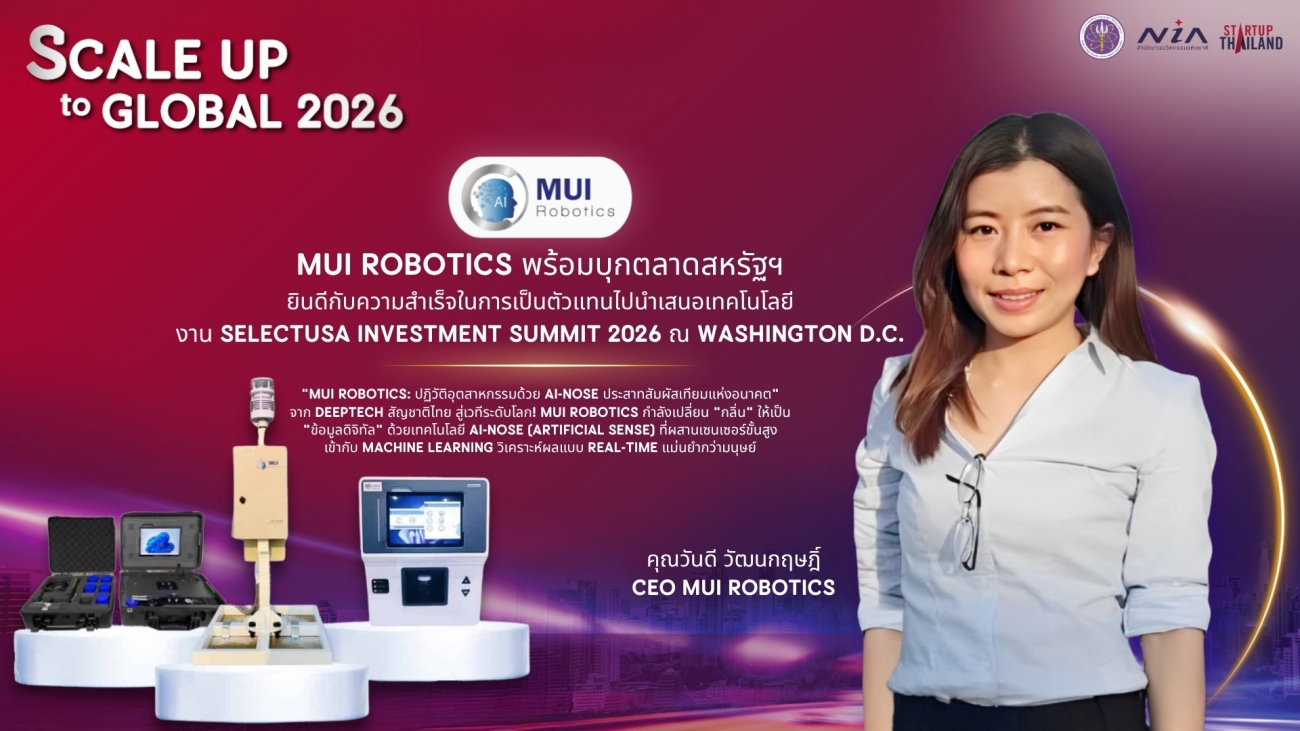
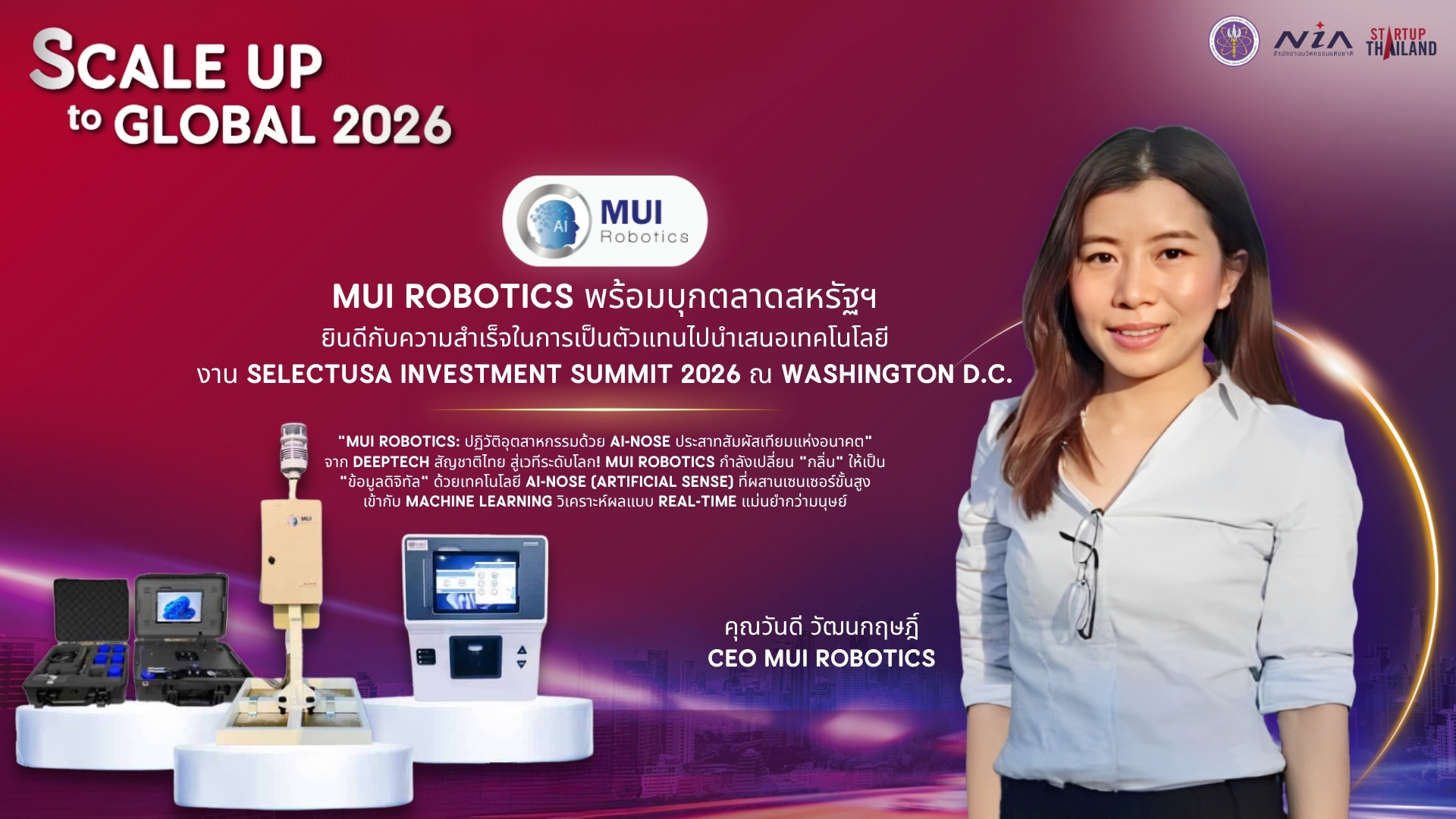
MUI Robotics is ready to expand into the U.S. market! Congratulations on successfully representing Thailand and showcasing its technology at the SelectUSA Investment Summit in Washington, D.C.

MUI Robotics is ready to expand

into the U.S. market!


Congratulations on successfully representing

Thailand and showcasing its technology

at the SelectUSA Investment Summit

in Washington, D.C.

     Thailand continues to make its mark on the global innovation stage. Most recently,  MUI Robotics, a Thai DeepTech startup specializing in Sensory AI—artificial intelligence that replicates human sensory capabilities, particularly the sense of smell—has been selected to present the innovation at the SelectUSA Investment Summit 2026 (www.selectusasummit.us) in Washington, D.C., United States. This achievement reflects the potential of Thai startups to compete on the global stage in DeepTech industry.

     MUI Robotics has developed “AI-Nose,” an AI-powered scent detection system that converts odors into real-time digital data using advanced sensors and machine learning. The technology has wide-ranging applications across industries, including food and beverage quality control, manufacturing, environmental monitoring, and healthcare—helping reduce human error and improve operational efficiency. This innovation known as “Artificial Sense,” an emerging frontier technology gaining global attention. 

     Participating in the SelectUSA Investment Summit 2026  marks a significant step for MUI Robotics, as it is one of the largest and most influential investment forums in the United States, the summit brings together global investors, Venture Capital Funds, leading technology companies, and government agencies from various countries in one place. Providing a valuable opportunity for startups to connect with international funding, build strategic partnerships, and access the U.S. market—one of the largest and most dynamic markets in the world. This is especially critical for DeepTech startups, which require substantial investment, collaboration, and a strong ecosystem to scale effectively.

     The success of Mui Robotics also reflects the role of the National Innovation Agency (NIA) in driving Thai startups onto the global stage. Under its “G-Global” strategy, NIA is committed to empowering Thai startups to grow and compete internationally through key initiatives such as Scaleup to Global, which accelerates startup growth and supports international expansion, and Gateway to ASEAN, which helps startups access Southeast Asia—one of the fastest-growing economic and digital regions in the world. These programs focus on building business networks, partnerships, and enhance confidence among international investors.


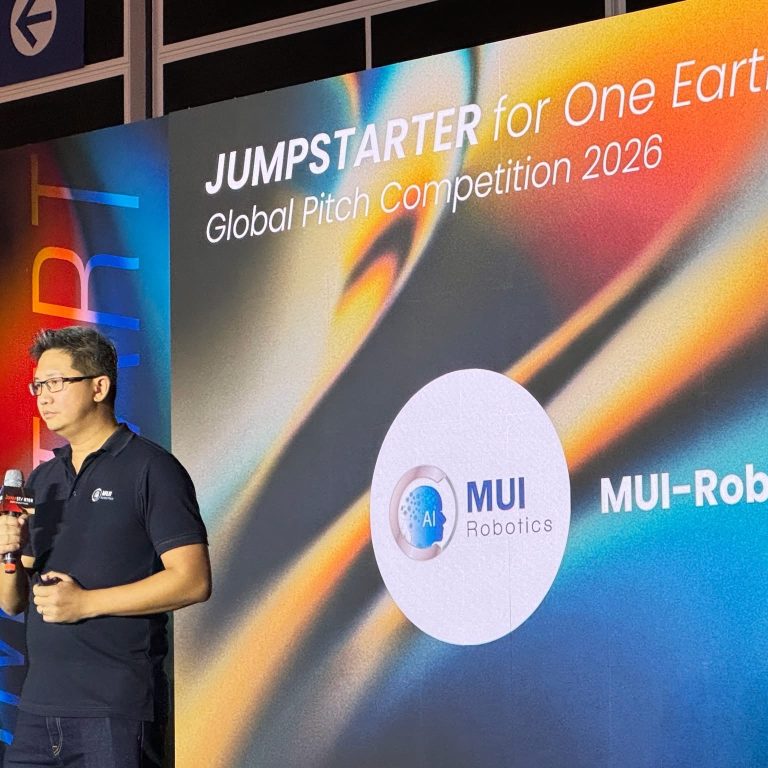
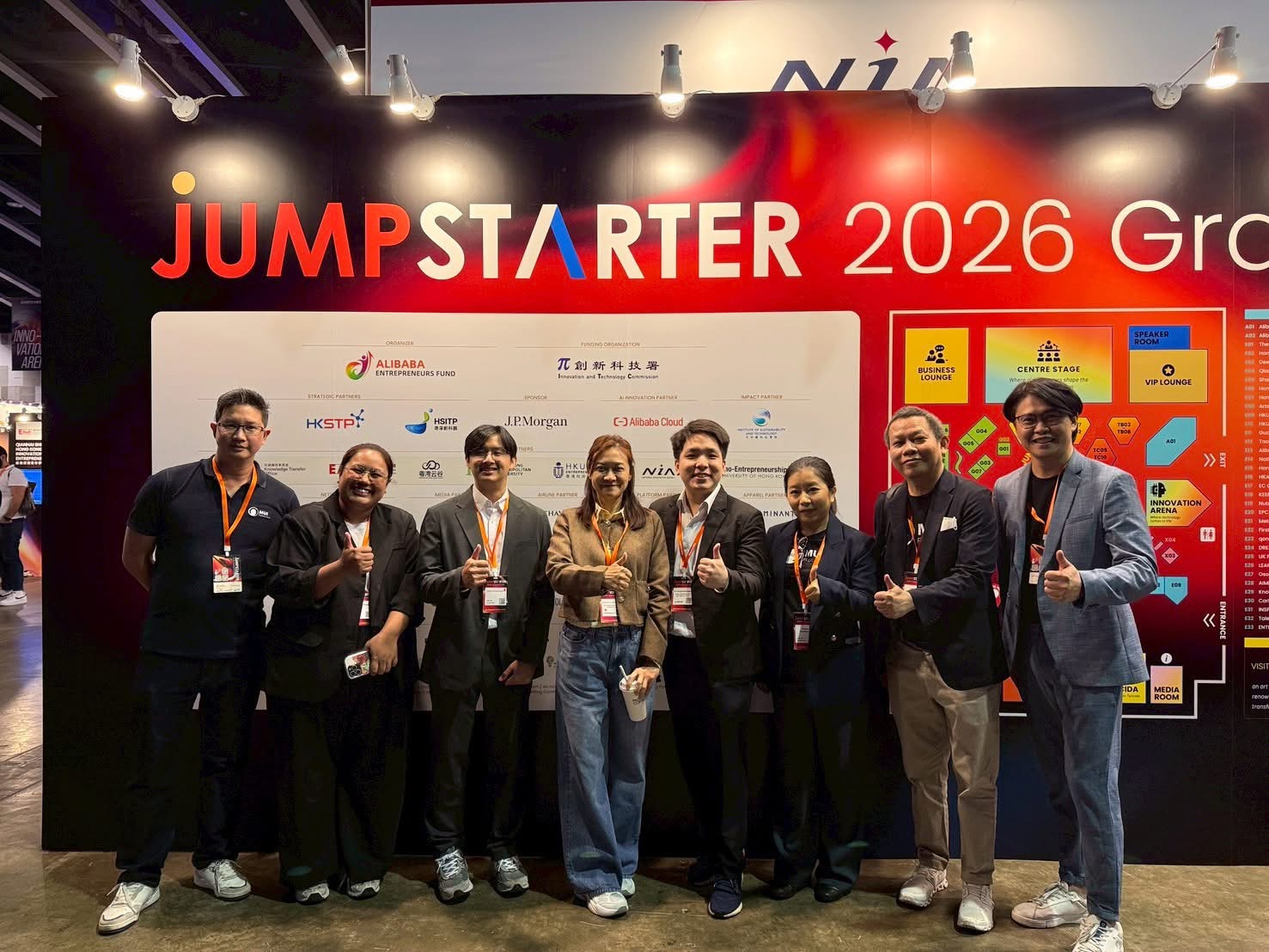
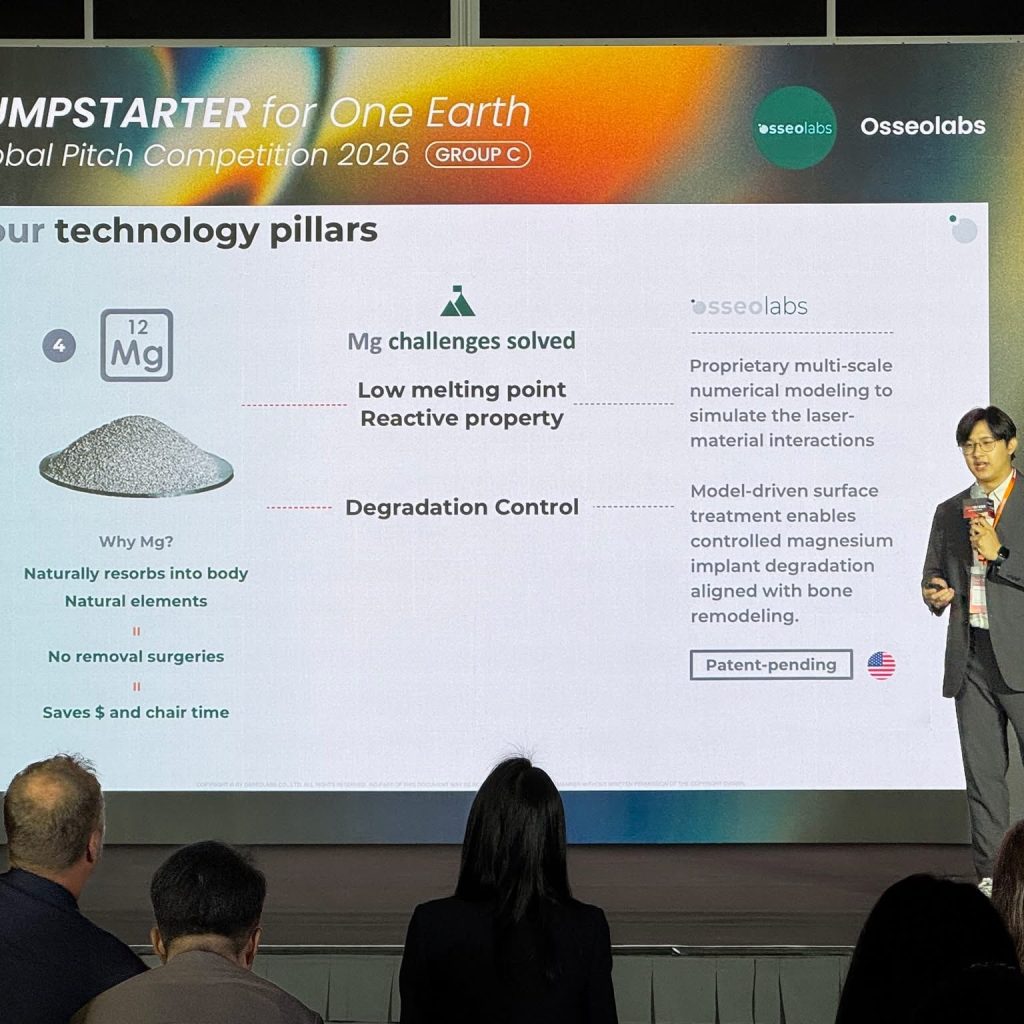
     MUI Robotics has also received support from NIA to showcase its innovation at JUMPSTARTER, and made it into the Top 30 Global PITCH COMPETITION—one of Asia’s most prominent startup and innovation events. Participating in this event has enabled the company to validate market potential, build partnerships, and connect with investors, marking another step toward global expansion.

     This achievement not only highlights the potential of MUI Robotics but also underscores the advancement of Thailand’s startup ecosystem in transforming innovation into real-world, globally competitive solutions.

#GoGlobal #GlobalExpansion #ScaleUpToGlobal #ThaiStartup #DeepTech


5 (2)

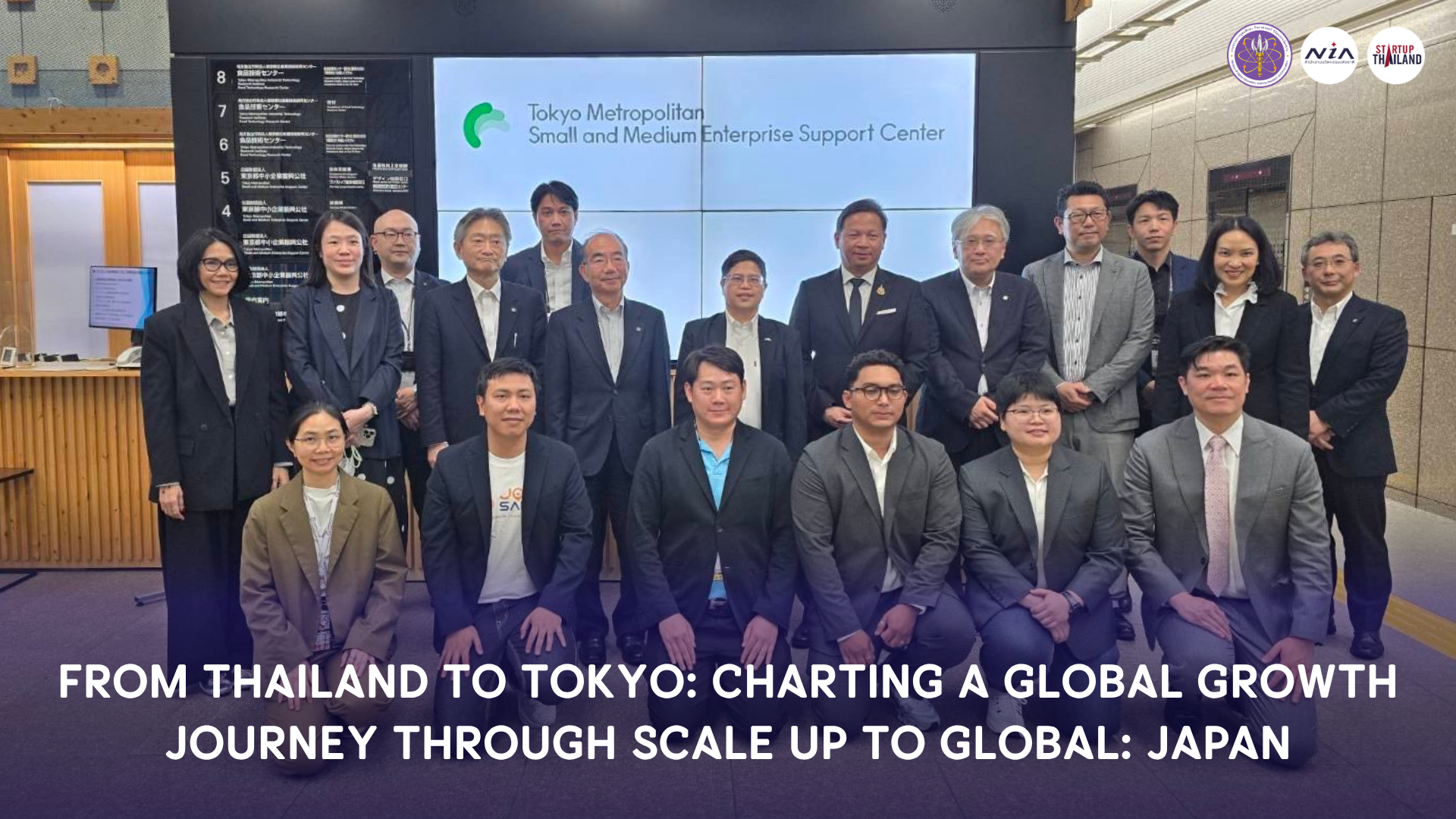
Japan: A Deep Tech Innovation Partner Startups Shouldn’t Overlook

Japan: A Deep Tech Innovation

Partner Startups Shouldn’t Overlook  

Japan is emerging as a global hub for startup support, especially in the deep tech sector. A key player is NEDO (New Energy and Industrial Technology Development Organization), a governmental agency that drives innovation and R&D with a budget of over $1 billion annually. With a clear vision to foster a sustainable startup ecosystem, NEDO already has international offices around the world to promote technological cooperation and innovation. This year, it’s expanding its presence to Jakarta, Indonesia. In Thailand, NEDO has initiated more than 30 projects related to renewable energy and EV batteries. 

The Japanese government has set a 5-year strategy to grow the number of domestic startups tenfold by 2027. This initiative focuses on improving access to funding, with a dedicated $690 million fund for deep tech, and creating more diverse exit strategies like IPOs or mergers with large corporations. This approach supports startups at every stage—from seed to early and middle stages—and promotes their growth. 
 

A major advantage of Japan’s support system is the clarity and generosity of its programs, particularly NEDO’s Deep Tech Startup Support Program (DTSU). This program is designed to help startups from the very beginning all the way through to expansion. The funding is provided as a grant rather than an equity investment, which allows founders to maintain full control and avoid ownership dilution. Additionally, up to 50% of the funds can be used for operations outside of Japan, offering a golden opportunity for international startups to enter the Japanese market without fully relocating their headquarters. 
 

To qualify for support, international startups only need to be incorporated in Japan, not be controlled by a large corporation, have been founded within the last 10 years, and be able to prepare their proposal in Japanese. These criteria are very welcoming for serious and ambitious entrepreneurs.

Beyond financial support, Japan is also very open to global learning and networking. Programs like Imagine send startup teams to train in Silicon Valley and Paris. The country is also hosting the Global Startups Expo 2025 in Osaka, which will turn global issues into challenges for startups to present innovative solutions in fields like energy, green industry, artificial intelligence, and the circular economy. 
 

For Thai entrepreneurs with expertise in deep tech or global problem-solving technologies, Japan is more than just a market; it’s a dedicated partner ready to provide serious support from day one. If you’re looking for a country that offers funding, technology, business opportunities, and a global network, Japan should be on your radar. 

Add Your Heading Text Here

3

The Role of Thai Startups in a Health Transition Era: From Technology to Elevating Thai Public Health on the Global Stage

The Role of Thai Startups in

a Health Transition Era:

From Technology to Elevating Thai

Public Health on the Global Stage 

In an era of increasingly complex public health challenges, from the burden of chronic diseases and an aging society to a shortage of medical personnel—health technology is no longer an option; it’s a necessity. At the Startup Connext: MedTech – HealthTech event, the National Innovation Agency (NIA) provided a platform for Thai startups to showcase their innovations and, most importantly, connect with global opportunities. 

Beyond Technology: Solving “Real-World Problems” 

A key takeaway from the panel discussion, “Navigating Med Tech/Health Tech Challenges,” came from Dr. Wannaviputh Saraputhpong, Director of Business Development at VitalLife Scientific Wellness Center, a Bumrungrad Hospital Group company. She emphasized that “true health innovation must begin with ‘real-world problems,’ not just cutting-edge technology.” 

Good technology, she noted, must have three essential characteristics: 

  •  – Address the needs of actual users, particularly healthcare professionals and patients. 
  •  – Reduce the burden and time within a system grappling with labor shortages. 
  •  – Ensure accuracy and safety, because a patient’s life is the most critical stake. 

If technology can help reduce staff burnout and provide people with faster access to services, it fulfills the primary goal of modern innovation design. When startups offer effective solutions that focus on helping people within the entire ecosystem, they are more likely to be embraced by healthcare facilities. 

Dr. Wannaviputh also highlighted a challenge for MedTech startups: beyond focusing on practical, safe, and user-centric technology, they must also prioritize financial accounting and cash flow to ensure long-term sustainability. Partnering with a financial expert can also provide the confidence needed to drive the business forward. 

NIA’s Mechanism for Supporting Thai Startups on the Global Stage 

Ukrith Kitchsiricharoenchai, Director of the Division for Funding Critical Innovation for National Development at NIA, explained the agency’s “Groom – Grant – Growth – Global” framework. This approach goes beyond providing R&D grants, connecting startups with real-world testing opportunities through a “Sandbox” area like Yothi, which links over 30 hospitals and medical agencies. This also opens up avenues for both domestic and international business matching. 

Ukrith stressed that MedTech and HealthTech startups should focus on developing user-centric, safe technology that addresses the greatest needs. Recognizing that this field requires high investment and a long timeline, NIA encourages startups to collaborate with other Thai businesses to strengthen their capital and work as a team. This collaborative effort increases their chances of widespread adoption and global competitiveness. 

 Health Technology Trends: The Right Opportunity at the Right Time 

A panel on “Med Tech/Health Tech Trends Now” highlighted Thailand’s significant global potential if it focuses on specialized, low-cost but high-impact technologies, such as AI and IoT, especially for populations with limited access to healthcare. 

Pongchai Petchsangar, President of the Thai Health Tech Association (THTA), emphasized that MedTech and HealthTech development needs clarity. Startups must “know whom they are helping” and “how to integrate into users’ lives.” Since access varies across different regions, the technology must be easy to access, practical, and truly meet user needs. 

The biggest challenge for Thai startups, according to Pongchai, is the increasing number of foreign startups with more investment entering the Thai market each year. The question for Thailand is how to attract more capital for local startups to seriously expand into international markets. 

To do this, startups must develop impactful technology, build a strong ecosystem, and “start by giving” to prove their value before being accepted. Health startups are not a sprint; they are a “marathon” that requires a clear goal and long-term commitment. Government and private sector support through domestic and international business matching provides concrete opportunities for global expansion. 

Lessons from the Front Lines: Technology that Changes Lives 

Supitchaya Phoopisut, CEO of Perceptra, shared insights from her experience. With Thailand’s transition into an aging society, health issues and the government’s burden are rising. Startups that develop technology to accurately measure and reduce this burden will gain wider acceptance and eventually attract international funding. 

Supitchaya stressed that the core of health technology development isn’t just about creating a sophisticated innovation. It’s about being brave enough to enter a real system, listening to feedback sincerely, and deeply understanding users to build a sustainable business model and create tangible impact. 

A key focus for startups should be to start with a real problem, build practical and measurable technology, ensure it’s safe, and help the government reduce its care burden. Success in this area will create a ripple effect in society and lead to widespread adoption. 

“Giving first” is her guiding principle, as creating an impact first will lead to long-term acceptance and growth. She also stressed the importance of financial preparedness, such as meticulous cash flow planning, since developing health technology is a long-term investment. 

Ultimately, a startup’s success begins by “going out and finding opportunities” and “starting as a giver without expecting immediate returns” to ensure technology is put to real use and creates genuine change in people’s lives. 

From the diverse perspectives of both the public and private sectors, it’s clear that developing and driving health startups is not solely about technology. It’s about a holistic understanding of the healthcare system—including people’s health, economics, and society—and relies on a system of support and “true collaboration” between the government, the private sector, and users. However, the most crucial thing for Thai startups to do is to “go out and explore the real world, learn from users, build partnerships, and stand strong for the long term.” 

When health technology can develop everything… the question we should ask is: does this technology help people get better, or does it improve the healthcare system for the entire country? 

b1

Government Support: When the Public Sector and Thai Startups Join Hands to Go Global

Government Support:

When the Public Sector and Thai Startups

Join Hands to Go Global

In an era where Thai startups need to grow rapidly, having a “government partner” to support them in every dimension becomes a crucial element for sustainable development. “Government Support,” organized by the National Innovation Agency (Public Organization) or NIA, is a platform that brings together public sector agencies driving the Thai startup ecosystem. These agencies provide a full range of tools and mechanisms to support startups, helping them understand the role of the public sector and effectively expand their businesses.

NIA has systematically designed its startup support mechanisms under the “Groom – Grant – Growth – Global” concept. This begins with nurturing a new generation of entrepreneurs through the Startup Thailand League program, a nationwide competition for students to pitch ideas and create innovative prototypes, continuously laying the foundation for future entrepreneurs. In terms of funding, the Regional Open Innovation program provides regional innovation grants of up to 1.5 million baht, while Thematic Innovation supports startups in target industries such as FoodTech, AgriTech, Circular Economy, Clean Energy, EV, AI, and Medical, with grants of up to 5 million baht per project.

Additionally, NIA focuses on developing and accelerating the potential of startups in future industries, including FoodTech, Climate Tech, Ag Tech, HealthTech, and Travel Tech, through its Accelerator program. It also provides opportunities for ready-to-scale startups to expand into international markets, targeting ASEAN+, the European Union (EU), and the GCC countries (Qatar, Saudi, UAE) through business matching, partnership linkages, and the promotion of international investment.

The Digital Economy Promotion Agency (depa) plays a vital role in systematically driving the growth of Thai digital technology startups, from the early stages to international market expansion. This is done through programs like depa Growth Lab and depa Global Launchpad, which nurture and accelerate startups in FinTech, EdTech, AgTech, Travel Tech, HealthTech, and Industry Tech sectors. depa offers various funding options, including grants and convertible notes ranging from 200,000 to 5 million baht, as well as tax benefits such as exemption from Capital Gains Tax and a 200% tax deduction for purchasing technologies listed in the Thai Digital Catalog.
Meanwhile, the Technology and Innovation Entrepreneurship Development Fund (TED Fund), under the Office of the Permanent Secretary, Ministry of Higher Education, Science, Research and Innovation, focuses on empowering technology entrepreneurs. It provides support from proof-of-concept and business plan development to prototype creation and real business expansion. The fund offers four types of grants: 1) Proof-of-Concept (IDEA) Grant, which must be under the supervision of a certified incubator or TED Fellow; 2) Business Plan and Prototype Development (POC) Grant; 3) Startup Promoter Grant; and 4) Business Expansion Grant of up to 2 million baht per project, with a project duration of no more than 24 months. Applicants can be students, recent graduates, or corporate entities.
The Board of Investment of Thailand (BOI) also has a prominent role in promoting high-potential startups under the Act on Increasing the Country’s Competitiveness for Target Industries. It offers a Matching Fund of 20–50 million baht, where the BOI co-invests with capital received by the startup from a VC or CVC. This comes with special benefits such as visas, work permits, land ownership, and corporate income tax exemptions for up to 15 years. Key conditions include founders holding at least 60% of the company’s shares and receiving a minimum investment of 15 million baht from a VC or CVC. The business must also operate in a target industry, such as digital, agri-tech, or medical.

Finally, the Stock Exchange of Thailand (SET) has developed the LiVE Exchange and LiVE Platform as fundraising and business incubation venues for high-potential SMEs and startups. Those with VC or PE co-investment can effectively raise between 10–500 million baht. The platforms offer relaxed governance and financial standards, suitable for businesses in their early to scale stages. Standard business documents like shareholder agreements, NDAs, term sheets, and privacy policies are also provided to help startups manage their internal affairs professionally. Additionally, a comprehensive support system on the LiVE Platform includes:

1) Education Platform

2) Scaling Up Platform

3) Business Matching & Networking,

along with standard business documents. Today, Thai startups are no longer alone. Public sector agencies are joining forces to pave the way for a strong and sustainable future, pushing Thai businesses to fully reach the global stage.

COVER Web Summit

NIA Drives Thai Startups to the Global Stage at Web Summit Qatar 2025

NIA Drives Thai Startups to the Global Stage

at Web Summit Qatar 2025 

Pushing Thai GreenTech into

the Middle East with a Targeted Strategy 

As green technology becomes a global priority, the National Innovation Agency (NIA) is actively elevating Thai startups to the international stage. The agency recently led four Thai GreenTech startups to Web Summit Qatar 2025 in Doha, Qatar, from February 23-26, 2025—a premier global tech event attracting over 25,000 attendees.

This initiative is part of NIA’s “Groom – Grant – Growth – Global” strategy, which aims to nurture and accelerate the development of innovative Thai entrepreneurs, from incubation to entering international markets. This effort specifically targets the Middle East and North Africa (MENA) region, which is increasingly focused on driving its economy through sustainability and clean energy.

The Thailand Pavilion served as more than just an exhibition space; it was a platform for Thailand’s soft power in innovation, attracting foreign investors and partners while showcasing the potential of Thai green technology to address global needs.

After the event, we spoke with the four startups about what they learned from experiencing the international market firsthand, including business opportunities, challenges, and valuable lessons from the global stage.

Altotech.AI: Developer of an AIoT Energy Management System Key Takeaway: Opportunities in the MENA clean energy market. “The first thing we noticed was the enthusiasm of the MENA market for clean energy.” According to Mr. Pamekhit Phuktalay, Technical Product at Altotech.AI, participating in Web Summit allowed them to connect with investors looking for solutions to reduce energy consumption in buildings and cities, a perfect match for their platform. “We received several serious invitations for discussions from Qatar and neighboring countries. The insights we gained were invaluable—for example, their pricing models, customer expectations, and how to adapt our system to the local context.”
ION Energy: A leading provider of residential solar solutions with an energy and payment management platform for PPA/EPC clients Key Takeaway: The importance of reliability and after-sales service. “What works in Thailand might not work here without a mindset shift.” Mr. Peerakan Manakit, COO of ION Energy, found that the Middle Eastern market has a different approach than Thailand. Buyers prioritize stability and long-term service over price alone. “Clients in this region were asking about reliability and warranties. This taught us to prepare more detailed engineering documentation and after-sales service plans.”
VEKIN: Developer of AI Carbon Editor, a tool for analyzing and managing corporate or industrial carbon emissions Key Takeaway: ESG and green finance are new opportunities in the region. “What we do aligns perfectly with their ESG needs.” Dr. Ekkasit Phaopongphan, CTO of VEKIN, noted that while carbon issues are still new in many countries, entrepreneurs in Qatar showed serious interest and were open to piloting VEKIN’s tool. “If we made the user experience (UX) simpler and more intuitive, they were ready to start a pilot project immediately. This is a clear opportunity for business expansion.”
MUI Robotics: Developer of smart robots and automation systems for various industries Key Takeaway: Learn to pitch by focusing on the customer’s pain points. “Don’t sell what technology you have. Start with the customer’s problem.” Mr. Pattananat Wongwan, CGO of MUI Robotics, shared that their pitch changed immediately and became more effective when they started by addressing market pain points before presenting their technology as a solution. “We changed our presentation to be more tangible. We didn’t focus on how advanced our technology was, but on what the customer would gain from it.”

Lessons from the Field: Understand – Adapt – Grow

All four startups agreed that attending international events isn’t just about showing off products. It’s a deep learning process that helps them understand new contexts and prepare to compete.

Every team emphasized the following:

  • You must understand the business culture and behavior of each country.
  • Prepare your information and team for negotiations.
  • Adjust your product and presentation to resonate with the market.

And most importantly, the role of a supporter like NIA is crucial. They not only create the stage but also stand by Thai entrepreneurs, empowering them to step out and create new opportunities in the global market. 

Follow good articles and the latest news from Startup Thailand 2025 on all channels: Facebook | Website | LinkedIn | X (Twitter) To never miss an important opportunity or update for startups.
S__617480202_0

GreenTech and Energy Tech: New Opportunities for Thai Startups in the Net Zero Era

GreenTech and Energy Tech:

New Opportunities for Thai Startups

in the Net Zero Era

In a time when environmental issues and climate change are major global challenges, Thailand cannot stand idly by. The national agenda to achieve Net Zero Future by 2065, or net-zero greenhouse gas emissions, requires the cooperation of all sectors. A key driving force in this transition is GreenTech and Energy Tech, technologies poised to bring significant change to both the environment and the economy. 

The Startup Connext: GreenTech–Energy Tech event, organized by the National Innovation Agency (NIA), served as an important platform connecting energy and environmental startups with investors, government agencies, and businesses. The goal was to collectively develop capabilities, facilitate business matching, build networks, and empower Thai startups to compete on a global scale. 

Accelerating Energy Innovation to Drive the Net Zero Goal 

During a panel discussion on “Building Thailand’s Net Zero Future with Innovation,” experts from the GreenTech and EnergyTech sectors shared insightful visions and strategies for moving the country toward its Net Zero target. 

Mr. Pariwat Wongsamran, NIA’s Vice President for Innovation Systems, stated that Thailand needs a structural transition and can no longer rely on traditional methods. Private companies, industrial sectors, and exporters must prioritize developing and integrating solutions and innovations in CleanTech, Climate Tech, Energy Tech, and GreenTech into their business models. 

The NIA’s role is to create an innovation ecosystem that fosters the growth of these startups. The agency provides support through funding for technology development, accelerator programs, market consultation, and investor connections. It’s expected that over the next 2–3 years, startups in this group that demonstrate their ability to scale up will receive increasing support from both domestic and international sources. 

Ms. Thada Varoonchotikul, Manager of the Low Carbon Business Certification Office at the Thailand Greenhouse Gas Management Organization (Public Organization – TGO), provided an overview of Thailand’s greenhouse gas emissions. She noted that the energy sector remains the primary source, accounting for 70% of total emissions, particularly from three key areas: electricity generation, industry, and transportation. It’s crucial for businesses to recognize Thailand’s 2030 emissions reduction target of 30–40% from the projected maximum level, which means a reduction of approximately 100–150 million tons of CO2 equivalent. By 2065, this must be reduced to no more than 120 million tons of CO2 equivalent, in line with the carbon absorption capacity of green spaces. Looking ahead to 2035, the goal is to increase the proportion of new electric vehicle registrations to 69%. This will lead to measures like the expansion of battery swapping and EV fast-charging stations, as well as a target to increase forest area from 80 million rai to 120 million rai to absorb up to 120 million tons of carbon by 2037. 

Furthermore, the draft Climate Change Act, currently under review, is expected to be a key turning point. It will create a mandatory mechanism for the private sector to systematically report and manage carbon, pushing businesses to adapt more quickly to avoid risks from environmentally related trade barriers. This law is anticipated to take effect by the end of 2025. 

In the environmental startup space, Mr. Suphapong Kittiwattanasak, Co-Founder of MuvMi, discussed his vision for the company. MuvMi is more than just a ride-hailing app; it’s an alternative public transport system designed to reduce urban pollution. It focuses on using domestically produced electric tuk-tuks, emphasizing clean energy and designing routes that align with the needs of local communities and users. 

A key challenge for this type of startup is simultaneously managing technology, investment, and market acceptance. Startups need a commercially scalable business model and must forge partnerships with government agencies, the private sector, and communities to bring their projects to life and scale them up. Additionally, startups must effectively educate investors, as GreenTech and Energy Tech businesses require time to prove their results and need sustained support to create widespread change. 

Opportunities for Startups 

Environmental issues are a global agenda, and while many countries are making progress with systematic startup scaling, Thailand is still in its early stages, especially with new regulations taking effect. However, Thailand has significant growth opportunities through Green Transformation. 

There is a high potential for Thailand to create at least one “Unicorn” if it can seriously and continuously support startups in this ecosystem. 

Currently, companies seeking to be listed on the stock exchange are required to prepare a greenhouse gas emissions report and set clear Net Zero targets. This presents a “gap” that startups can fill. 

Startups and SMEs can develop technologies to reduce greenhouse gas emissions, not just by cutting energy consumption but also by developing alternative energy sources, providing carbon measurement and tracking services, and offering comprehensive offset or carbon management solutions. With their technological diversity and flexibility, startups play a crucial role in driving Thailand toward a sustainable low-carbon economy. 


Investors Emphasize the Synergy of Technology and Business 

In the panel discussion, “Funding the Next Wave of Climate Solutions,” leading investors shared their views on opportunities and investment trends in GreenTech and Energy Tech startups. 

Mr. Worapot Kingkaewkanthong, Head of Investment at Beacon Venture Capital, stated that an investable startup must have the potential to create value, both technologically and commercially. The startup and its team must demonstrate a clear path to generating revenue and expanding into the market. He stressed that sustainable GreenTech development is not just about creating good technology; it must also address clear societal and environmental problems while generating sustainable returns for investors. 

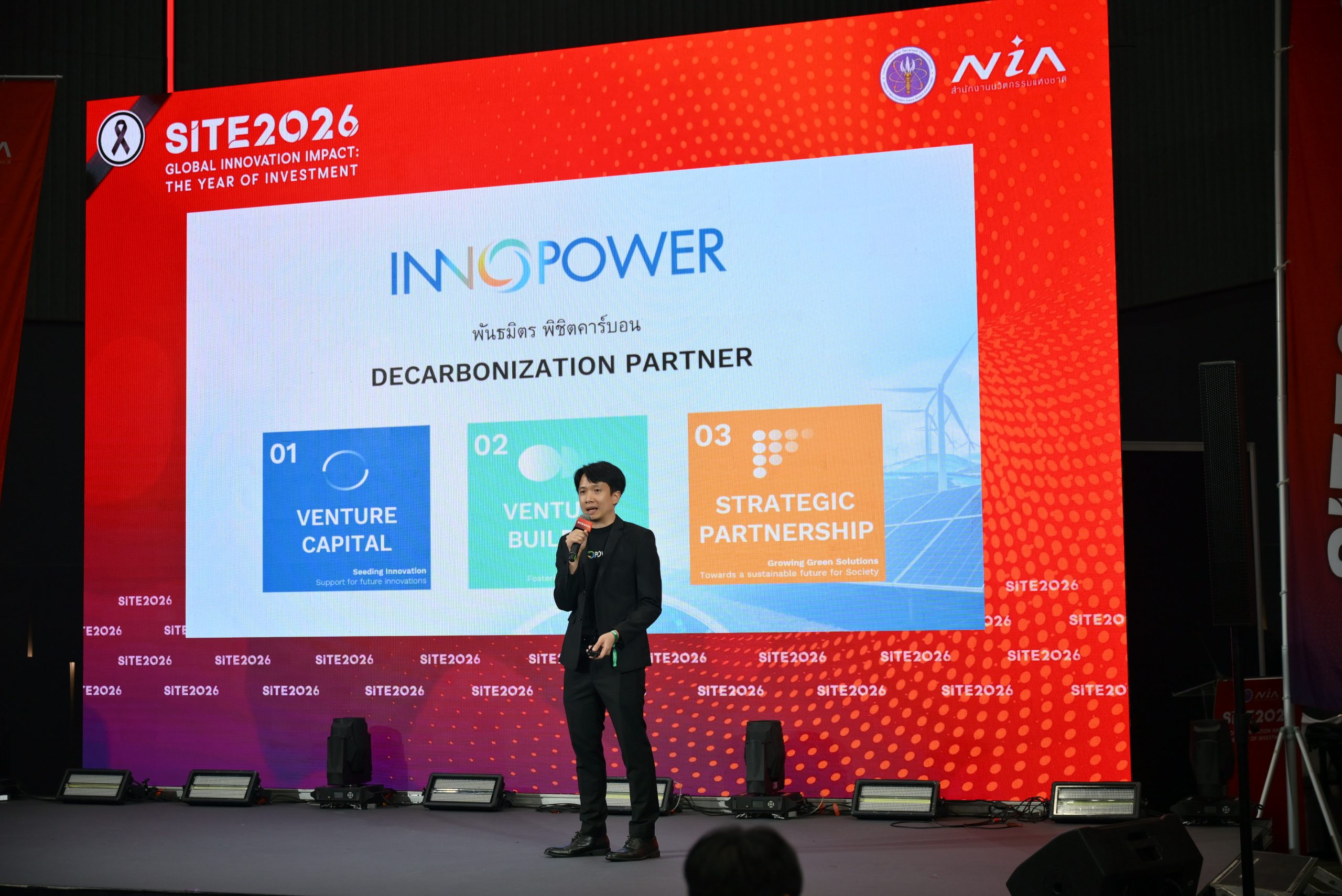
Mr. Chayut Jatunvarat, Investment Principal at Innopower, commented that attractive startups should be bold enough to present new, effective solutions to “big and complex” problems like climate change. They also need the potential to scale to an “industrial level” to create a broad positive impact. Investors also place great importance on the “team,” especially founders with deep technological knowledge, a solid understanding of the market, and the ability to adapt quickly to change. 

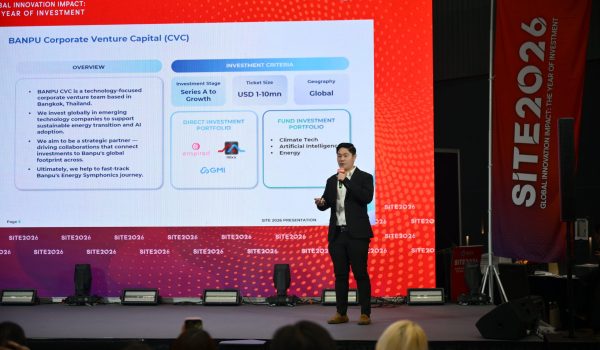
From the perspective of a Corporate Venture Capital (CVC) investor, Mr. Phet Wannisorn, Investment Director at Banpu PCL, explained that CVCs like Banpu focus on investing in startups that can develop technology to extend or enhance the core business of the parent company. He noted that startups should be self-reliant and have enough “resilience” to withstand economic and technological changes. If a startup can integrate AI into its product to make it a core value of the business, it will be a major strength in the eyes of investors, as it increases the product’s potential for future use and growth. 

GreenTech and Energy Tech are not merely new opportunities for Thai startups; they are a necessity for tangibly driving the country toward the Net Zero Future by 2065. This transition cannot be achieved by any single entity; it requires collaboration from all sectors—government, private companies, investors, and, most importantly, the courage of Thai entrepreneurs to rise and create clean energy innovations. 

Investing in GreenTech and Energy Tech is not just about finance; it’s an investment in the future of the world, and of Thailand. 

NPR55869

Growth & Exit Strategy ถอดรหัสความสำเร็จจากศูนย์สู่พันล้านกับ SHIPPOP

Growth & Exit Strategy:

Cracking the Code to Billion-

Dollar Success with SHIPPOP 

In the startup world, growth isn’t just a goal, it’s a way of life. This was the central theme at the Global Stage within the SITE 2025 event, where one of the main highlights was the “Growth & Exit Strategy” session. The featured speaker was Suttikiat Chanchairoat, also known as Mochi, the founder of SHIPPOP, a company that once reached a valuation of 1.2 billion baht. Drawing from his direct experience building three successful businesses, he shared powerful lessons on both failure and rapid recovery. 

From a Small Town to a Billion-Baht Company 

Mochi began by sharing his journey, starting as a young man from a provincial town who moved to Bangkok with nothing more than a computer and a motorcycle. He started as a programmer and eventually attended a Webmaster Camp, which ignited his dream of becoming a startup founder. At this crucial turning point, he chose to leave nothing behind, working his day job while building his business on the side and constantly practicing his pitch. “Become a great pitcher, a great speaker, and do a lot of research,” he emphasized as the first steps to success. He relied on the “Build-Measure-Learn” formula, which allowed him to test ideas quickly, fail fast, and learn even faster. 

Lean Canvas: Know Your Customers Before You Act 

Mochi explained that before starting any business, you should begin with the Lean Canvas, focusing specifically on the Customer Segment. Consumer behavior varies greatly based on income, age, and lifestyle. For example, a person earning 9,000 baht a month will eat at a different kind of Japanese restaurant than someone earning 200,000 baht. This, he noted, is the true definition of understanding your customers. 
To Grow Fast, You Need a New S-Curve 

The reason for SHIPPOP’s continuous growth is that the company never stopped creating new S-Curves. They started with API (Application Programming Interface), added credit services, and launched a COD (Cash on Delivery) website before developing new services. Mochi’s strategy was to test the market by running Facebook ads before building the actual system. He taught a crucial lesson: “You don’t need to make a heavy investment from the start.” Instead, you must Sell before you Build, then Measure the results, and learn immediately before adjusting your strategy. 

The Secret Formula for Unicorn Growth & Exit 

What made Mochi so successful wasn’t just knowing how to make money but knowing how to plan for growth and having a clear Growth Strategy. He advised that if you want to grow to a unicorn level, you need to know about global funding sources and attend world-class camps or accelerators like Y Combinator, Sequoia, Softbank, or Alibaba eFounders. 

A good investor should be a Strategic Investor, not just a source of money. Most importantly, you must be able to answer the question, “If you have the money, what will you do with it?” instantly. This includes having a clear business plan for the short term (1 year), mid-term (3 years), and long-term (5 years), as well as setting both growth and exit goals. 

SHIPPOP itself has completed a merger and has a clear exit plan. The company is also preparing to use the Capital Gains Tax benefits provided by DEPA and NIA to reduce future financial burdens. (In the future, if SHIPPOP has a clear plan for an IPO, using these tax benefits will also be part of the preparation for becoming a public company). 

Key Takeaways Every Startup Must Know 

-Understand your Product Life Cycle—whether your business is in the introduction, growth, maturity, or decline phase. 

-Don’t get trapped by immediate success. You must always seek a new Goal. 

-Constantly look for a New S-Curve. 

-Build a strong Marketing and Sales system. It’s not enough to just be good at your product. 

-Know your company’s Top 20 customers. Visit them often, understand them, and prioritize them. 
-Prepare all 12 points on your Due Diligence checklist to be ready for any opportunity or challenge. 

-The CEO’s role must evolve from doing everything to building a team. If you have 10-100 people, you need to create a Culture. If you have 100-1,000 people, you need to establish Vision with clear company goals. 
A Final Thought from Mochi 

“Don’t be afraid to fail. Failing fast is the best lesson that will help us get to the next S-Curve before anyone else.” 
 

Follow good articles and the latest news from Startup Thailand 2025 on all channels: Facebook | Website | LinkedIn | X (Twitter) 

To never miss an important opportunity or update for startups.